
Adolf Hitler's Right-Hand Man Asked to Revamp Indonesia's Economy
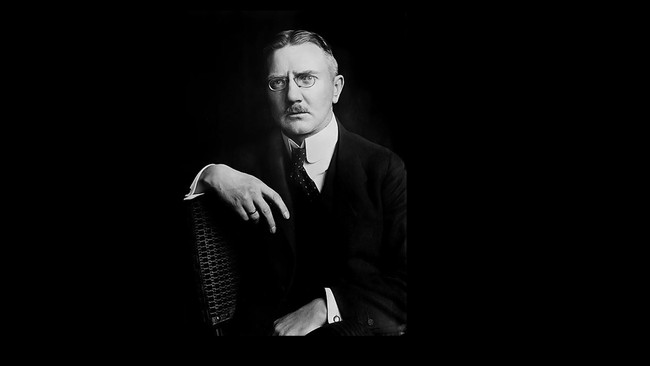
The Indonesian government once sought assistance from a foreign economist who served as Germany’s Minister of Economy under Adolf Hitler’s trust to manage the national economy in the early 1950s. At that time, Indonesia’s economy was still in disarray following the war and independence, characterised by hyperinflation, mounting debt, and production activities that had yet to recover. In that situation, the government turned to a German banker whose worldwide reputation stemmed from successfully lifting his country from economic ruin to the point of daring to initiate the Second World War. That economist was Hjalmar Schacht. Schacht was not a political figure but a pure technocrat. Born in 1877, he spent much of his life in the world of finance and banking. His name gained widespread recognition after he was entrusted with leading Germany’s central bank, the Reichsbank, during the Weimar Republic. Under Schacht’s leadership, Germany escaped the extreme hyperinflation of the early 1920s. From there, his name began to be respected among international economists. It was this reputation that led Adolf Hitler to retain Schacht when the Nazis came to power in January 1933. At that time, Germany’s economy was at its lowest point. The country was depleted of raw material reserves, factories had stopped operating, and around 6.5 million people were unemployed. Schacht was once again entrusted, this time with a greater mandate: to save the national economy. As President of the Reichsbank and Minister of Economy, Schacht became the architect of recovery policies. He not only managed monetary stabilisation but also designed ways for the country to resume production and absorb labour. It was in this role that Schacht demonstrated his main character: pragmatic, technocratic, and bold in challenging conventional economic norms. One of his most well-known legacies is the MEFO bill financing scheme. Through this instrument, Schacht enabled the state to fund industrial projects without directly printing money. He ensured that every financial instrument was backed by real production, thus keeping the money supply under control. Under his supervision, this policy spurred industry back to life and drastically reduced unemployment. For Schacht, the central bank’s task was not merely to maintain figures but to ensure the wheels of the economy turned. As long as the money created drove real production, he believed inflation could be prevented. This view made him regarded as a heterodox economist—not entirely adherent to classical theory, but effective in practice. Over the period from 1933 to 1938, Germany’s economy recovered rapidly. Full employment was achieved, and Germany transformed into a major economic power in Europe. However, this success also marked the beginning of the rift between Schacht and Hitler. When inflationary pressures began to emerge, Schacht urged that the armament expansion be halted. Hitler refused. Finally, on 19 January 1939, Hitler dismissed him from the Reichsbank. Schacht was sidelined from the circles of power, though his name was already recorded as one of the key figures behind Germany’s economic resurgence. After the Second World War, Schacht was tried at the Nuremberg Tribunal but acquitted. Although his reputation was overshadowed by his association with the Nazi regime, his expertise as an economist remained acknowledged. He then became known as an international consultant, a technocrat sought by developing countries facing economic crises, including Indonesia. For Indonesia, the name Hjalmar Schacht symbolises hope that his experience and expertise could provide direction for the young nation’s economy struggling to emerge from post-war chaos.