
Adidaya Institute Pushes for MBG to Become an Integrated Food Economy Platform
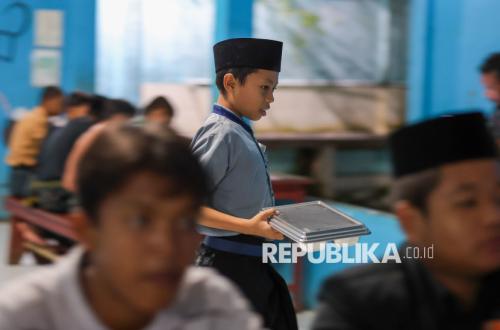
The Adidaya Institute is proposing the strengthening of the Free Nutritious Meals (MBG) programme’s functions so that it does not solely focus on meeting consumption needs but also drives national food economy growth. This approach is seen as capable of bolstering the programme’s resilience amid increasingly dynamic global pressures.
Economist from the Adidaya Institute, Bramastyo B Prastowo, stated that MBG has significant potential to deliver broader economic benefits if optimised as a connector between domestic food consumption and production needs.
“MBG is too simplistic if left merely as a food distribution programme. MBG must be transformed into a national food economy engine,” said Bramastyo during a media dialogue in Jakarta on Tuesday (31/3).
He explained that strengthening MBG’s role should be viewed as a strategic step to enhance the programme’s added value, so it not only produces outputs in the form of meal portions but also outcomes in the form of a growing local food ecosystem.
According to Bramastyo, this approach will make the programme more adaptive to various global challenges, including commodity price fluctuations and supply chain disruptions due to geopolitical conflicts or extreme weather phenomena.
He assessed that MBG’s needs, reaching tens of millions of portions per day, could become an opportunity to strengthen the market for domestic production, from farmers, fishermen, and livestock breeders to small and medium-scale food businesses.
“Imagine the impact. Farmers have guaranteed buyers. Fishermen enter official supply chains. Village cooperatives become aggregators and distributors. Food SMEs grow because there is a clear and sustainable market. State funds circulate domestically, rather than flowing to importers,” said Bramastyo.
Bramastyo added that strengthening MBG’s role also aligns with efforts to promote more equitable economic growth, particularly in rural areas that serve as the base for national food production.
He noted that MBG’s success indicators could be expanded, not just on the number of portions distributed, but also on the level of local raw material absorption, involvement of business actors, and its impact on regional economies.
“MBG that only measures the number of portions is a half-way MBG. MBG that measures the growth of the local food ecosystem is the MBG that truly works for Indonesia,” said Bramastyo.
To support this strengthening, the Adidaya Institute proposes several acceleration steps. First, resolving implementing regulations so that field implementation has clear certainty and direction, especially regarding the mechanism for absorbing local food.
Second, encouraging market certainty through purchase contracts that provide clarity on prices, quality standards, and payment guarantees for farmers and fishermen.
“Farmers and fishermen need market certainty, not promises. Design purchase contracts with reference prices, inflation adjustment clauses, quality standards, and timely payment guarantees,” said Bramastyo.
Third, strengthening the role of local institutions such as village cooperatives, fishing villages, and food barns to serve as distribution hubs and supply stabilisation points.
Fourth, providing adequate fiscal space to maintain the programme’s sustainability amid potential global turbulence.
Fifth, developing a data-based monitoring system that is publicly accessible to enhance transparency and accountability in programme implementation.
“Monitor cost per portion, local absorption percentage, number of active SPPG, nutritional indicators, and regional economic impacts openly. Data is the compass for transformation,” said Bramastyo.
The Adidaya Institute views MBG as having a strategic position as one of the government’s major programmes with a reach of tens of millions of beneficiaries. With the right role strengthening, this programme has the potential to become the main driver of the national food ecosystem from upstream to downstream.
“The state is not just feeding people. The state is building a crisis-resilient, sustainable local food ecosystem that empowers the people from the bottom up,” said Bramastyo.