
Adi Arnawa to Build Breakwater to Address Coastal Erosion
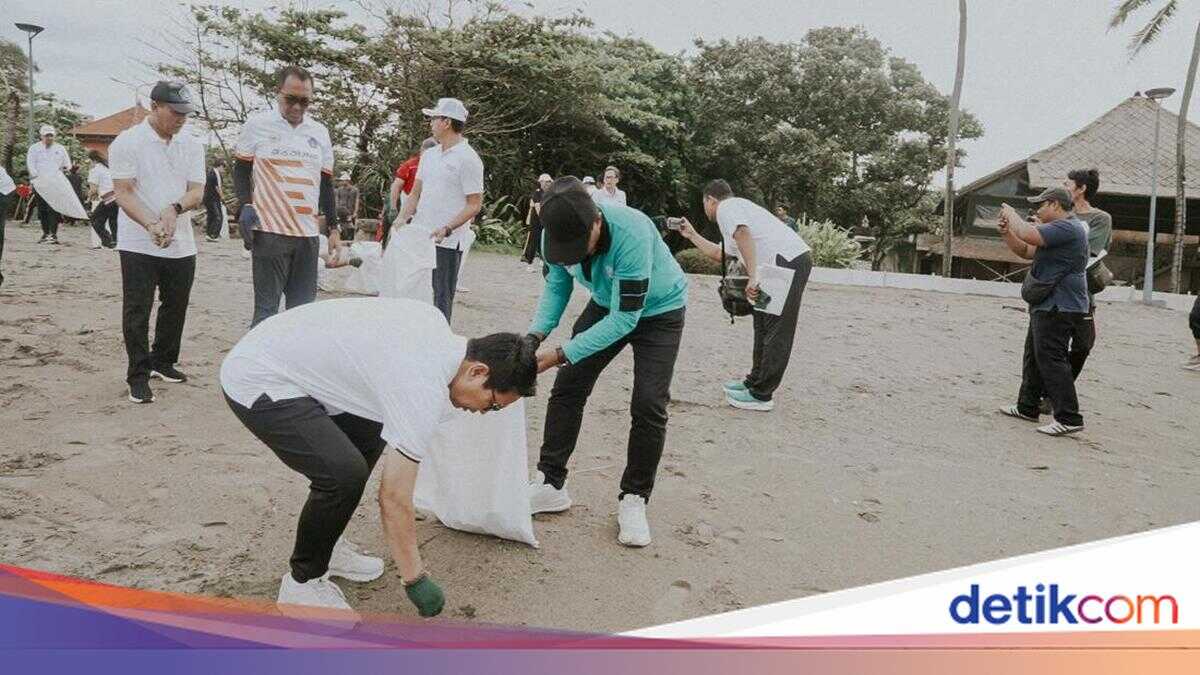
Badung Regent I Wayan Adi Arnawa plans to construct breakwaters to address coastal erosion. This coastal protection infrastructure will be installed at several vital tourism points.
“We will prepare breakwater construction at several locations, ranging from the south towards Canggu. The objective is to ensure our beaches remain wide and provide better space for community and tourist activities,” said Adi Arnawa whilst leading the Bali Clean Rubbish Movement at Petitenget Beach on Sunday (1 March 2026).
Adi Arnawa led the beach cleaning activity at Petitenget Beach alongside Badung Regional People’s Representative Council (DPRD) Chairman I Gusti Anom Gumanti. The two swept the coastline from Petitenget to Cemagi Beach.
According to Adi Arnawa, the tourism sector is the backbone of the economy, making Badung highly dependent on beach conditions. For this reason, coastal cleanliness is no longer merely optional but a duty.
“We conduct regular beach cleaning every week. Badung lives from the tourism sector and beaches are its main attraction. Therefore, beach cleanliness must become a shared responsibility,” Adi Arnawa emphasised.
Adi Arnawa expressed pride at the enthusiasm shown by the community, ranging from members of the Armed Forces and National Police, business practitioners to students, demonstrating that environmental awareness is growing independently at the village level.
“What we are building is not merely ceremonial activity but a culture of cleanliness. Once this culture is established, the community will move on its own,” explained the former Badung Regional Secretary.
Adi Arnawa stressed that waste management cannot be handled only at the downstream level but must begin at the upstream level, namely the household level. If waste is already well-managed at home, the burden downstream will be significantly reduced.