
Adi Arnawa: Suwung Final Disposal Site Will Only Accept Residue From April, Fully Closed by August
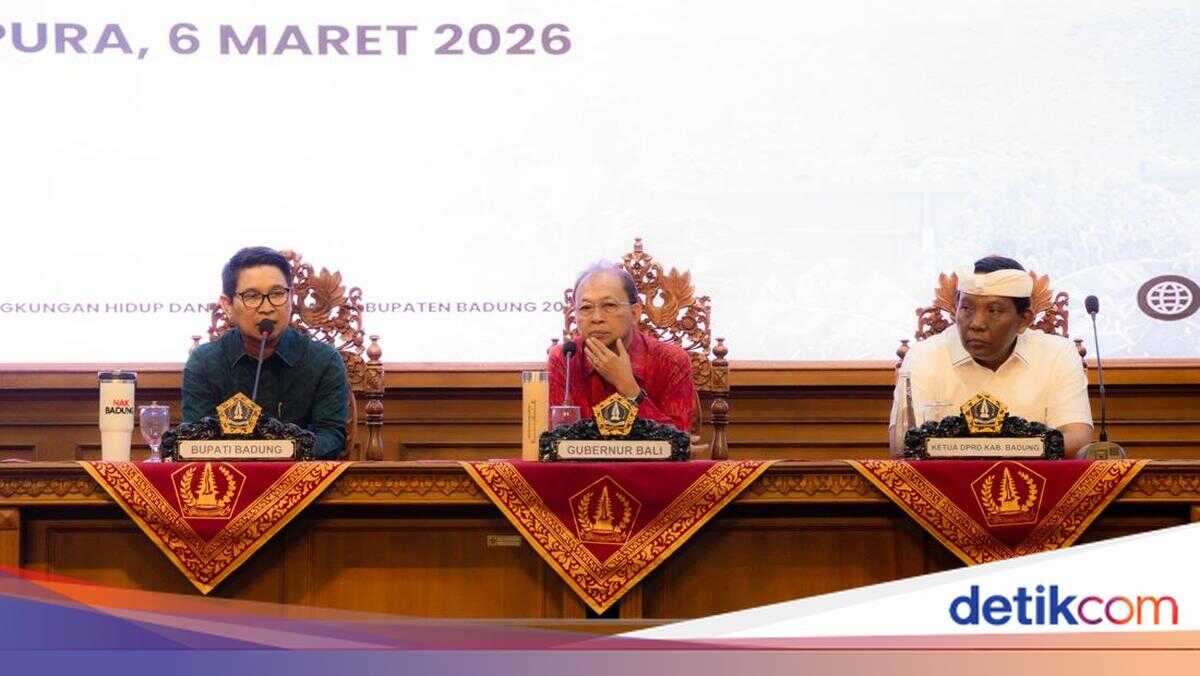
The Regent of Badung, I Wayan Adi Arnawa, reminded that Suwung Final Disposal Site (TPA) in Denpasar will be set to receive only residual waste from 1 April 2026 and will be officially closed in full on 1 August 2026. The policy requires all villages and kelurahan in Badung to immediately shift the focus of waste management entirely from the upstream or household level.
“Implementation of source-based waste sorting must be carried out at every household. I am confident Badung can implement source sorting from the source. The synergy between the Badung Regency Government and our village apparatus is hoped to be maintained,” said Adi Arnawa during a waste management coordination meeting with village, kelurahan, and adat village officials at the Badung Government Centre (Puspem Badung) on Friday (6 March 2026).
According to Adi Arnawa, in line with directions from the Ministry of Environment (LH), as of 1 April there should be no organic waste transported out to the disposal site. Residents were asked to use the remaining time to consolidate and socialise so that the sorting process truly operates across the entire environment.
“No more organic waste to the TPS; only residue that can be brought there. Therefore there is still time for us to coordinate and socialise to ensure there is no organic waste brought to the TPS,” said the Secretary for the Badung Branch of the Indonesian Democratic Party of Struggle (DPC PDIP) Badung.
The firmness reaches its peak on 1 August when all access to organic waste as well as residue will be closed off. Arnawa warned that enforcement actions have moved into the investigative domain for those who violate waste processing rules. “That means if violations occur, it is not unlikely that the case will be raised to the legal level,” he asserted.
The Badung Regency Government has allocated revenue-sharing funds from the Hotel and Restaurant Tax (PHR) to the village budgets (APBDes) to build processing facilities. Villages are required to construct organic waste pits (teba modern) and provide composting equipment for residents who do not have large plots of land.
“March must see movement by everyone, especially in preparing the facilities and infrastructure. For residents who do not have land, arrangements must be made for waste pits,” Arnawa explained.
Regarding imported waste along coastal areas, according to Arnawa, the central government has allowed the use of waste incinerators specifically for wooden waste at integrated waste processing facilities (TPST) or at Reduce, Reuse, and Recycle (TPS-3R) locations. However, the operation of these devices will be strictly supervised to prevent burning of plastic waste that could pollute the air.
Arnawa also ordered subdistrict and village heads, especially in the Kuta area, to be more active on the ground in addressing clogged waste points. Weekly supervision will be conducted to monitor progress in the construction of waste processing facilities in each village to avoid administrative or legal sanctions.
“If it turns out we cannot guide them, we will, be it reluctantly, take legal action so that our officials or our people do not end up with legal trouble,” said the former State Secretary (Sekda Badung).