
Adaptive governance supports technology use tailored to needs
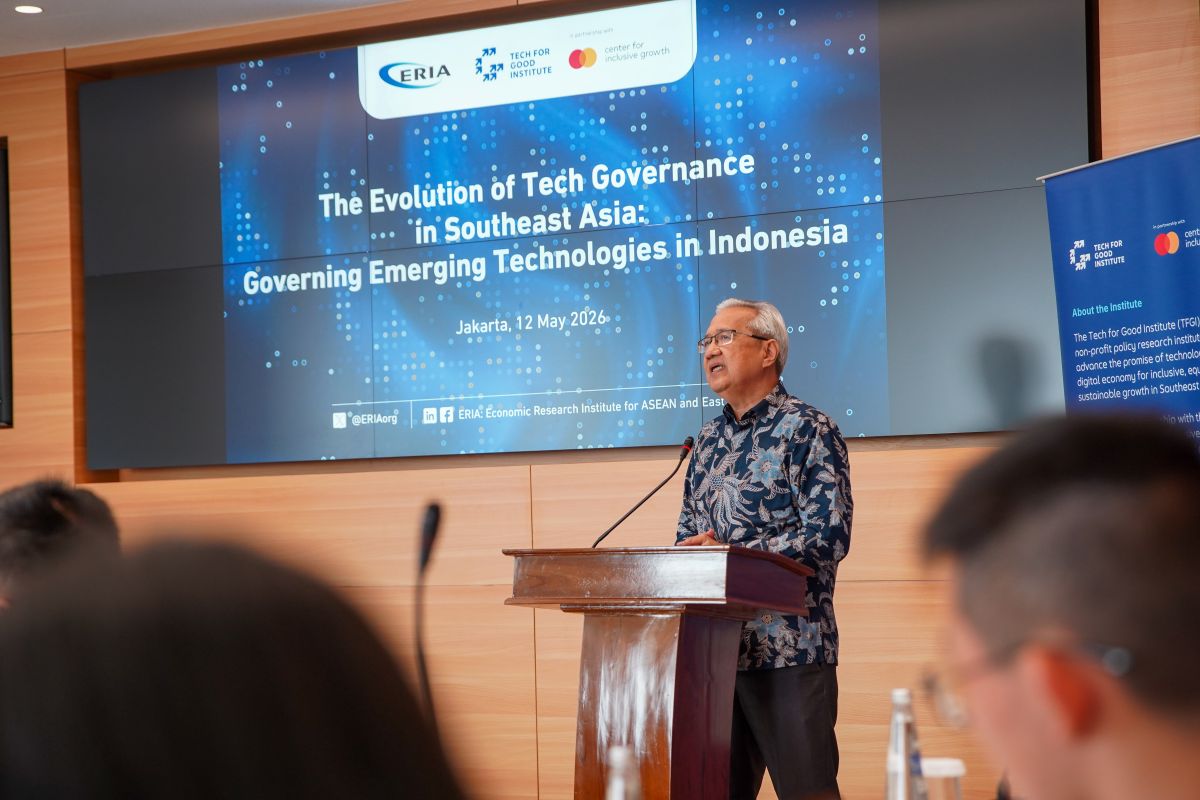
Jakarta (ANTARA) - The Economic Research Institute for ASEAN and East Asia (ERIA) assesses that adaptive governance can regulate the use of new technologies tailored to societal needs. “ASEAN’s digital transformation is now entering a new phase. The question is no longer whether regulation is needed, but how to ensure that existing rules and institutions truly align with the conditions of the regulated market,” said ERIA’s Managing Director for Policy Design and Operations, Dr. Aladdin D. Rillo, in an official statement in Jakarta on Wednesday. At a meeting titled “Technology Governance in Southeast Asia: Understanding the Direction of New Technology Regulations in Indonesia” in Jakarta on Tuesday (12/5), Rillo cited findings from an ERIA report referencing data from the Ministry of National Development Planning/Bappenas. The data indicates that Indonesia’s digital economy is projected to grow to 20.7% of Gross Domestic Product (GDP), or around Rp22,513 trillion (USD1.4 billion), by 2045. At the same time, the integration of the digital economy in the region must also consider differences in digital readiness among ASEAN countries. In response, Tech for Good Institute’s Programme Director Citra Nasruddin stated that as technology continues to develop rapidly in Southeast Asia, its governance approach must also improve. Tech for Good Institute’s Programme Manager Keith Detros added that technology governance is the responsibility of all involved parties, so that technology use can be adapted to needs in each area. “Technology governance is not just the government’s responsibility. Amid the rapid development of the digital economy, cross-disciplinary collaboration, public-private sector cooperation, and inter-country synergies are needed. Such an approach is important so that the resulting policies and regulations are truly relevant to the region’s needs,” said Detros.