
Acid Attack on KontraS Activist Deepens Fears Over Indonesia’s Military Turn
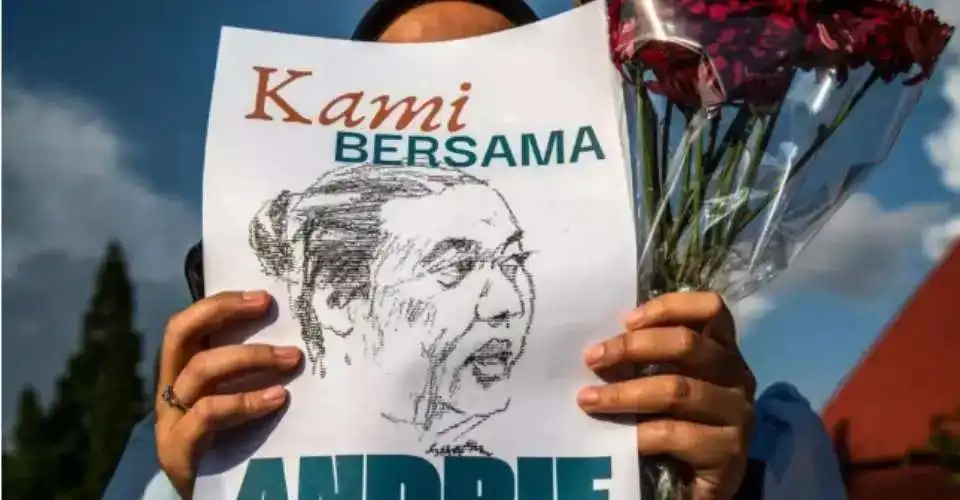
Four soldiers have been detained, but rights groups say the real test is whether the case is handled independently and transparently
The acid attack on KontraS deputy coordinator Andrie Yunus has become more than a criminal case. After the detention of four military intelligence personnel, the incident is now being seen by many in Indonesia as a test of whether the country can still protect dissent, investigate abuses independently, and prevent the military from regaining a wider political role.
Four soldiers are already in military custody
Indonesia’s military police detained four active-duty service members on March 18 over their alleged involvement in the acid attack on Andrie Yunus. Police and military statements say the suspects are linked to the military intelligence branch, and the detentions followed growing public pressure after CCTV footage and civil society findings pointed to what activists described as the work of “trained individuals.”
That development answered one question — whether security personnel were involved — but opened another, more sensitive one: who should investigate and prosecute the case. Rights groups say that because the suspects are soldiers, there is a serious risk the case will remain trapped in internal military mechanisms rather than be fully exposed to civilian scrutiny.
Civil society fears the investigation could stop too low
Human Rights Watch has called on President Prabowo Subianto to create an independent fact-finding team, arguing that the military cannot credibly investigate itself in a case involving an attack on a government critic. Rights groups also want any proceedings to be public and to examine whether responsibility extends beyond the direct perpetrators.
That concern is central to the controversy. For activists, the issue is not only whether four men are punished, but whether the investigation will examine command responsibility, motive, and whether the attack was connected to Yunus’ public criticism of growing militarization in government.
The attack came after Yunus criticized remilitarization
Yunus has been one of the most visible critics of efforts to expand the military’s role in civilian life. Reports say he was attacked after taking part in a podcast discussing remilitarization and after earlier activism against revisions to Indonesia’s military law.
Those legal changes matter. Indonesia’s revised military law, passed in March 2025, expanded the number of civilian institutions where active-duty officers can serve from 10 to 14, according to multiple reports, and critics say it weakens the civilian-democratic guardrails put in place after the fall of Suharto.
The wider political atmosphere is adding to the alarm
Public anger over the Yunus case has grown not only because of the violence itself, but also because it comes amid increasingly harsh rhetoric toward critics. Recent reporting noted that Prabowo accused critics of being influenced by outside forces and said he had intelligence on them and would “put things in order,” comments that rights advocates viewed as threatening.
In that context, the acid attack is being read by many activists not as an isolated assault, but as part of a broader climate of intimidation. Human Rights Watch recently warned of democratic backsliding, protest crackdowns, media censorship, and intimidation of activists under Prabowo’s administration.
This case is now a democracy test
The Yunus case matters because it sits at the intersection of three issues Indonesia is struggling with at once: shrinking civic space, the return of military influence in civilian governance, and the safety of human rights defenders. If the case is handled only internally, without transparent civilian oversight, critics fear it will reinforce the idea that security actors remain beyond meaningful accountability.
For Indonesians, the immediate question is whether the state can show that criticism of government policy does not carry physical danger. For Singaporeans and other regional observers, the case matters because Indonesia’s democratic direction affects not only its own civil liberties, but also the broader political tone of Southeast Asia.
The detention of four soldiers is an important step, but it is not the end of the story. The real measure of credibility will be whether Indonesia allows an investigation that is independent, public, and willing to follow the evidence as far as it leads. If that does not happen, the acid attack on Andrie Yunus may come to symbolize not only violence against one activist, but a wider retreat from the democratic gains Indonesia has spent decades building.
Sources: UCA News (2026)
Keywords: Andrie Yunus acid attack, KontraS activist, Indonesia military law, TNI suspects acid attack, Prabowo critics, civil society Indonesia