
Acid Attack on KontraS Activist and the Threat of Chilling Effect
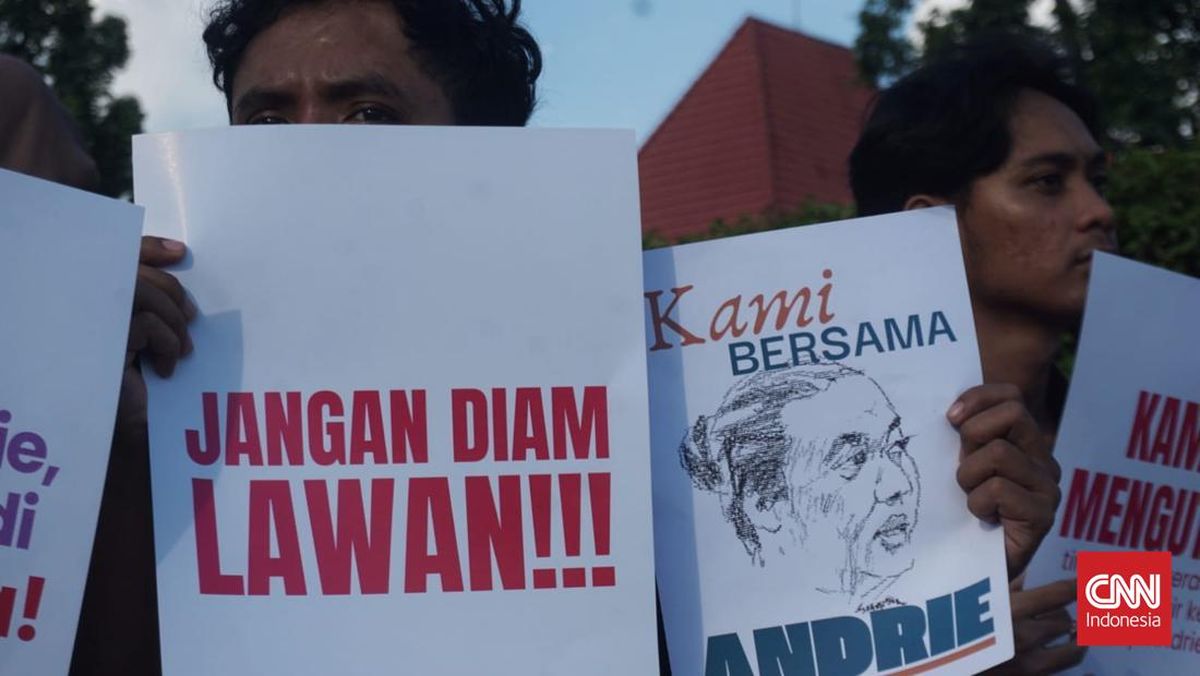
An acid attack on Andrie Yunus, deputy coordinator of the Commission for the Disappeared and Victims of Violence (KontraS), is considered capable of producing suppression and a widespread chilling effect within civil society.
“This attack can produce extraordinary suppression of public criticism through a widespread chilling effect,” said Ikhsan Yosarie, human rights researcher and security sector specialist at Setara Institute, in a written statement on Sunday (15 March).
Ikhsan expressed concern that the incident could set a dangerous precedent damaging civil freedoms if allowed to proceed without firm and transparent legal action.
According to him, the acid attack on Andrie can be read as a symbolic message directed at the public at large, suggesting that voicing criticism could carry serious risks.
Ikhsan added that the acid attack constitutes extremely serious violence that cannot be tolerated in a nation upholding the principles of democracy and human rights.
“This incident not only attacks an individual, but also threatens the safety of human rights defenders who have worked to ensure checks and balances on power, and who advocate for various violations of citizens’ constitutional rights,” he said.
Ikhsan stated that this acid attack incident serves as an alarm to strengthen protection mechanisms for human rights defenders in Indonesia, including through strengthening the state’s commitment to guaranteeing freedom of expression and the safety of civil society actors carrying out advocacy functions.
He emphasised that protection of human rights defenders is an integral part of protecting democracy. According to him, when fear restricts public participation in civic space, democracy loses one of its main foundations in the form of free and equal citizen participation.
According to Ikhsan, the state’s failure to protect human rights defenders is not merely a matter of individual security and safety, but also represents a tolerance of the destruction of democratic space that is occurring.
“Setara Institute urges law enforcement officers, particularly the National Police, to immediately conduct rapid, independent, and transparent investigations into this case and uncover all perpetrators and intellectual actors behind the attack,” he said.
Not to be regarded as an ordinary attack
The Indonesian Centre for Law and Policy Studies (PSHK) and the Indonesian Jentera Law School stated that the terror against Andrie Yunus should not be regarded as an ordinary attack. According to them, the acid attack is an act of violence that cannot be tolerated and must be immediately thoroughly investigated by law enforcement.
Rizky Argama, executive director of PSHK, stated that in the context of human rights defence and public advocacy work carried out by the victim, the acid attack should also be seen as a threat to civic space and the rule of law principle guaranteeing citizens’ freedom to express opinions.
“In recent years, various indicators have shown a trend of shrinking civic space in Indonesia. Human rights defenders, journalists, academics, and other elements of civil society increasingly face intimidation, criminalisation, or other forms of violence when carrying out public advocacy work,” Rizky said in a written statement.
“The attack on Andrie Yunus reinforces concerns that human rights defence work is increasingly facing serious security risks,” he added.
Aria Suyudi, chairman of Indonesian Jentera Law School, added that from a rule of law perspective, this situation cannot be allowed to continue.
When human rights defenders can be brutally attacked in public space without adequate protection, he said, what is at stake is not only individual safety, but also the integrity of the democratic system and public trust in law enforcement.
PSHK together with Indonesian Jentera Law School views that the protection of human rights defenders is an integral part of the agenda to strengthen the rule of law in Indonesia.
“Firm and transparent law enforcement in this case is an important test of the state’s commitment to protecting civil freedoms,” Aria said.
PSHK and Indonesian Jentera Law School then urged law enforcement to thoroughly investigate the attack on Andrie Yunus, including apprehending perpetrators and uncovering those behind the brutal incident.
“(Urging) the government to provide real and effective protection for human rights defenders, civil society activists, and those carrying out public advocacy work,” they stated in their demands.
“(Urging) the government to ensure Andrie Yunus receives the best medical care and comprehensive recovery support,” they said.
Andrie Yunus became a victim of acid attack by unknown perpetrators, resulting in serious injuries across his body, particularly on both hands and arms, face, chest, and eye area.
The incident occurred shortly after Andrie finished recording a podcast at the Office of the Legal Aid Foundation (YLBHI) titled “Remilitarisation and Judicial Review in Indonesia” at approximately 23:00 WIB on Thursday (12 March).
Following the incident, Andrie was immediately taken to hospital for medical treatment. Medical examination showed Andrie suffered burn injuries to 24 per cent of his body. His right eye became the most seriously affected area.
The government through several ministers condemned the acid attack targeting KontraS activist Andrie Yunus.
Yusril Ihza Mahendra, Coordinating Minister for Law, Human Rights, Immigration, and Correctional Affairs, stated that the attack on a human rights activist is a blow to the practice of democracy in Indonesia.
“The acid attack on Andrie Yunus from KontraS is a serious assault on democratic principles,” he said.