
Achieving WHO Listed Authority Status: BPOM Meets Nine Criteria
The Indonesian Food and Drug Authority (BPOM) has been officially designated by the World Health Organization (WHO) as a WHO Listed Authority (WLA) in the regulation of medical products (vaccines). This recognition places BPOM on par with leading regulatory authorities in advanced nations, such as Australia’s Therapeutic Goods Administration (TGA).
BPOM Head Taruna Ikrar explained that WLA status represents the highest achievement for regulators involved in drug and food oversight. With this designation, Indonesia became the first developing nation whose regulatory system has been recognised as meeting the highest global standards.
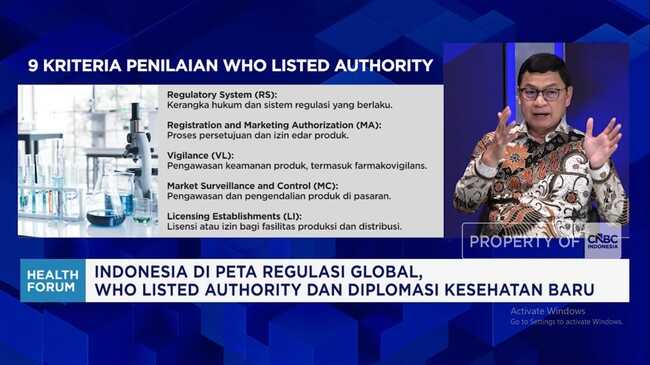
Ikrar outlined nine criteria and evaluation points for achieving this status. The first is the regulatory system and governance framework. The second is marketing authorisation, which concerns the certification of product distribution permits.
The third criterion is vigilance—the extent to which drugs or vaccines circulating in Indonesia provide protection to the public. This criterion measures the impact of these products on human health.
The fourth is surveillance—the national system by which BPOM protects and safeguards the Indonesian public in matters relating to drugs, food, and vaccines on a consistent basis.
The fifth criterion is clinical trial oversight, which evaluates the supervision of clinical trials for drugs or vaccines before they are released to the market. The sixth concerns the quality of laboratories that conduct drug and vaccine testing.
The seventh criterion, assessed very rigorously, is licensing. This pertains to every letter, permit, and authorisation issued to the public, all of which have implications for regulatory oversight, the quality of supervision, and health and safety protection for the public.
The eighth criterion relates to inspection—how BPOM carries out its duties in accordance with standards for inspections in the manufacture of drugs or vaccines. This includes factory inspections concerning marketing practices and good manufacturing practices, including the standards of equipment used in drug production.
The final criterion concerns vaccine batch traceability—the extent to which drugs or vaccines distributed and circulated by a country can be tracked.
Ikrar stated that these nine criteria were evaluated independently by a team from the WHO that visited Indonesia, with no facilitation or bias from local authorities. The evaluation was entirely independent.