
Aceh Legal Expert: Public Entitled to Compensation Following Sumatra Blackout
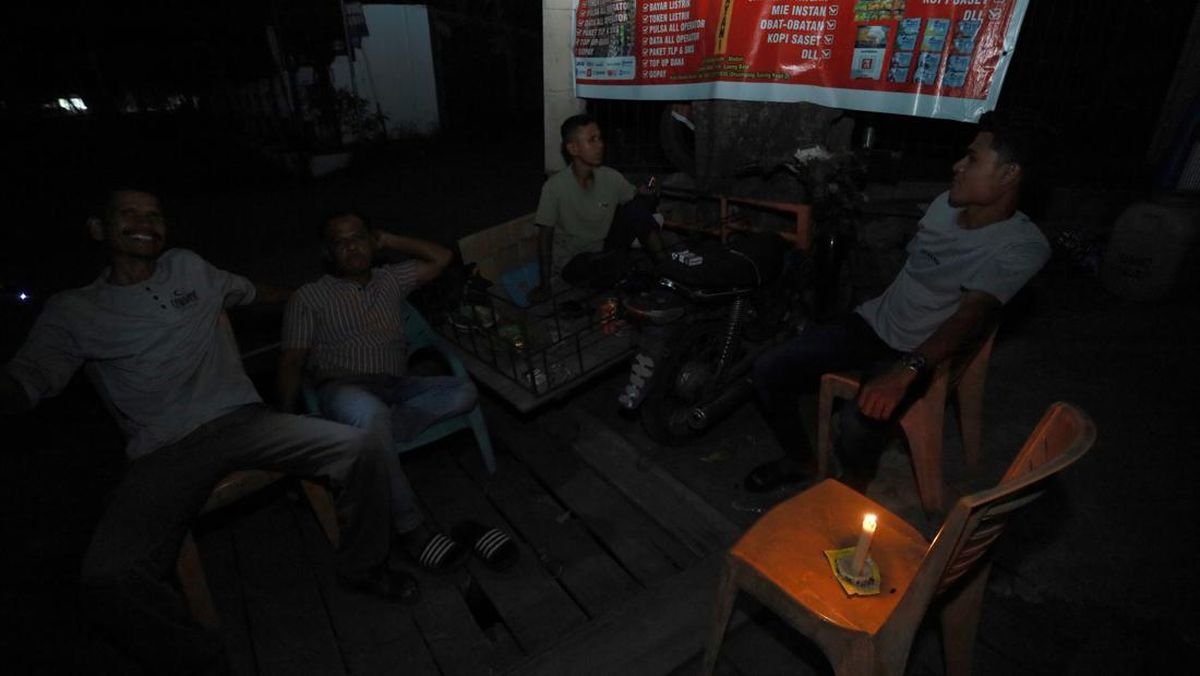
Aceh-based legal practitioner Rahmat Hidayat argues that PT PLN (Persero) must compensate tens of thousands of electricity customers across multiple Sumatran provinces, including Aceh, for losses incurred.
He stated that the 24-hour-plus total blackout significantly impacted residents’ activities, particularly the economy.
“The recent multi-day total blackout in Aceh has crippled various customer activities,” Rahmat Hidayat told Antara on Thursday (28 May). “It has disrupted not only households, public services, economic activities, small and medium enterprises, but also access to clean water and communication networks.”
He emphasised that electricity is a fundamental necessity supporting domestic life, work, worship, healthcare, education, and other essential services.
Therefore, he stated, PLN is legally obligated to compensate affected customers, as stipulated in laws including the Consumer Protection Act, Electricity Act, and Energy and Mineral Resources Ministry regulations.
Rahmat said the blackout contravened Article 4 of Law No. 8 of 1999 on Consumer Protection, which states: “Consumers are entitled to comfort, safety, and security when consuming goods and/or services.”
“These consumer rights align with Article 29(1)(a) and (b) of Law No. 30 of 2009 on Electricity, which clearly states that consumers have the right to good service and continuous, high-quality, reliable electricity supply,” he added.
Additionally, it refers to Article 6 juncto 6A of Energy and Mineral Resources Ministry Regulation No. 18 of 2019 on Service Quality Standards and Costs for Electricity Distribution by PT PLN (Persero), mandating compensation for poor service quality causing prolonged outages and losses to customers.
BMKG Data and PLN-ESDM Statements
Rahmat cited PLN CEO Darmawan Prasodjo’s explanation that the blackout in Aceh, North Sumatra, Jambi, West Sumatra, and Riau began on the evening of Friday (22 May) due to adverse weather disrupting the 275 kV Muara Bungo-Sungai Rumbai Extra High Voltage Transmission Line in Jambi.
However, Rahmat suspected the bad weather was merely a pretext for PLN to avoid compensation liability.
Data from the Jambi BMKG office on 22 May 2026 predicted safe weather conditions in Muara Bungo-Sungai Rumbai, Jambi and surrounding areas, with only cloudy skies and light rain.
Therefore, Rahmat suspected the blackout was not weather-related but due to poor electricity management and infrastructure, negatively impacting both the public and customers.
Meanwhile, Energy and Mineral Resources Deputy Minister Yuliot Tanjung stated on Monday (25 May) that there was no intent behind the Sumatran blackout on Friday (22 May) at 18:44 WIB.
“No, there was no intent. It was purely due to natural conditions,” Yuliot said at the Senayan Parliamentary Complex in Jakarta on Monday (25 May).
Yuliot said the Sumatran blackout was caused by lightning striking the transmission network in Jambi.
However, he acknowledged the Energy Ministry had directed PLN to review its electricity system to prevent future mass blackouts in Sumatra. The directive includes technical transmission network evaluations, installing additional protection systems in vulnerable areas, and equitable power generation distribution across regions.
The government also ordered PLN to install additional earthing or grounding systems in areas prone to lightning and extreme weather.
Additionally, the Energy Ministry instructed that Sumatra’s electricity distribution should not heavily rely on long-distance power transmission from south to north. Yuliot explained this dependency complicates system recovery during outages.
“There must be balanced power generation supply in each region. There shouldn’t be excessive reliance on long-distance transmission, such as from south to north. This prolongs recovery times,” he said.
During a press conference at the Bareskrim Police headquarters the same day, PLN Transmission Director Edwin Nugraha Putra explained Sumatra’s main electricity system relies on two primary routes: a 500 kV eastern line and a 275 kV western line. He stated the disruption occurred as extreme weather hit Jambi.
“In Jambi’s Muaro Jambi area, BMKG has issued warnings due to high humidity leading to heavy rain, lightning, and strong winds,” Edwin said at the police headquarters.
During the joint press conference at the headquarters, suspected broken transmission cables were displayed as the cause of the Sumatran blackout.
Edwin explained that during the Sumatra blackout, a 275 kV transmission line from New Aur Duri to Sumsel 5 was disrupted, which fed into the eastern 500 kV line. He said this was likely due to extreme weather conditions.
“This caused both circuits to trip, taking the 500 kV line offline. It is suspected to be due to heavy rain and strong winds at the time,” he explained.
He said recovery times varied across regions due to differences in power generation types.
At the same time, Bareskrim Deputy Chief Irjen Pol Nunun