
Aceh declares hydrometeorological disaster alert status until 20 April
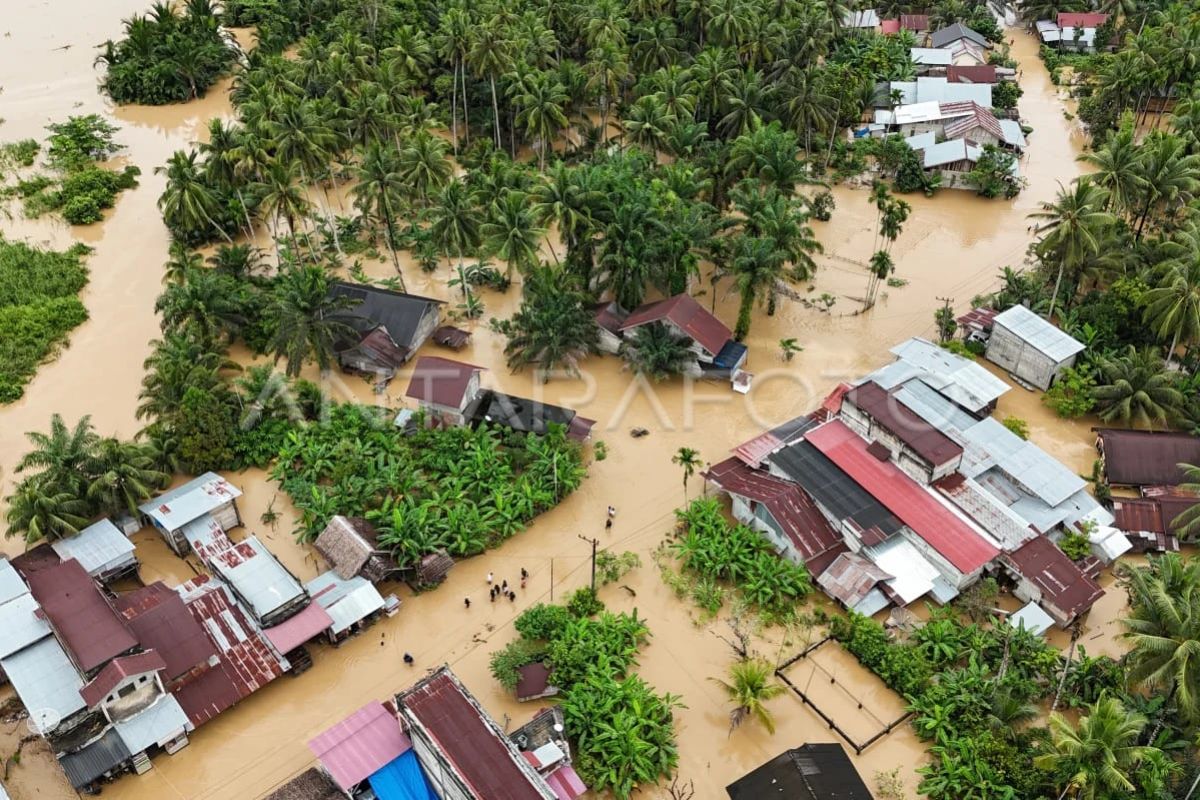
Banda Aceh (ANTARA) - The Aceh government has officially declared a hydrometeorological disaster alert status in several districts and cities in the province, effective from 13 to 20 April 2026, following the BMKG’s extreme weather warning regarding the potential for heavy rain.
“This disaster alert period is crucial to minimise impacts,” said Aceh’s Secretary General M Nasir while leading a coordination meeting via Zoom with the SAR Team and BMKG in the Setda Aceh office in Banda Aceh on Monday.
Based on BMKG information, the atmospheric conditions in the Aceh region are currently influenced by cyclonic patterns, wind shearlines, and convergence that could increase the growth of rain clouds.
In response to these conditions, M Nasir also instructed district and city governments to immediately activate 24-hour emergency posts, especially at disaster-prone points.
“We ask BPBD in districts and cities to activate posts and monitor weather developments in real-time together with BMKG and the Aceh Disaster Management Agency (BPBA),” he said.
The Secretary General emphasised that mitigation steps must not be delayed; local governments must immediately carry out water infrastructure normalisation through cleaning drains, rivers, and dredging sedimentation to prevent overflows.
In addition, prevention also includes trimming trees prone to falling and securing billboards and high-risk utilities. Field officers are required to increase routine patrols in flood-prone areas, landslides, and critical river basins (DAS).
Not only that, in terms of emergency preparedness, the Aceh government has instructed the mobilisation of Quick Reaction Teams (TRC) and the placement of heavy equipment at alert points.
“Supporting facilities, such as motorboats, evacuation vehicles, emergency logistics, and refugee tents, must be in ready-to-use condition. Evacuation routes and refugee locations must also be re-verified to ensure their safety,” he said.
On this occasion, M Nasir also emphasised the importance of cross-sector synergy in disaster management. Intensive coordination must be carried out between local governments and TNI/Polri as well as vertical agencies, such as BPJN, BWSS, SAR, PLN, and Telkom, to ensure smooth communication and rapid response during emergencies.
Furthermore, the optimisation of the early warning system (EWS) is also a primary concern. Sub-district heads, villages, and their apparatus must actively disseminate weather information and early warnings to the public through various communication channels, including WhatsApp groups, village sirens, and local media.
“Do not let any information be cut off. This series of preventive steps is expected to be able to minimise the risks of extreme weather impacts during the alert period until 20 April 2026,” said M Nasir.