
Aceh, a Hope That Never Fades (3 -- End)
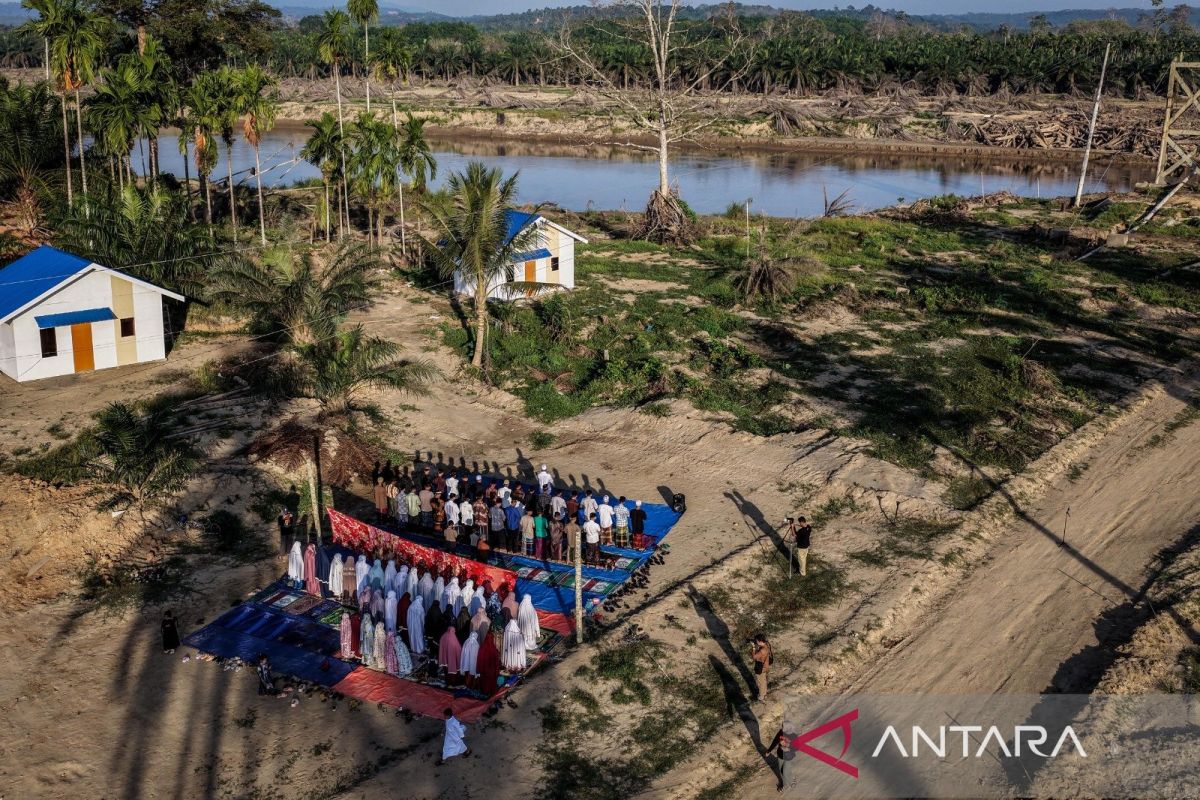
Jakarta (ANTARA) - Eid al-Fitr is the eagerly awaited moment for every Muslim, following a month of fasting during Ramadan.
The ANTARA Bangkit Sumatera team captured the Eid atmosphere in the disaster-affected areas of Aceh in March 2026. This third-period team departed from Jakarta on 15 March, or five days before Eid al-Fitr.
Landing at Kualanamu Airport in Medan on Sunday (15/3) night, the team continued their journey the next morning to a hospital in Aceh Tamiang that had gone viral during the disaster, RSUD Muda Sedia.
That name had previously been a frequent topic on social media. Dramatic video clips showed how the second floor of the hospital became a survival spot for patients and medical staff when floodwaters submerged the ground floor.
Now, four months post-disaster, the place has transformed, demonstrating an ongoing recovery process, though not yet 100 per cent complete. The mud has been cleared, hospital activities have resumed, and even some parts of the building have been repaired and repainted, signifying a resurgence from despair.
In haste, we promptly carried out our duties. Recording footage, taking photos, interviewing several people. Our journey continued.
Sekumur and the Sea of Wood
Venturing deeper into Aceh, the team reached Desa Sekumur, Sekerak, Aceh Tamiang. The damage we had seen on the roads earlier paled in comparison to what had occurred in this rather remote village.
To reach it, we had to cross the Tamiang River using a simple raft, which at that time served as an essential transport tool for local mobility.
Descending from the raft, we traversed the village. Once again, we were stunned by the sheer volume of flood debris—wooden scraps carried into the village. One ANTARA team member, Bang Aloy, a burly man from the East, even tried comparing his body to the stranded logs, and the result was that he couldn’t even embrace one with his arms.
Further along the path, our eyes ceaselessly scanned left and right, but as far as the eye could see, there was nothing but unremoved flood logs.
A Sampan from the Wound
The atmosphere in Desa Sekumur was quite hot at the time, but there were still breezes that made our walk less punishing, even though we were fasting. As we walked, we often exchanged greetings with residents until our gaze was fixed on a house in front of which stood a large wooden sampan that was not yet complete.
It turned out that the sampan was made by a 65-year-old grandfather named Mukhtar Sulaiman. Not without reason, the sampan was crafted from flood-carried logs that had washed up right in front of his home.
Drawing on the boat-building skills inherited from his father, Mukhtar transformed a gelam log about 10 metres long and over one metre in diameter into a sampan usable by the community.
Not for rent or sale. With humility, he said that the sampan was made as a form of charity to fellow villagers in need.
“This I use as my charity for this community, because many from outside have helped us greatly—why can’t we?” Mukhtar said this while holding the axe used to carve the sampan.