
Acceleration of MSME Legalization: Government Simplifies Business Identification Number Issuance Through Self-Declaration
The Indonesian government continues to strive to encourage the growth and development of Micro, Small, and Medium Enterprises (MSMEs) as the backbone of the national economy. One of the strategic steps taken is to simplify the business legalisation process through the issuance of the Business Identification Number (NIB). The latest data shows that of the approximately 56 million potential micro-enterprises in Indonesia, around 40 million do not yet have an NIB. This is a serious concern for the government, as business legality is an important foundation for MSMEs to access various assistance and support programmes, and to contribute optimally to the country’s economy.
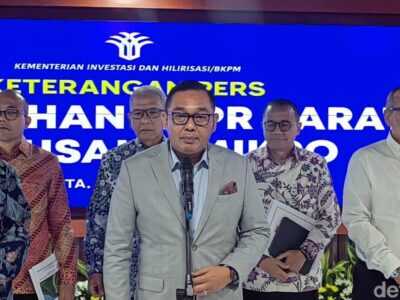
The Deputy Minister of Investment and Downstreaming/Deputy Head of BKPM, Todotua Pasaribu, emphasised the importance of MSME legality at a press conference held at the Ministry of Investment and Downstreaming/BKPM Office, South Jakarta, on Tuesday, 24 February 2026. He explained that by having an NIB, MSMEs will have a clear legal status and verified permits. This will facilitate the distribution of government programmes aimed at MSMEs, and ensure that the assistance is targeted and measurable.
To date, the government has issued approximately 15.2 million NIBs, with 14.9 million of these issued to micro-enterprises. Although this figure is quite significant, there is still a large gap of around 40 million micro-enterprises that do not have legal status. The government recognises that addressing this gap is crucial to maximising the potential of MSMEs and increasing the sector’s contribution to state revenue.
One of the main obstacles in the issuance of NIBs has been the requirement to fulfil the Spatial Utilisation Activity Compliance Approval (PKKPR), or more commonly known as a location permit. The PKKPR process is often time-consuming because it requires a number of complex technical requirements. This has led to delays in the issuance of NIBs and hindered efforts to legalise MSMEs.
Recognising this problem, the Ministry of Investment and Downstreaming has issued a Circular Letter from the Minister of Investment and Downstreaming/Head of BKPM Number 1 of 2026 regarding the provisions for the issuance of land-based PKKPRs for micro-enterprises. This circular letter is a breakthrough step to simplify the PKKPR process for micro-enterprises. Through this policy, micro-enterprises can process the PKKPR through a simpler and more efficient mechanism.
The core of this policy is the replacement of the complex technical verification process with a self-declaration mechanism. Micro-enterprises only need to state the location and address of the business through the Online Single Submission (OSS) system. Once the self-declaration is submitted, the PKKPR approval can be issued automatically, significantly accelerating the NIB issuance process.
Todotua Pasaribu explained that this Circular Letter will be upgraded to a Ministerial Regulation in the next three months. This Ministerial Regulation will further strengthen the legal basis for the self-declaration mechanism for PKKPRs for micro-enterprises. Thus, micro-enterprises will no longer need to go through a long and complex technical verification process to obtain a location permit.
Although the process is simplified, micro-enterprises are still required to accurately state the location and address of the business through the OSS system. This self-declaration includes basic information such as the location of the business, the complete address, and other relevant details. This information will be used by the government to monitor and manage the utilisation of space more effectively.
This policy is expected to have a significant positive impact on micro-enterprises throughout Indonesia. With a faster and easier NIB issuance process, more MSMEs will have business legality. This will open access to various government assistance programmes, such as loan capital, training, and business assistance. In addition, business legality will also increase consumer and business partner confidence, thus expanding market opportunities for MSMEs.
The government recognises that the legalisation of MSMEs is a long-term investment that will provide significant benefits to the national economy. With more MSMEs that are legal and competitive, this sector will be able to make a greater contribution to economic growth, job creation, and improved welfare.
However, the acceleration of MSME legalisation is not without challenges. One of the main challenges is the lack of understanding and awareness among micro-enterprises regarding the importance of business legality. Many micro-enterprises still consider the licensing process to be complicated and time-consuming. Therefore, the government needs to carry out intensive socialisation and education to increase the understanding and awareness of micro-enterprises regarding the benefits of business legality and the ease of the NIB issuance process.
In addition, the government also needs to ensure that the OSS system functions properly and is easy to use by micro-enterprises. The OSS system must be user-friendly and provide complete and clear information about the requirements and procedures for issuing NIBs. The government also needs to provide assistance and support services for micro-enterprises that experience difficulties in using the OSS system.
Coordination between government agencies is also an important factor in the success of the MSME legalisation acceleration programme. The Ministry of Investment and Downstreaming/BKPM needs to coordinate with the Ministry of Cooperatives and SMEs, local governments, and other related agencies to ensure that this programme runs effectively and efficiently. This coordination includes policy synchronisation, resource provision, and the implementation of socialisation and education programmes.
The government also needs to involve the active participation of various parties, such as MSME associations, financial institutions, and universities, in supporting the MSME legalisation acceleration programme. MSME associations