
Accelerating the Realisation of People's Welfare
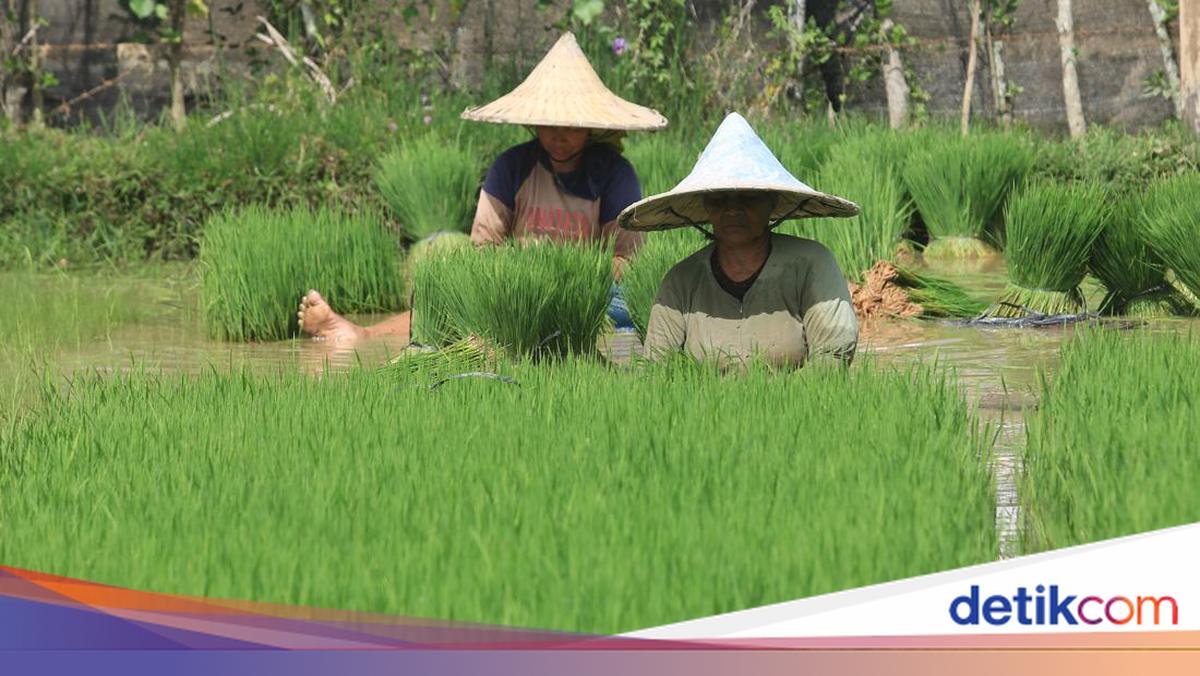
Land is the primary resource for farmers. It involves not only economic, social, and legal relationships. But land ownership by farmers holds a sacred meaning. It is a manifestation of an emotional and spiritual bond, usually expressed through customary and cultural rituals.
Various cultures and sacred rituals are still found in many villages, intended to perpetuate the emotional and spiritual relationship between farmers and the earth or land. Earth rituals, village ceremonies, and land purification rites are some forms of gratitude and inner connection between the land and farmers. This feeling grows because the land has become part of the farmers’ lives.
Meanwhile, in relation to land as a trigger for welfare, Hernando de Soto in his book titled The Mystery of Capital: Why Capitalism Triumphs in the West and Fails Everywhere Else states that the poor in developing countries are not poor in work ethic and creativity.
They are poor due to legal barriers and bureaucracy. Farmers’ assets in the form of land and housing are not compatible with the formal economic system recognised by the state. In de Soto’s view, legalising people’s assets is absolutely necessary so they can enter the formal financial system. Through this legalisation mechanism, land certificates can be used as collateral, traded, valued, and trusted by the inclusive financial system.
It is also interesting to observe the bureaucratic barriers and the emergence of “field resistance” by the people. The narrative of illegal land occupation of abandoned plantations, encroachment on forests by people for farming, and the proliferation of street vendors occupying pavements. These are forms of people’s resistance (revolution) against the stagnation of formal law.
In his other book titled The Other Path: The Invisible Revolution in the Third World, Hernando de Soto argues that bureaucratic hurdles and excessive legal systems are the main obstacles to poverty alleviation programmes in developing countries.
Cumbersome and lengthy bureaucracy has become a major complaint in bureaucratic regimes in many developing countries, including Indonesia. Sometimes, efforts at de-bureaucratisation and omnibus laws even become part of new bureaucracy.
Often, the implementation of simplification gives rise to interpretations of new regulations beneath them. Thus, it will eventually give birth to new bureaucratic rules that hinder many poverty alleviation programmes.
De-Bureaucratisation of the RA Programme
On 13 January 2026, the Minister of ATR/BPN issued a circular regarding the strengthening of the agrarian reform (RA) programme. The core of the circular places the central role of the Land Bank Agency in the agrarian reform programme. The redistribution and legalisation of land for RA must be above the HPL (Management Rights) of the Land Bank Agency.
This idea stems from the premise that subjects of RA who have received land ownership certificates through the RA programme often sell them back to other parties. Data from the Directorate General of Land Regulation indicates that there are 16,342 ownership certificates obtained from the RA programme that were resold by RA subjects before 10 years.
To anticipate such incidents, the Minister of ATR/BPN’s circular was issued.
However, translating the Minister of ATR/BPN’s circular is not a simple matter. At least 35 documents are required for the community to obtain a right-of-use certificate above the HPL of the Land Bank Agency. The requirements are tiered, starting from the village level, sub-district, regency, land office, regional BPN office, and finally queuing from desk to desk at the Directorate General of the Ministry of ATR/BPN.
Moreover, if the TORA source is from the Ministry of Forestry, for example, confirmation documents to the BPKH (Forest Area Consolidation Agency) regarding the documents and decree for releasing the forest area are also needed. The emergence of these various documents will certainly correlate with time, effort, and costs that must be expended.
This reality is exactly like the case studied by Hernando de Soto in his book The Other Path: The Invisible Revolution in the Third World. It is stated in his research that to obtain a small garment business permit took 289 days, with 11 cross-ministry/institution permit procedures, and cost $1,231, equivalent to 32 times the minimum wage in Peru at that time. Even more extreme for processing and issuing land rights. It took nearly 7 years with 207 administrative processes.
Therefore, drastic steps and efforts are needed to cut unnecessary bureaucracy. The RA programme is essentially to provide legal certainty over land possession already carried out by the people to meet their livelihood needs.
The government is present to ensure that such possession has been done fairly and with the correct subjects. If according to village to regent statements that the land plot has indeed been possessed by the people, then legalisation can be done directly as the output of the GTRA (Agrarian Reform Task Force) session.
Meanwhile, if land possession exceeds the determined area, the GTRA session led by the Regent will relocate it to other subjects (land consolidation). In addition, the GTRA session should produce an agreement in the form of a masterplan for the RA area. Building RA areas must be intended to build new rural-based economic areas.
The GTRA session is not only for legalisation and redistribution. But it becomes an important session or meeting and the local government’s vision to agree on a 5 or 10-year development plan for the TORA location. The GTRA session is not an administrative session, but should be a strategic session/ meeting that will provide new hope that the TORA location will become a field of welfare for the people as RA subjects.
The birth of the Land Bank Agency is the institutionalisation of de-bureaucratisation. The Ministry of ATR/BPN must delegate to