
Accelerating Green Energy as Indonesia's New Engine for Economic Growth
For several decades, Indonesia’s economic growth has relied on three main pillars: domestic consumption, commodity exports, and conventional infrastructure development. This model has proven effective in maintaining stability, but it is beginning to show limitations as the world enters a major transformation phase driven by climate change, technological revolution, and shifts in energy geopolitics.
In a global economy increasingly oriented towards decarbonisation, countries that can turn the energy transition into a growth strategy will gain significant competitive advantages. In this context, the large-scale development of solar energy must be viewed not only as a transition agenda but as a new engine for economic growth.
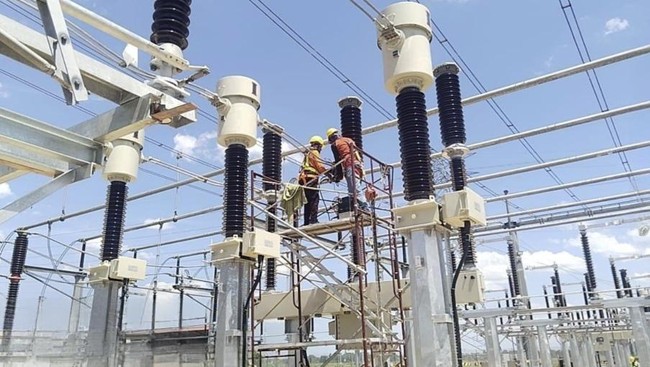
President Prabowo Subianto has targeted the construction of up to 100 gigawatts (GW) of solar power plants (PLTS) within about two years. If realised, this programme would become one of the largest energy projects in Indonesia’s history, even globally. Given its massive scale and short timeframe, the impact would no longer be gradual but could potentially serve as an investment shock that significantly accelerates economic growth.
Assuming utility-scale PLTS development costs range from USD 900,000 to USD 1 million per megawatt (MWp), the investment required for 100 GW is estimated at around USD 100 billion. Additionally, the construction of 320 GWh Battery Energy Storage Systems (BESS) is planned to support PLTS reliability. With an assumed BESS investment of USD 300,000 per MWh, approximately USD 100 billion would be needed for 320 GWh BESS.
However, the solar system does not stand alone. Additional investments are still required for strengthening transmission networks and developing supporting industries such as electrical components. If network support costs are around 25% and additional industry investments amount to USD 30 billion, the total investment for this programme could reach approximately USD 255 billion.
If realised within two years, the average annual investment could exceed USD 127.5 billion, equivalent to about 9.1% of Indonesia’s GDP per year. From a macroeconomic perspective, this represents a very large investment shock.
In development economics theory, large-scale investments generate cross-sector multiplier effects. The construction of power plants stimulates activity in the construction, financial services, manufacturing, logistics, technology, and labour sectors. Studies by various international institutions show that energy and infrastructure projects have a multiplier effect between 1.6 and 1.9.
Using a conservative multiplier of 1.7, the economic impact from investments of around USD 255 billion could approach USD 433.5 billion. If this occurs over two years, the additional annual economic activity could reach more than USD 216 billion. With a GDP of around USD 1.4 trillion, this figure equates to more than 15.5% of Indonesia’s GDP per year, making it one of the largest economic stimuli in national history.
To measure its impact on growth, the ICOR approach is used. Data from the Central Statistics Agency indicates Indonesia’s ICOR is in the range of 6.33 to 6.5. With a moderate ICOR assumption of 6.4 and annual investments of around 9.1% of GDP, the additional growth from direct capital formation would be in the range of 1.42%.
However, in large-scale energy projects, the impact extends beyond capital formation. The influx of foreign direct investment, growth in panel and battery industries, creation of green jobs, and reduction in industrial energy costs can significantly amplify these effects. The entry of FDI is a key factor. Renewable energy projects on a scale of hundreds of gigawatts are highly attractive to global investors due to their stable long-term cash flows and alignment with decarbonisation agendas.
If around 60% of the investment comes from foreign capital, the potential FDI could reach USD 150-153 billion in a short time. This flow would not only strengthen the energy sector but also deepen the domestic financial market, enhance industrial capacity, and accelerate energy infrastructure development.
In addition to power plants, the construction of 100 GW PLTS will create significant demand for panels, batteries, cables, steel structures, inverters, and other electrical components. Demand on this scale will encourage investors to build domestic production facilities, especially if supported by consistent industrialisation policies. With large nickel reserves and ongoing downstreaming programmes, Indonesia has the opportunity to become a centre for battery and clean energy industries in the region.
The creation of green jobs is a tangible impact. Large-scale construction requires labour in the construction, operation, maintenance, and supporting industries phases. In the long term, the energy transition can become a source of more sustainable job growth while improving workforce quality through the need for higher technological skills.
Another impact is the long-term reduction in energy costs. Solar energy has low production costs after installation, which can lower industrial electricity prices and increase export competitiveness. In a global context increasingly applying carbon standards, the use of clean energy also becomes an important factor in maintaining international market access. Thus, the energy transition creates growth through investment, productivity, industrialisation, and exports.
If all these effects are combined, the construction of 100 GW PLTS and 320 GWh BESS within two years has the potential to add around 1.5% - 2% to annual economic growth. This means that if Indonesia’s economic growth is around 5% per year, this programme could push it towards 6.5% - 7%.
It is very rare for a single programme to simultaneously create large capital formation, attract FDI, and expand in