
Accelerate Measles Immunisation Coverage, Health Ministry Ensures MR Vaccine Stock Is Safe
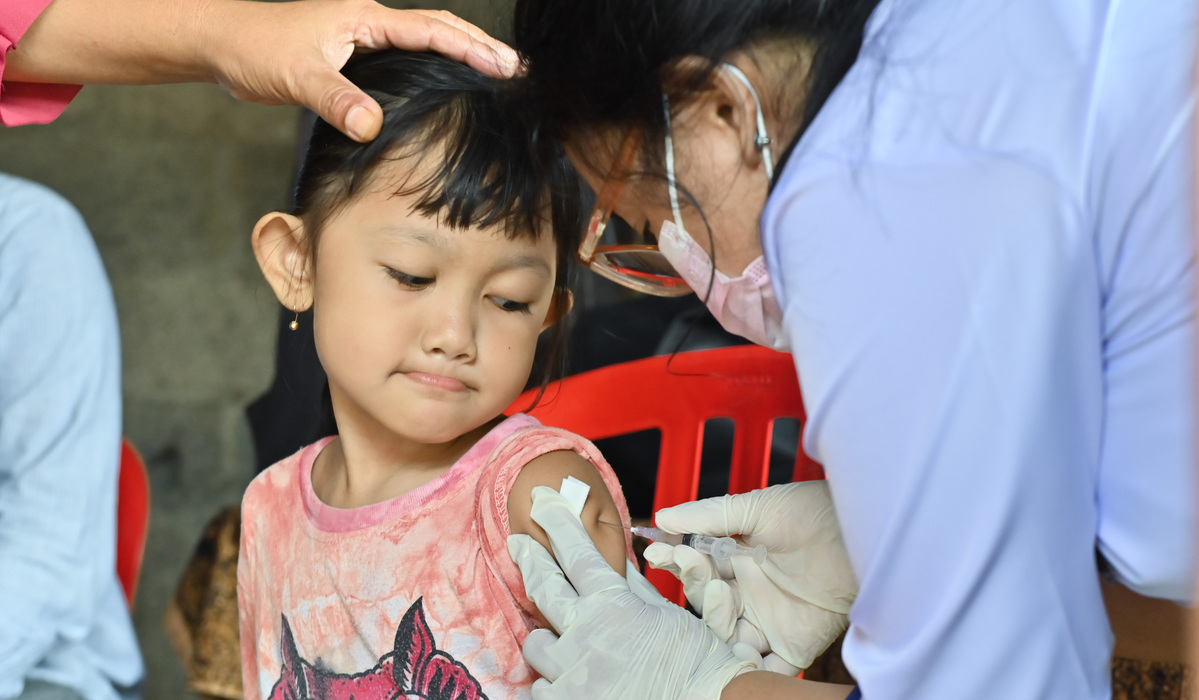
Indonesia’s Ministry of Health (Kemenkes) has confirmed that the stock of measles-rubella vaccine (Vaksin MR) is secure across the country to support accelerated immunisation in response to rising measles cases in several regions. Rizka Andalusia, Director-General of Pharmacy and Medical Devices at the Ministry of Health, said that the availability of the measles vaccine is a key factor in controlling outbreaks, alongside surveillance and early detection of cases. ‘In responding to extraordinary measles events, one important factor besides surveillance is the availability of vaccines for immunisation. The government has planned to accelerate the implementation of Outbreak Response Immunisation (ORI) in areas with high case numbers,’ she said in a statement on Saturday, 7 March.
As of 6 March 2026, MR vaccine stock in Indonesia was confirmed to be sufficient. At the central level, around 9.5 million doses are available, while regionally about 6.6 million doses have been distributed to provincial health offices, regencies/cities, and puskesmas (community health centres).
‘We are ensuring stock is available and continuing distribution from the centre to the regions, especially in areas where stocks are starting to decline. All provinces currently have vaccine stock levels above two months,’ she explained.
The Ministry of Health also monitors vaccine distribution and stock levels in real time through the Satu Sehat Logistik (SSL) system, which tracks inventory down to the level of puskesmas.
Monitoring results show that most provinces have adequate measles vaccine stocks, with 23 provinces having stocks for 2–5 months, nine provinces for 5–7 months, and six provinces with stocks of more than seven months.
These stocks are prioritised to support Outbreak Response Immunisation (ORI) and Catch Up Campaign (immunisation kejar) in 102 districts/cities across 11 provinces that are priority areas for measles control. Rizka also emphasised that the MR vaccine used in the national immunisation programme has undergone rigorous evaluation concerning safety, quality, and efficacy.
‘The vaccines used in the national immunisation programme have undergone review by the Ministry of Health and the National Immunisation Committee, and have also obtained distribution approval from the Badan Pengawasan Obat dan Makan (Badan POM). In other words, the vaccine has been confirmed as safe and effective for use,’ she said.
Based on study results and clinical trials, the MR vaccine is proven to be effective in boosting immunity to measles and rubella. Research shows a significant rise in antibodies after vaccination, with seropositivity rates reaching more than 90 percent among vaccinated children.
Regarding public concerns about side effects, Rizka explained that reactions after immunisation are generally mild and temporary. ‘Side effects of the MR vaccine are usually mild, such as mild fever, redness or pain at the injection site, and mild rashes. These reactions typically disappear within about 24 hours,’ she noted.
She reminded the public not to easily trust unverified information about vaccines. ‘Information claiming that vaccines contain microchips or are biological weapons are hoaxes. Vaccines contain only biological components that function to stimulate the immune system to recognise and combat disease,’ she asserted.
The Ministry of Health urged the public to always access health information from official sources, such as the Ministry’s communications channels, and to ensure children receive complete immunisation.
‘The central and regional governments will continue to ensure vaccine availability, smooth distribution, and immunisation services across Indonesia. We hope the public will actively participate in immunisation programmes to protect children from measles and the serious complications it can cause,’ he concluded. (H-3)
The Ministry reminds people to heighten vigilance against measles transmission ahead of the Hari Raya exodus and holidays. Public gatherings, especially during Eid celebrations, can raise transmission risk. The ministry reports 8,224 suspected measles cases up to March 2026. See the distribution of outbreaks and the schedule for additional MR immunisation for early childhood education pupils here.
The Indonesian Paediatric Association (IDAI) has highlighted a resurgence of measles in several regions linked to diminished herd immunity. Suspected measles cases in 2025 rose by 147 percent compared with 2024, underscoring the priority of early warning systems.
The Ministry also warned of the dangers of measles transmission during the period of homecoming travels and Eid al-Fitr holidays. The debate over public health messaging continues as authorities urge caution and validate information from official sources.
Copyright @ 2026 Media Group - mediaindonesia. All Rights Reserved