
Academics' Views on the DME Plan to Replace LPG
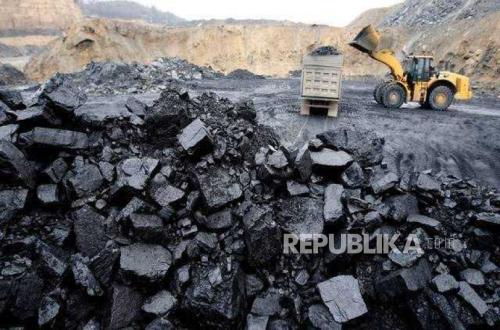
Professor Iwa Garniwa from the Faculty of Engineering at the University of Indonesia assesses that the plan to downstream coal into dimethyl ether (DME) as a substitute for liquefied petroleum gas (LPG) faces major challenges, particularly in terms of economics and the environment. He emphasises that the success of this programme is highly dependent on government policy interventions.
The coal gasification project is projected to increase the value added of domestic commodities. However, the large investment requirements and the sensitivity of production costs to global coal prices are crucial factors that cannot be ignored in its implementation.
“DME is highly sensitive to coal prices, and the capex for gasification is high. If coal prices are above 60 US dollars per tonne, DME is not competitive without subsidies,” said Iwa in Jakarta on Wednesday (6/5/2026).
He explained that, besides price aspects, DME production also faces environmental challenges. The emissions produced are said to be around 20 per cent higher than LPG, thus requiring carbon capture, utilisation, and storage (CCUS) technology to mitigate the impact.
The implementation of CCUS technology, he continued, implies an increase in investment and operational costs. The additional capex is estimated to reach 20 per cent, while opex increases by around 15 per cent, which ultimately further pressures the project’s economics.
“DME is a tactical short- to medium-term solution to quickly reduce imports by utilising existing assets. However, it cannot be a single solution due to emission and economic constraints,” said Iwa.
The government is pushing to accelerate the DME project with a target capacity of 1.4 million tonnes per year. This programme is projected to absorb around 7 million tonnes of low-calorie coal per year to reduce reliance on LPG imports, which currently account for around 75 per cent of total national needs of 8.3 million tonnes per year.
Iwa suggests that Indonesia learn from countries that have developed DME earlier, such as China, India, and the United States, particularly in designing policies that support the industrial ecosystem from upstream to downstream.
“China’s state support is very strong in the form of downstream subsidies, blending mandates, and coal price incentives. That can be a primary reference for gasification technology aspects and economic scale,” he said.
In China, DME production has reached around 7 million tonnes per year and is used as an LPG blend of up to 20 per cent for household and industrial needs. Policy interventions make DME prices more competitive than imported energy.
Meanwhile, in India, blending 20 per cent DME with LPG is estimated to reduce imports by up to 6.3 million tonnes per year and save billions of US dollars in foreign exchange. “India’s government role is quite high because it is relevant from the public policy perspective, targeted subsidy schemes, and a gradual approach. India faces similar challenges in transitioning from subsidised LPG,” said Iwa.
In contrast to those two countries, the United States is more focused on developing DME as an alternative fuel for heavy vehicles with a dominant private sector role. “The private sector role like Oberon Fuels is high. There are no direct subsidies, but incentives. This is relevant for small-scale technology aspects and emission standards, although the business model differs from Indonesia’s,” he said.
Iwa assesses that Indonesia has a combination of resource endowments and fiscal urgency similar to China and India. Synergy between execution speed, policy prudence, and environmental standards is the key to the success of the national DME project.
Alongside this, the global DME market prospects also show an increasing trend. The market value is projected to grow significantly over the next decade, with the Asia-Pacific region remaining the main driver of growth.
The Minister of Energy and Mineral Resources (ESDM), Bahlil Lahadalia, stated that the government is seeking alternative energy sources to reduce reliance on LPG imports, which reach around 7 million tonnes per year. “Our LPG needs are 8.6 million tonnes per year. Our installed production capacity is 1.9 million tonnes, but actual production is only around 1.6 to 1.7 million tonnes. So we import around 7 million tonnes per year,” said Bahlil.
He mentioned that LPG import spending reaches around Rp137 trillion per year, with subsidies borne by the state ranging from Rp80 trillion to Rp87 trillion. In addition to DME, the government is also actively examining the utilisation of compressed natural gas (CNG) for household needs.