
Academics urge state to strengthen human rights responsibilities in nickel sector
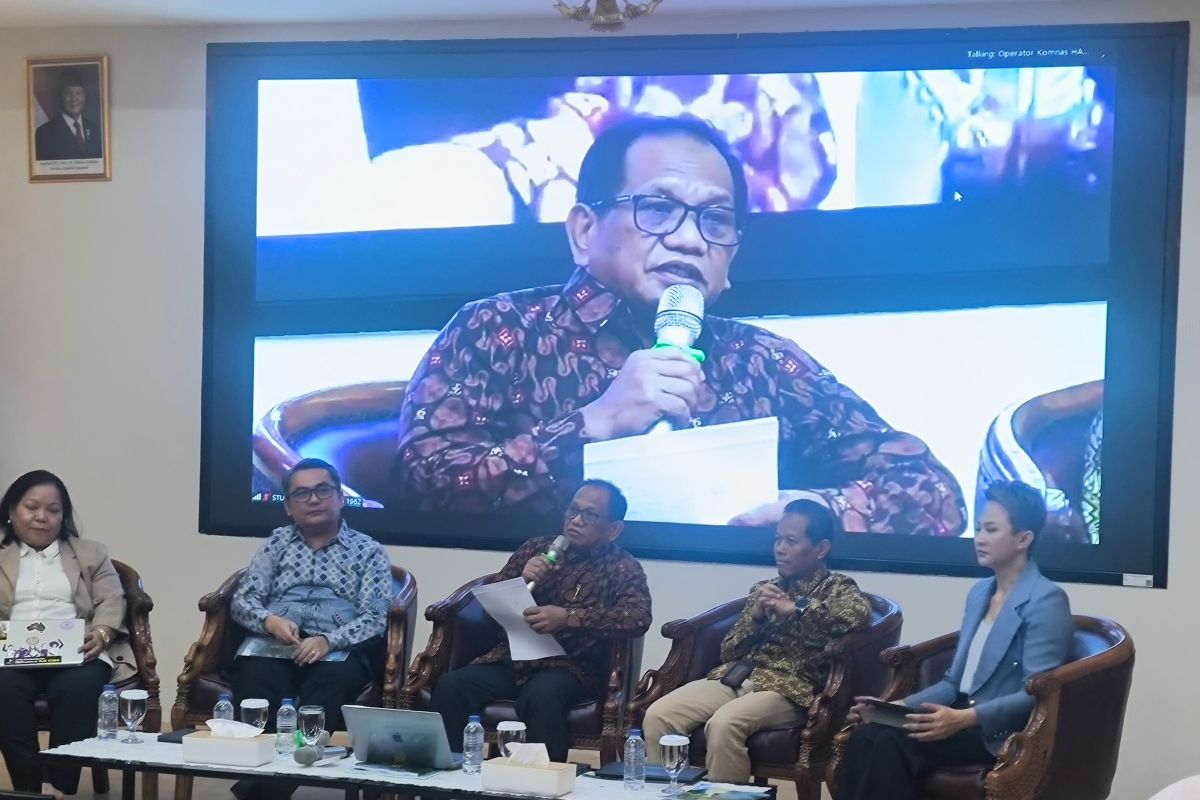
Jakarta (ANTARA) - Professor Dr Ir Abrar Saleng, from the Faculty of Law at Hasanuddin University, is urging the state to strengthen its responsibilities in fulfilling human rights (HAM) in the nickel mining sector, in line with the increasing scale of the industry and its impacts on society.
He assesses that a human rights approach must become the primary framework for viewing the management of natural resources, rather than merely a supplement to policies.
“So far, human rights have often been associated with violence, whereas major human rights violations are also related to the rights of communities over natural resources,” he stated during a discussion on the impacts of the nickel industry in Jakarta on Thursday.
According to him, Indonesia’s position as one of the world’s largest nickel producers demands greater responsibility in ensuring the protection of society and the environment.
“Indonesia is currently one of the world’s largest nickel producers, with around 40 percent of global production coming from Indonesia,” he said.
Abrar emphasised that the management of the nickel industry must align with constitutional guarantees for a healthy living environment.
“How can we talk about clean energy when the surrounding environment is unhealthy? Yet the constitution guarantees that every citizen has the right to a healthy living environment,” he said.
He also highlighted the need to strengthen institutional positions in promoting the implementation of human rights study results so that they do not remain merely at the discourse level.
“That means, even if the study is good, if the legal standing is not right, the government can also say it was not informed,” he said.
To that end, he encouraged active involvement of the Ministry of Human Rights in bridging study results with policy-making at the national level.
“If the Ministry of Human Rights is involved, that ministry has the authority to convey it to the President,” he said.
In addition, Abrar considers it important to adopt an approach based on human rights impact analysis in every mining sector policy.
According to him, the use of the Human Rights Impact Assessment (HRIA) method can strengthen the data base and analysis in decision-making.
With that approach, policies would not only consider economic aspects but also the protection of community rights and overall environmental sustainability.