
Academics Re-examine SOE Plan to Control Refined Sugar Imports
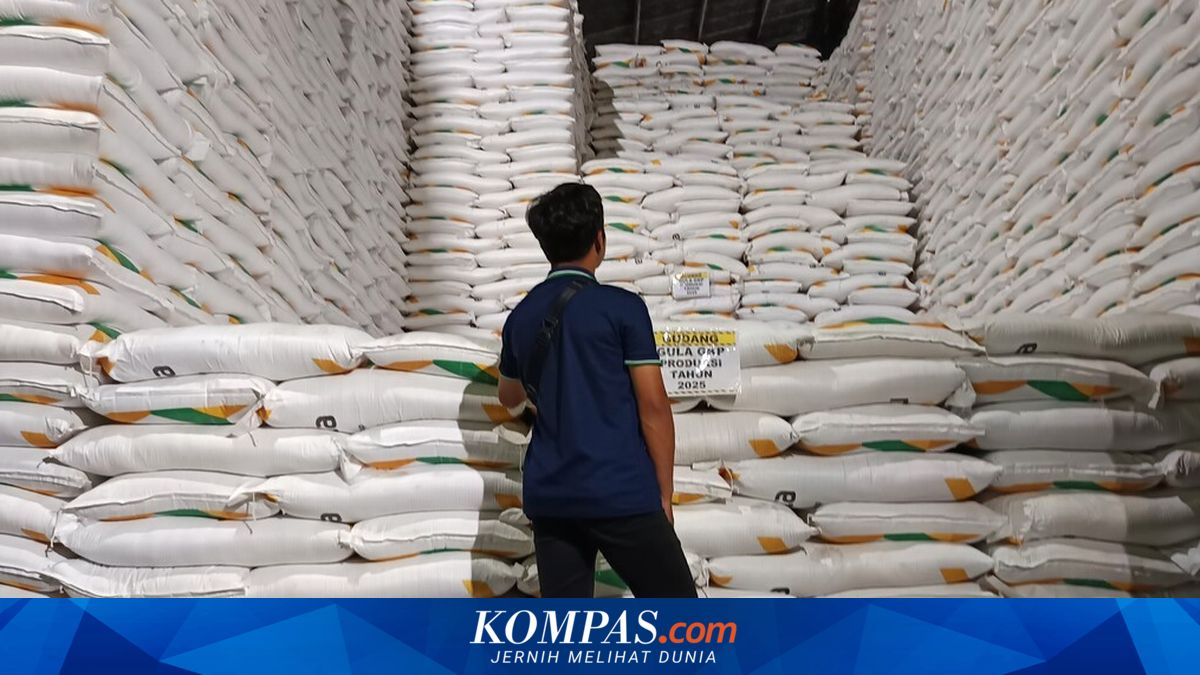
JAKARTA, KOMPAS.com - The government’s plan to shift imports of refined sugar raw materials from the private industry to state-owned enterprises (SOEs) has been urged for deeper examination. The plan is seen as potentially creating monopolistic practices.
Professor at the Faculty of Economics and Management, IPB University, Hermanto Siregar, stated that economic activities must be based on principles of productivity and efficiency. This means that every policy, including imports of refined sugar raw materials, should be directed towards producing lower costs with optimal output.
In this context, shifting imports of refined sugar raw materials to SOEs is not an issue, as long as the companies can carry out the import process more efficiently than the private sector.
“If indeed SOEs are capable of carrying out the production process in this case refined sugar, yes imports, more efficiently than the private sector, then go ahead. But what is very important is the study,” said Hermanto Siregar to Kompas.com on Saturday (25/4/2026).
“So study it first, will the implementation of imports by SOEs actually be more efficient or not compared to the current one?” he explained.
He noted that the policy of making SOEs the sole importers of refined sugar raw materials would, from an economic perspective, be categorised as a government monopoly.
“Is it, for example, the only import option basically by SOEs? What does that mean? In economics, that means monopoly, yes, government monopoly,” Hermanto explained.
This is because in a monopoly situation, there is only one player controlling the market, so competitive pressure becomes very minimal. When there are no competitors, the incentive to improve efficiency, reduce production costs, or enhance product or service quality tends to weaken.
“According to theory, we are academics, yes, according to theory, monopoly is not good in terms of efficiency and so on compared to healthy competition. Healthy competition,” he continued.
He stressed that the main problem in the national sugar industry is not solely the import scheme, but the inefficient production structure, both in the upstream and downstream sectors.
On the upstream side, sugarcane plantation productivity remains the main challenge. According to Hermanto, productivity improvements must be carried out through the application of cultivation technology, including the use of superior seeds that can increase harvest yields.