
Academics Bring Agricultural Innovation to Help Rebuild Post-Disaster Tapanuli
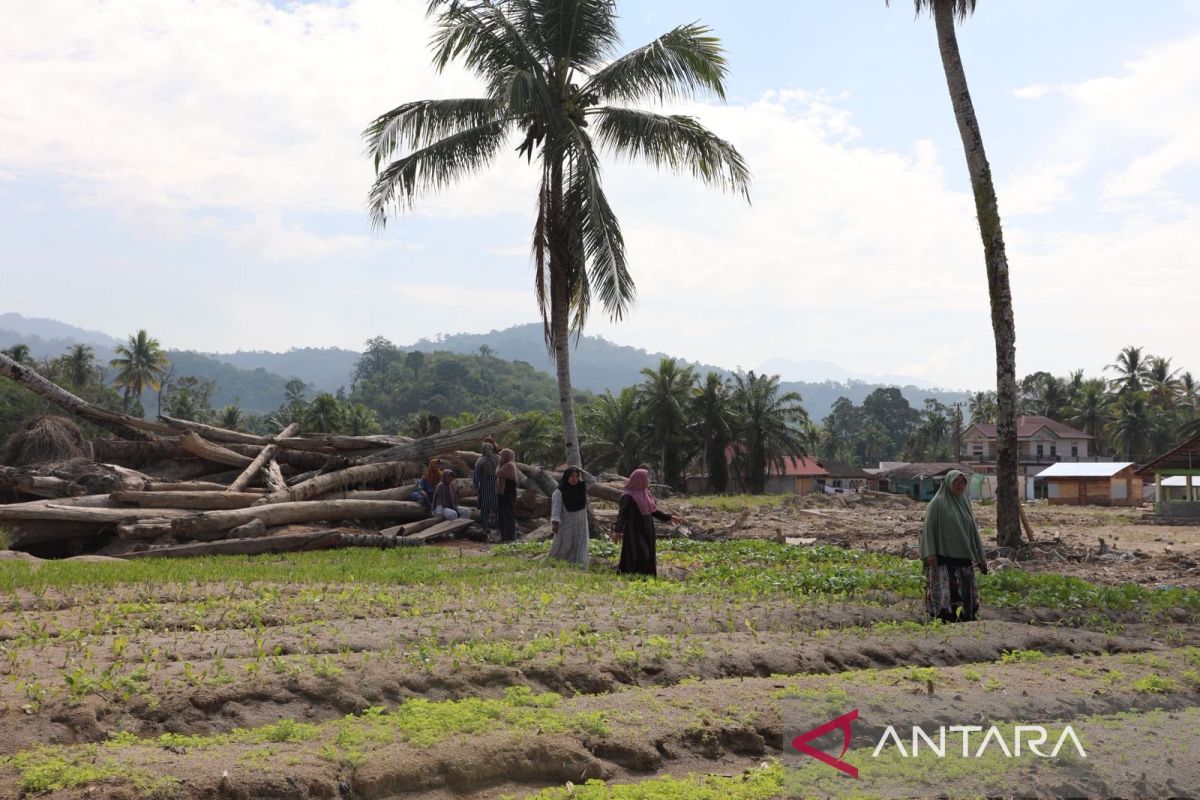
Jakarta (ANTARA) – A team of students from Muhammadiyah University of South Tapanuli (UM Tapsel) has introduced a range of recovery innovations based on agroecology, sociopreneurship, and trauma counselling for communities affected by flash floods in Huta Godang village, South Tapanuli Regency, North Sumatra.
The activity is one of the post-disaster recovery efforts that hit several parts of Sumatra towards the end of 2025, under the Program Mahasiswa Berdampak (Students with Impact Programme) initiated by the Ministry of Education, Science and Technology.
“Through an agroecological approach, we are teaching the preparation of organic matter as a growing medium and liquid fertiliser to improve soil fertility on flood-affected land,” said Darmadi Erwin Harahap, the Programme Implementation Team Leader from UM Tapsel, in a statement in Jakarta on Saturday.
Darmadi explained that the students, together with the community, were preparing land and planting various horticultural crops such as spinach, mustard greens, water spinach, and maize.
Darmadi outlined that the programme also includes sociopreneurship training to help the community revive economic activity after the disaster. Residents are trained to produce processed food products and learn how to market them via social media.
In addition to the economic and agricultural aspects, students from the Guidance and Counselling study programme also provided awareness on trauma management suffered by some members of the community after the flash floods.
One resident of Hutagodang Village, Mila Erlina Napitupulu, said the programme helps people see opportunities to repurpose land that had been affected by the floods.
“We can come together, learn collectively, and start trying to sell again. We hope such mentoring can continue so that the land here can be cultivated again on a larger scale,” Mila said.
Separately, I Ketut Adnyana, Director of Research and Community Service, Directorate General of Research and Development, stated that the 2026 Students with Impact Programme is part of transforming higher education to be more contextual and responsive to community needs.
“Students and the government will continue to stand with the community. The presence of students is expected to provide motivation and optimism for the community to recover from the ordeal, and to foster the belief that the future will be better through the utilisation of existing potential and technology in Aceh Tamiang. This is a tangible form of impactful higher education,” said I Ketut Adnyana.