
Academic Says Civilian Supremacy a Key Pillar That Must Be Maintained Together
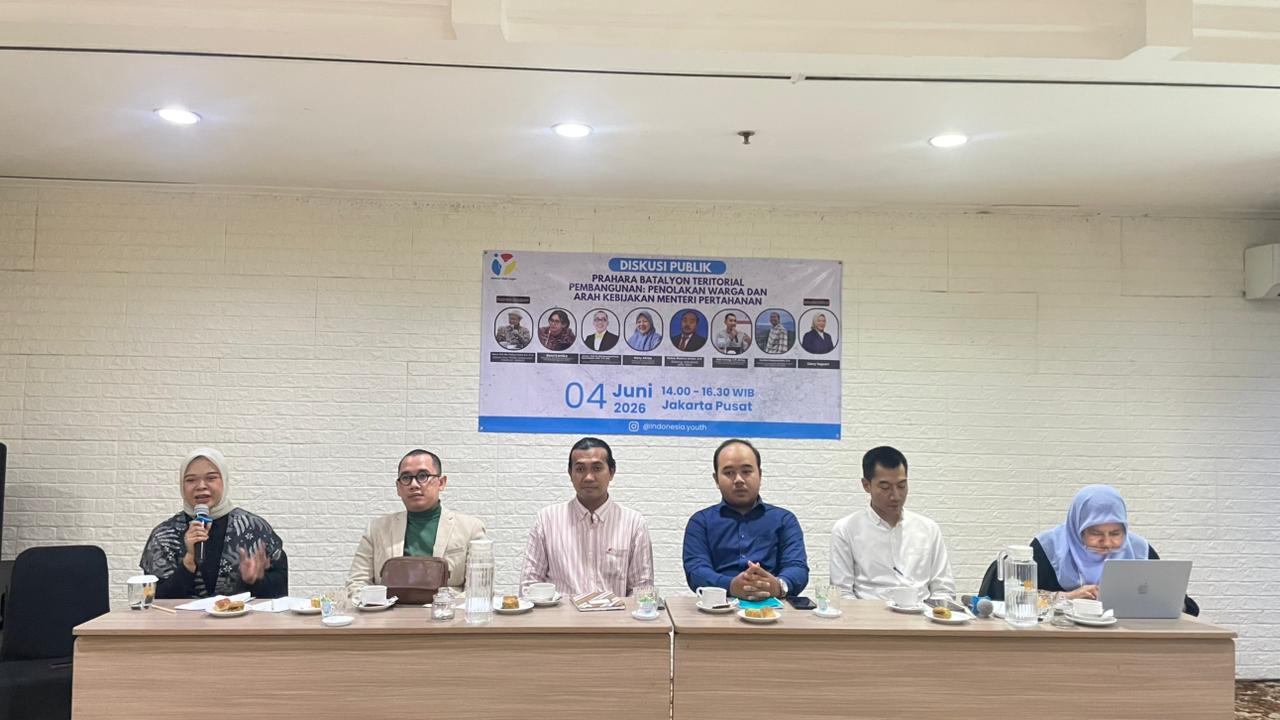
Plans to expand the role of defence instruments into the national development and food security sectors require thorough regulatory review, an academic has said. The move is considered important for maintaining institutional governance balance and ensuring the functional focus between military institutions and civilian technocratic ministries runs in harmony.
This governance issue was discussed by Binus University Business Law lecturer Muhammad Reza Syarifuddin Zaki during a public discussion titled ‘The Tempest of the Territorial Development Battalion: Community Rejection and the Defence Minister’s Policy Direction’ in Central Jakarta on Thursday.
The plan to form Territorial Development Battalions was previously presented by the Ministry of Defence as a strategic step to strengthen regional stability. Reza explained that in the constitutional system, strengthening civilian supremacy is one of the main pillars that must be maintained together. Therefore, the involvement of military personnel outside the core defence sector, such as in agriculture and regional infrastructure, must be placed within a clear legal corridor.
‘The public expects a firm division of roles. Domestic sectors and technical ministries should be optimised by civil apparatus who have functional expertise in their fields,’ said Reza.
In the forum, the plan to add 24,000 enlisted personnel and form new Territorial Development Battalion units also became material for scientific discussion. It was suggested that this policy consider aspects of state budget allocation efficiency, so as not to trigger duplication of functions with existing civil government instruments.
Several points of arrangement highlighted included optimising the functions of technical ministries such as the Ministry of Agriculture and the Ministry of Public Works, which already have professional personnel. Secondly, the importance of focusing the defence budget on modernising primary weapons systems and mastering modern defence technology.
Furthermore, there is a need to improve the welfare and capacity of civil farmers through education and guaranteed market access as a long-term solution for the food sector. ‘If the goal is to strengthen food sovereignty, the most sustainable approach is to empower farmers and the younger generation with agricultural technology support, so that this sector becomes more promising,’ Reza elaborated.
Reza also presented a comparative analysis of international political dynamics in several developing countries throughout the 2022 to 2024 period. Based on global business law and political studies, the shift in the role of defence institutions into the bureaucratic and strategic economic realms at the global level tends to affect the balance of power distribution.
Therefore, he recommended that the draft policy for the formation of the new battalions open up wider space for public involvement to mitigate overlapping administrative authorities in the regions.