
Academic: Implementation of biointensive techniques reduces agricultural production costs
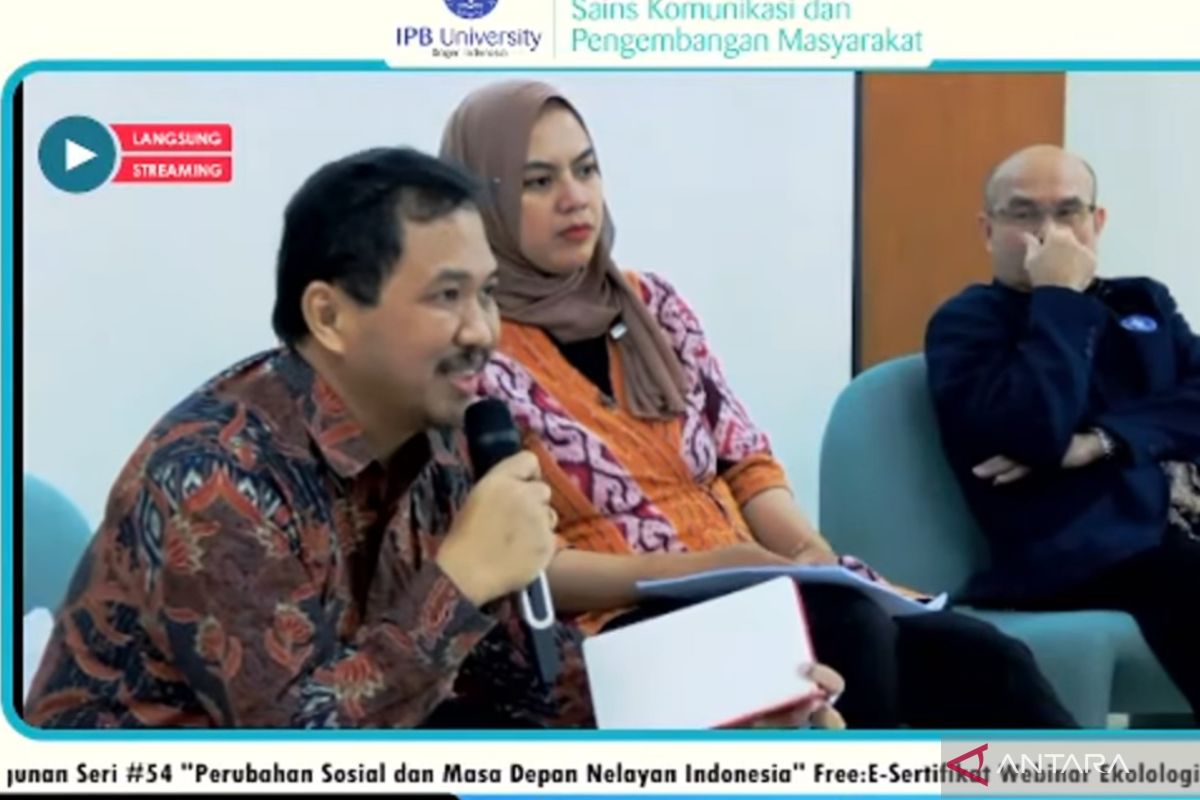
Jakarta (ANTARA) - Head of the Centre for Agricultural and Rural Development Studies at Bogor Agricultural University (IPB), Ivanovich Agusta, assesses that the implementation of biointensive techniques has the potential to reduce fertiliser and pesticide use for smallholder farmers amid rising production costs due to global conflicts.
“Biointensive rice techniques reduce the use of manufactured fertiliser by up to 30 per cent and pesticides by up to 70 per cent, without decreasing production,” said the man familiarly known as Ivan, quoted in Jakarta on Thursday.
Biointensive techniques are a farming cultivation method that optimises land efficiently by reducing the use of chemical fertilisers and pesticides through an ecological approach. Meanwhile, smallholder farmers are those with land control of less than 0.5 hectares, who generally have limited capital and are vulnerable to fluctuations in agricultural input prices.
According to him, this group is the most affected by the rise in production costs triggered by the Iran conflict with the United States and Israel, as well as the threat of prolonged drought due to the El Niño phenomenon.
“Mitigation for farmers cannot be underestimated, as it will coincide with prolonged dry conditions,” he stated.
Thus, according to Ivan, biointensive techniques become one approach that can be implemented through guidance and extension services based on ecological cultivation.
“Guidance and extension services are directed towards saving the use of manufactured fertilisers and pesticides, and shifting to ecological cultivation technology,” he said.
He emphasised the importance of the role of extension workers in activating communication forums among farmers to share experiences.
Ivan stated that the government needs to direct more substantial mitigation policies at the village level to maintain the sustainability of smallholder farmers’ livelihoods.
Meanwhile, Professor from the Department of Plant Protection, Faculty of Agriculture at IPB, Suryo Wiyono, revealed that the ongoing global conflicts can disrupt global fertiliser production and logistics.
He conveyed that 42.89 per cent of phosphorus fertiliser raw materials come from Europe and the Arab region. The distribution of these raw materials is now hampered by security risks and soaring shipping insurance costs.
For Indonesian farmers, he stated that one of the threats faced is a 32.4 per cent surge in nitrogen fertiliser prices, and pesticides are predicted to rise by 20–30 per cent.
Therefore, biointensive rice cultivation techniques and the application of ecological farming are several adaptation strategies that can be pursued.