
Academic and Social Pressure Weighs on Students, Mental Health Comes into Focus
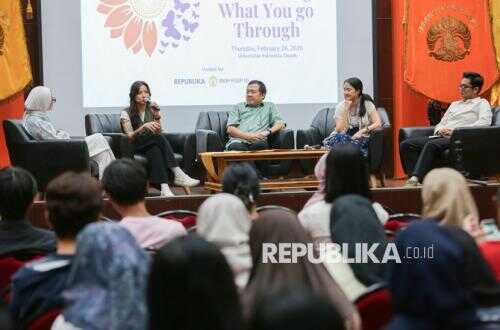
DEPOK — Febri Susanto P, a 2021 graduate from the Department of Social Welfare at the Faculty of Social and Political Sciences, Universitas Indonesia, has highlighted how academic and social pressures continue to burden students throughout their university studies. He shared his experience navigating academic demands, organisational activities and environmental adaptation challenges that significantly impacted his mental health.
Febri completed his four-year degree whilst participating in various student activities, including the Student Executive Board (BEM) and departmental student association. These commitments ran parallel to rigorous academic requirements and social dynamics that demanded significant adaptive capacity.
“When discussing workload, nearly all students experience it. I felt the same. The pressure comes not only from academic tasks but also from the social environment,” he stated during a discussion forum organised by Republika in collaboration with the Student Counselling Board (BKM) at FISIP UI in Depok, West Java on Thursday (26 February 2026).
Febri noted that social pressure was particularly acute during his initial semesters. As a student from outside Jakarta, he had to adjust to a new environment whilst building relationships during a period when lectures were conducted online due to the pandemic. Face-to-face classes only resumed in the third semester, significantly limiting time for socialising and environmental familiarisation compared to students who attended classes in person from the outset.
Academic pressure also manifested through various coursework assignments. According to him, the burden extended beyond individual tasks to group projects that demanded coordination and shared responsibility.
“From my personal experience, group assignments actually caused more stress than individual ones,” Febri explained.
In his final semesters, pressure intensified as he balanced thesis work with organisational commitments and family issues. During this phase, Febri experienced deteriorating lifestyle patterns. He frequently slept late into the night and occasionally did not sleep at all, yet continued his daily activities despite declining physical health. In one stretch, he managed only approximately one hour of sleep whilst maintaining a full 24-hour schedule of activities.
The situation worsened when recurrent nightmares plagued his attempts to sleep longer. This condition persisted for two to three weeks, progressively impairing daily functioning and concentration.
“I only realised after observing my own patterns. I was sleeping just one hour for 24 hours of activities. When attempting to sleep longer, nightmares would emerge,” he recounted.
Upon recognising his condition as abnormal, Febri sought professional assistance. He initially registered for services at the Makara Clinic at UI, but the lengthy waiting period prompted him to seek faster alternatives. After receiving information from a lecturer, he accessed the Student Counselling Board services at the faculty level. The prompt response enabled him to quickly commence counselling sessions and receive professional support.
This experience became an important lesson regarding how academic and social pressures affect student mental health. Febri emphasises that self-awareness and access to readily available support services constitute critical factors in maintaining psychological wellbeing.
The phenomenon of layered pressure among students demonstrates the necessity for stronger institutional campus support. Preventive measures and responsive services are expected to help students navigate their studies with greater health and balance.