
Abundant Supply: Prices of Red Bird's Eye Chilies Begin to Fall Today!
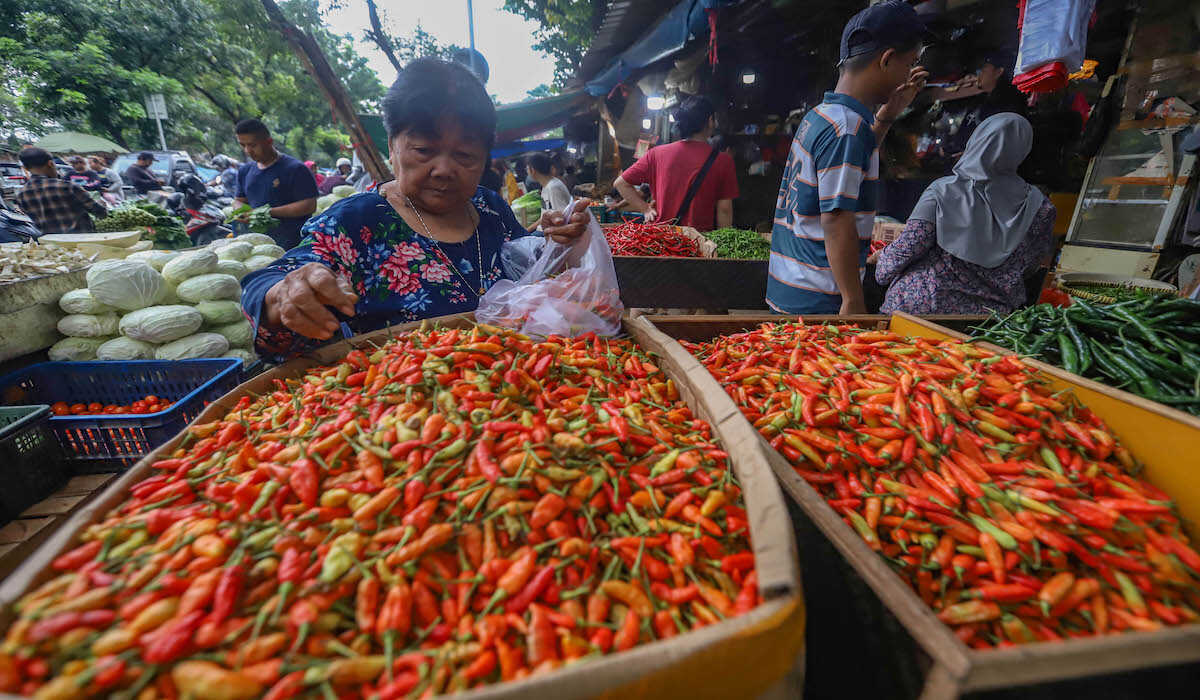
Good news for consumers, the price of red bird’s eye chilies across Indonesia is starting to show a downward trend. According to data from the Task Force for Addressing Price, Security, and Quality Violations of Food, this price decrease coincides with improved weather conditions and increased harvesting activity in several major production centers.
The Director of Supply and Price Stabilization at the National Food Agency (Bapanas), Maino Dwi Hartono, stated that previously, chili prices had fluctuated due to high demand and extreme rainfall that hindered the harvesting process.
“With the weather starting to improve, the harvest is increasing, so the supply can be increased to meet market demand and prices are starting to stabilize,” said Maino in an official statement on Wednesday (February 25).
Currently, the supply of chilies entering the Kramat Jati Main Market (PIKJ) in Jakarta averages 14-18 tons per day. This stable supply has helped to lower prices at the trader level to around IDR 65,000 per kilogram (kg), a decrease compared to the previous period.
The latest distribution to PIKJ today includes supplies from Enrekang (South Sulawesi) of 2.1 tons and Magelang (Central Java) of 2.5 tons. At the wholesale level, prices are recorded at around IDR 50,000 per kg, while retail prices in traditional markets range from IDR 60,000 to IDR 65,000 per kg.
Perbandingan Harga Cabai di Berbagai Daerah:
The Champion Chili representative from Sleman, Ardi, confirmed that the availability of chilies at the farmer level is actually sufficient. The main constraint previously was the weather, which hindered optimal harvesting.
“Currently, there are no stocks in warehouses; what is available is standing crop or ready-to-harvest plants in the fields. If the weather continues to support, the number of harvests will continue to increase,” explained Ardi.
The Deputy for Availability and Food Stabilization at Bapanas, I Gusti Ketut Astawa, has instructed the Food Task Force in all regions to tighten supervision in distribution channels and auction points. This aims to prevent prices from soaring above the Recommended Selling Price (HAP).
Local governments, such as in Jambi Province, are also starting to prepare market operations through transportation subsidies and Food Distribution Facilitation (FDP) to ensure that prices remain affordable for consumers without harming farmers.
The synergy between the central government, law enforcement agencies, and business actors is expected to maintain the stability of chili prices, especially in anticipation of increased demand during the upcoming Ramadan 2026.
The Indonesian Chili Association (APCI) predicts that after the Chinese New Year period, the price of red bird’s eye chilies will gradually decrease.
The Director General of Animal Husbandry and Animal Health, Agung Suganda, said that the results of the inspection showed that prices were relatively stable and supply was available.
The tradition of homecoming, which stimulates community mobility, also needs to be prepared for in advance.
Based on the National Food Balance Sheet Projection as of January 6, 2026, commodities such as rice, chicken meat, eggs, sugar, and beef are still sufficient for the next three months.
“To all food business actors, please use the reference prices that have been set by the government, especially during Ramadan until Eid al-Fitr.”
A study of pine tree rings in Spain revealed the most extreme weather anomaly since the 1500s. Rainfall instability has now reached a critical point.
The Indonesian Agency for Meteorology, Climatology, and Geophysics (BMKG) is warning of the potential for increased hydrometeorological disasters in the next week.
The Indonesian Agency for Meteorology, Climatology, and Geophysics (BMKG) reminds the public that Indonesia has officially entered the peak of the rainy season from November 2025 to February 2026.