
Absorbing Public Aspirations, MPR Deputy Speaker Urges Action on Rob Crisis in Demak
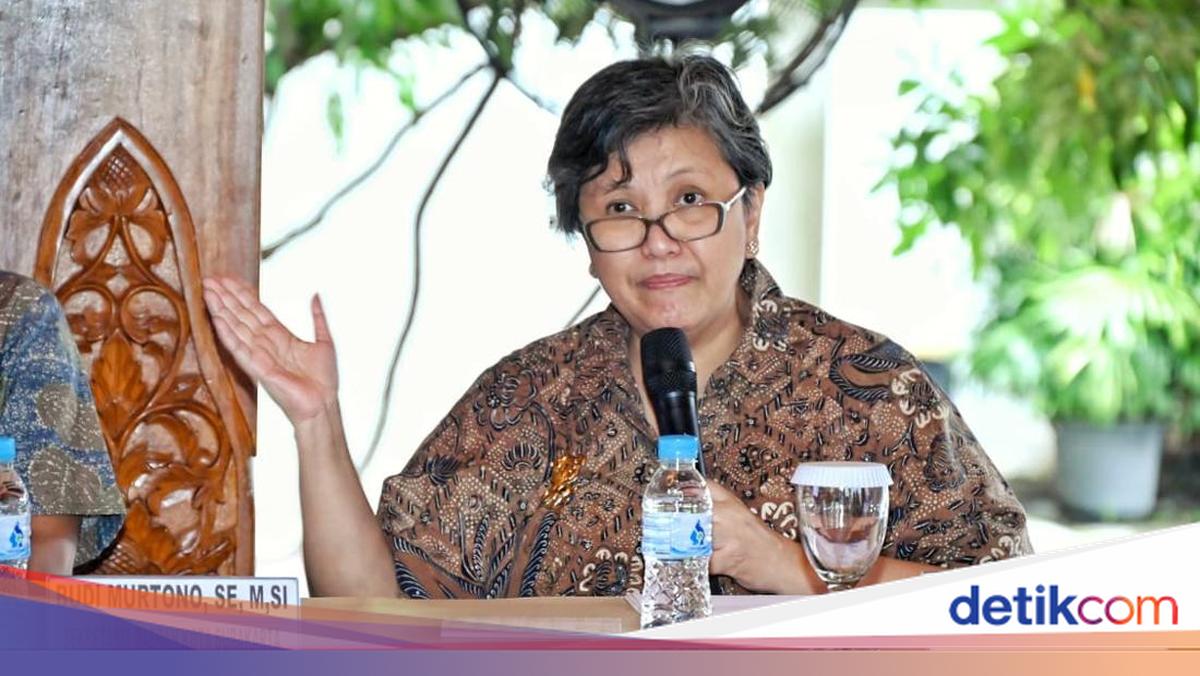
“What is happening in Sayung, Demak, is no longer just tidal flooding, but a structural crisis causing the gradual loss of land and living spaces for the community,” emphasised Rerie in her statement on Tuesday (5 May 2026). She made these remarks following up on the results of absorbing public aspirations during the recess period in Sayung Subdistrict, Demak Regency, last week. Recent research from the National Research and Innovation Agency (BRIN) records that 65.8% of the northern Java coastline has experienced abrasion over the period from 2000 to 2024. These findings were presented by Researcher from BRIN’s Centre for Climate and Atmospheric Research, Tubagus Solihuddin, during the Earth and Maritime Research Organisation (ORKM) Expose and Focus Group Discussion (FGD) themed ‘Resilient Pantura, Sustainable Indonesia for the Integration of Science, Innovation, and Coastal Resilience’ at the BJ Habibie Building, Jakarta, on Monday (4 May). Based on Sentinel satellite imagery analysis, changes in the northern Java coastline are dominated by erosion at 65.8%, while accretion only reaches 34.2%. This phenomenon is considered unusual as it occurs in delta areas that are naturally sedimentation zones. The condition is triggered by various upstream activities, such as canalisation, river diversion, and the construction of road infrastructure and dams that disrupt sediment supply to the coast. Furthermore, the impacts are already visible in several areas. In Tanjung Pontang, Serang, Banten, land area of 1.72 square kilometres has been lost due to erosion. Meanwhile, in Pantai Bahagia, Muara Gembong, Bekasi, West Java, seawater has penetrated up to 4 kilometres inland, submerging more than 1,000 hectares of ponds. Similar conditions have occurred in Legonkulon, Subang, West Java, with seawater intrusion up to 2 kilometres, submerging around 700 hectares of ponds. In Indramayu, West Java, abrasion has even damaged village roads spanning 500 metres to 1 kilometre. In the Demak area, seawater has been recorded to have entered up to 5-6 kilometres inland, submerging rice fields and residential areas. Rerie emphasised that what is happening in Sayung is not just a local case, but a national warning for all northern Java coastal regions. Throughout 2026, 6,600 hectares of Demak territory have been affected by tidal flooding and permanent inundation. The affected area has increased dramatically from last year’s recorded 1,200 hectares. Rerie, a legislator from Electoral District II of Central Java (Demak, Kudus, and Jepara Regencies), revealed that around 15,000 households in 20 villages are directly affected. Only about 5 villages in Sayung remain as rice field areas. Furthermore, Rerie disclosed that the majority of the community has lost agricultural land and is forced to switch to pond farming without adequate knowledge, as well as entering the informal sector with unstable incomes. “This transition occurs forcibly, without readiness and without systemic support,” said Rerie, explaining the field findings during the recess. The senior member of the NasDem Party’s High Council also conveyed several community complaints, including rice fields that can no longer be planted, drastically reduced incomes, damaged or flooded homes and environments, and continuously rising living costs. “They are left to face those conditions on their own,” said Rerie, conveying the complaints of the community in Sayung Subdistrict. In addition, Rerie urged concrete and measured steps in handling the tidal flooding in Sayung. Several steps taken, she added, must be systemic and long-term based, with real economic transition programmes for affected communities, strengthened social protection, coastal ecosystem restoration, and sustainable coastal area policy arrangements. Rerie stressed that physical handling such as dyke construction is not enough without accompanying economic transition policies and social protection that favour the community. “What is lost in Sayung is not just land. What is lost is living space, certainty, and the future,” concluded Rerie.”