
Aboe Bakar Al Habsyi Apologises for Claiming No Prison is Free from Drugs
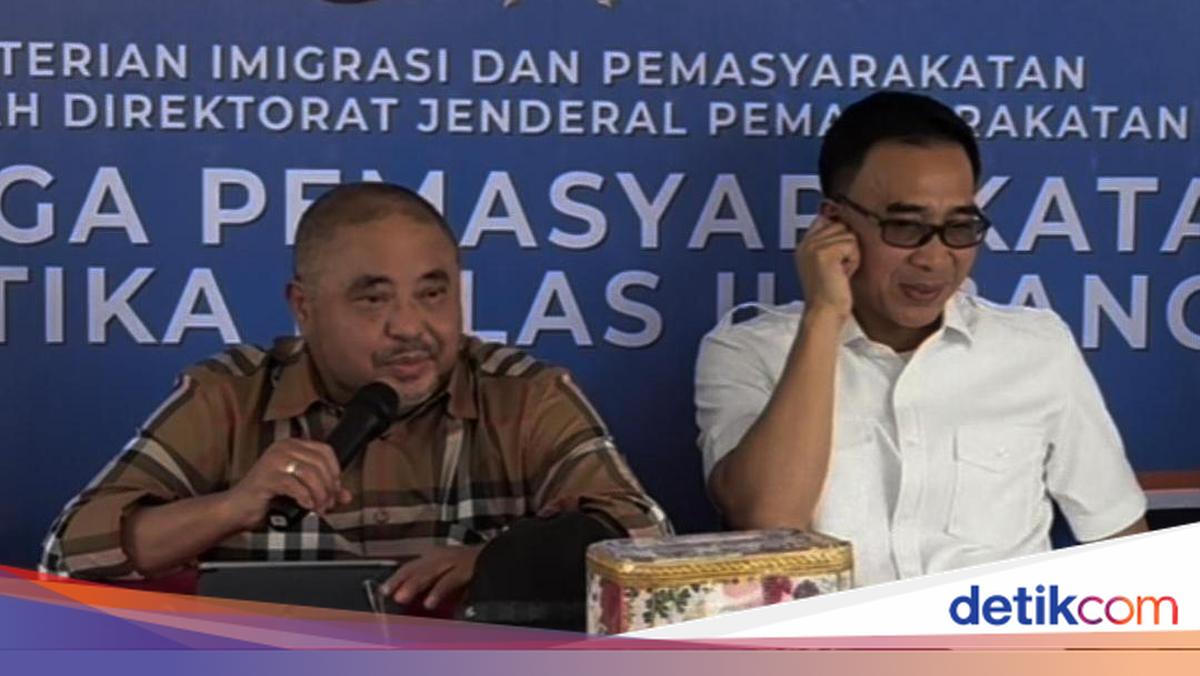
Aboe Bakar initially expressed disbelief that any prison in Indonesia is free from drugs. He made this statement during a Commission III meeting with the National Narcotics Agency (BNN) on Tuesday (7 April 2026).
“I don’t believe it, sir. Currently, prisons are indeed dens for drug trading, period. If you don’t believe me, check inside; it’s a lie if officials say ‘no, no, no’. I have people inside, sir, who provide detailed stories. In fact, the way they use it is forced, turning them into users,” said Aboe Bakar during the meeting.
Aboe Bakar claimed that every prison has drug players. He then urged a Commission III DPR RI discussion with partners, Minister of Immigration and Correctional Services Agus Andrianto, and Director General of Corrections Mashudi to address drugs together.
“So it’s a lie; in my view, there isn’t a single prison without its players. Come on, let’s sit down there, invite the minister, the director general, go to the field all together. So we truly understand that the drug problem needs to be faced together,” he continued.
From a video viewed by detikcom on Sunday (12 April), Aboe Bakar appeared to be on a working visit to the Class IIA Bangli Narcotics Prison in Bali. He said the purpose was to prove his statement from the BNN meeting.
“I have to prove it because yesterday I spoke quite firmly and sharply; in my view, there isn’t a single prison without drug trading,” said Aboe Bakar.
He then said his statement was refuted by the facts after visiting the Class IIA Bangli Prison. He then gave his appreciation.
“Immediately refuted, I like it. Immediate reaction. The Class IIA Bangli Prison is a witness that it is clean from drugs. Applause for Bangli,” he stated.
During this working visit, he apologised for the accusation that ‘prisons are drug trading dens’. He said human error is normal, and the most important thing is to correct mistakes.
“Thanks and apologies if I had rash words along the way, in controlling, that’s normal. Human error is also normal, but the most important thing is the effort to improve. Allah does not love the cleanest people, no, but Allah loves those who cleanse themselves,” he concluded.
Current Prison Conditions
The conditions of correctional institutions (prisons) and detention centres in Indonesia have improved in terms of overcrowding. Currently, overcrowding in prisons has dropped to 85%.
In June 2025, the overcrowding rate reached nearly 100%. And by August 2025, it was successfully reduced to 93%.
Based on data from the Ministry of Immigration and Correctional Services (Kemenimipas) during an audience with the National Narcotics Agency (BNN) on Thursday (9 April 2026), the number of inmates in prisons and detention centres in Indonesia totals 271,468 people, consisting of 215,156 convicts and 56,312 detainees. Ideally, the number of inmates in prisons and detention centres is 146,860 people.
Kemenimipas stated that half of the total number of inmates in prisons and detention centres have backgrounds in drug cases, namely 146,282 people or 53.9%. Kemenimipas has taken several strategic steps to reduce overcrowding rates, lower the potential for new drug networks or other crimes, strengthen segregation of high-risk inmates, and break the chain of drug circulation in prisons.
A major step taken by the ministry under the leadership of Minister Agus Andrianto is transferring inmates or prison residents to the Technical Implementation Units (UPT) of the Directorate General of Corrections (Ditjenpas) on Nusakambangan Island, Cilacap, Central Java. Those sent to the ‘prison island’ are those with high-risk status based on assessments.
Since taking office in November 2024, Minister Agus ordered Ditjenpas to profile and assess inmates, and as of 27 March 2026, the number of high-risk convicts sent to Nusakambangan Island totals 2,284 people. Nearly 80% of the high-risk inmates transferred are involved in drug cases.
In addition to transferring high-risk inmates, Minister Agus Andrianto directed Ditjenpas to implement the One Stop Service Correctional Rehabilitation approach in 2025, in collaboration with local BNN and related professional organisations. The reason is to serve the medical and social rehabilitation needs of prison inmates in one holistic flow.
Now, 531 Ditjenpas UPTs, including detention centres, prisons, and special child development institutions (LPKA) in 33 regional offices across Indonesia, have implemented the One Stop Service Correctional Rehabilitation concept. This programme reaches 36,806 people.
Those rehabilitated were previously screened based on addiction factors and needs assessments. This programme is not only remedial but also preventive. Therefore, participants are not limited to narcotics case convicts or detainees only.
The fruit of the One Stop Service Correctional Rehabilitation programme is 7 certified SNI Narcotics Prisons for rehabilitation service standards, namely Class IIA Jakarta Narcotics Prison, Class IIA Cirebon Narcotics Prison, Class III Sawahlunto Narcotics Prison, Class IIB Muara Sabak Narcotics Prison, Class IIA Tanjung Pinang Narcotics Prison, Class IIA Samarinda Narcotics Prison, and Class IIA Bangli Narcotics Prison.
Kemenimipas conducted data collection on all Ditjenpas UPTs during the period January to December 2025. There were 140 incidents of attempted drug smuggling into prisons and detention centres in 24 regional offices and 99 UPTs that were successfully thwarted by 272 officers.
The results of these disclosures were handed over by Ditjenpas UPT Kemenimipas to the police as a form of transparency, up to the transfer of inmates to the supermaximum security prison on Nusakambangan as a form of commitment and firmness in eradicating dark drug circulation inside prisons.
Not closing the fact of involvement by rogue elements, Kemenimipas stated that during the period 1 January