
AALI Allocates Rp1.4 Trillion in Capex, Focusing on Replanting 8,000 Ha of Palm Oil
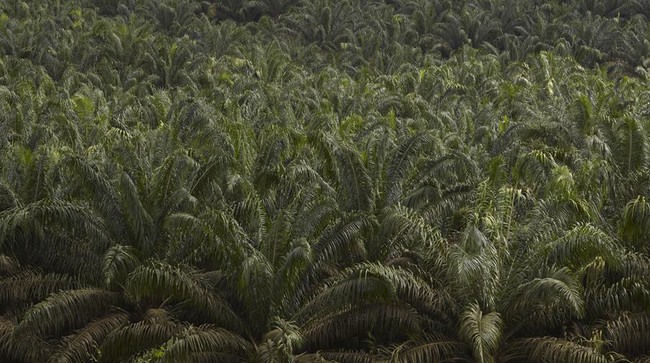
Jakarta, CNBC Indonesia - The Astra Group palm oil issuer PT Astra Agro Lestari Tbk (AALI) has allocated working capital or capital expenditure (Capex) of Rp1.4 trillion for 2026, with the largest portion used for planting seedlings (plantation).
AALI President Director Djap Tet Fa stated that this working capital budget represents a 79% year-on-year (yoy) increase compared to last year’s realisation of Rp782 billion.
“The majority of CAPEX in 2026 will be allocated to plantation, with 63.8% for planting. Then 19.8% for mills and ports, and 16.4% for non-plantation items such as various transport vehicles to support production and productivity,” explained Djap Tet Fa during a Public Expose in Jakarta on Wednesday (15/4/2026).
Furthermore, Djap emphasised that the company’s primary priority this year is replanting. In this regard, AALI is focusing on accelerating replanting by increasing the replanting area and using superior quality seedlings.
“The increase in replanting land area is also a focus, where over the past two years the company has increased the replanting area from an average of 4,000 hectares per year to 5,000 hectares per year last year,” said Djap.
Further, this crude palm oil (CPO) company plans to accelerate replanting with a minimum target of 6,000 hectares over the next four years. Nevertheless, the company remains ambitious to achieve a replanting area of 8,000 hectares by the end of 2026.
On the other hand, Djap Tet Fa revealed that the Iran-United States conflict is also affecting the operational costs of the palm oil industry. This is due to rising raw material prices, including diesel and fertiliser.
He explained that global oil prices are fluctuating like a roller coaster, influenced by statements from world leaders. This increase has driven a surge in non-subsidised diesel prices, which by April had risen nearly 90% from the range of Rp14,000-Rp15,000 to nearly Rp25,000 per litre.
In addition to energy, fertiliser costs have also seen a significant increase. This is because fertiliser raw materials such as urea and ammonia are highly dependent on global gas and oil prices.
The rise in energy costs is also impacting logistics expenses. Transporters are facing higher operational costs, which in turn pressures the distribution costs of the palm oil industry.
“Therefore, we are also implementing several strategies on how to deal with the current conditions, one of which is to efficiency costs,” he clarified.
In terms of performance, AALI recorded a net profit of Rp1.5 trillion, or up 28.2% year-on-year (yoy). Meanwhile, net revenue also increased by 31% to Rp28.7 trillion compared to the previous year’s Rp21.8 trillion.
The increase in production volume contributed to the revenue growth of the company, driven by a 6% yoy rise in CPO production to 1.2 million tonnes and kernel production up 8% yoy to 252,000 tonnes. Meanwhile, CPO and derivative sales volume rose 13% to 1.8 million tonnes.
The company’s improved performance was also due to supply and demand factors as the main catalyst for the commodity sector. Tight CPO supplies have driven the average selling price (ASP) up 11% yoy from Rp12,883 per kilogram to Rp14,316 per kilogram in 2025.