
A World in Turmoil! Trade Minister Abruptly Calls Palm Oil Exporters for Tomorrow, What's Happening?
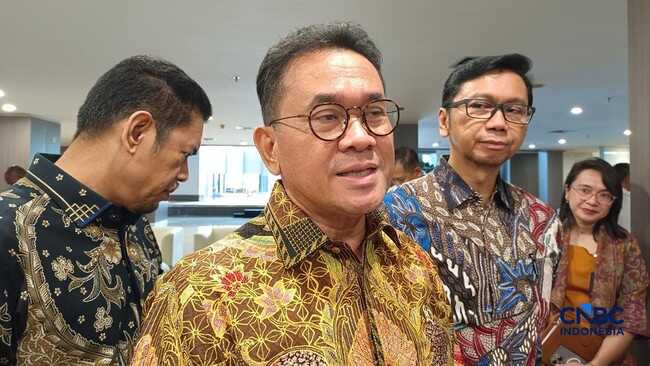
Jakarta, CNBC Indonesia - The Indonesian Trade Minister, Budi Santoso, will summon exporters, particularly palm oil exporters, to discuss potential impacts of the escalation of the conflict between the United States, Israel, and Iran on national palm oil exports. This move follows concerns among business players that the conflict in the Middle East could disrupt sea transport routes, which are the main channels of global trade, including Indonesia’s crude palm oil (CPO) exports.
Tomorrow, yes, tomorrow I will meet (the exporters), but we also cannot calculate yet. Yesterday we studied it with BK Perdag (Badan Kebijakan Perdagangan), but we also cannot confirm before we get input from business players, because, you know, hopefully the war ends quickly,” said Budi when met at the Ministry of Trade office, Jakarta, Thursday (5 May 2026).
According to him, the government still needs to hear directly from business players to determine the potential impacts if disruptions to international trade routes truly occur.
Budi also stressed that if CPO exports are truly disrupted due to the conflict, the government will seek alternative export markets to maintain the stability of trade in the commodity.
“Because if that (CPO exports) is indeed disrupted, then we have to find other markets. That’s what I will discuss with exporters tomorrow,” he said.
The exporters to be invited for discussion are business players who have long been in contact with the Ministry of Trade, including representatives from exporters’ associations.
“Yes, it will be the exporters who are regularly in touch with the Ministry of Trade, for example those from GPEI (Gabungan Perusahaan Ekspor Indonesia),” he said.
Earlier, palm oil industry players began to fear the impact of the conflict involving the US, Israel, and Iran on the smooth operation of exports. Eddy Martono, the chairman of the Indonesian Palm Oil Producers Association (Gapki), said the biggest risk to watch is disruption to sea transport.
According to Eddy, if shipping lanes are disrupted, export activity will be affected, especially shipments to Europe. In certain conditions, ships may have to take longer routes to avoid conflict areas.
“First, the problem is transport is disrupted; if transport is disrupted, exports will be disrupted, but in the next 1 to 2 weeks, or if we are forced to reroute exports to the European Union, this will cause additional transport costs,” Eddy told CNBC Indonesia, Wednesday (4/3/2026).
He explained that changing shipping routes is indeed feasible. However, the consequence is higher logistics costs, which can reduce trading efficiency.
Moreover, prolonged export disruptions could trigger domestic supply chain issues. If shipments are held up, stocks of crude palm oil at home could accumulate.
“If this disruption lasts too long and exports are disrupted, upstream problems could occur, such as tanks becoming full,” he said.
According to Eddy, full storage tanks could put pressure on domestic CPO prices. When stocks swell due to export bottlenecks, prices could fall sharply.
Nevertheless, Eddy said that to date, the national CPO supply condition remains relatively normal and there has not been significant stock buildup.
“Not yet (over), still normal,” said Eddy.
He noted that developments in the next one to two weeks will be decisive for whether transport disruptions actually occur and affect Indonesia’s palm oil exports.
“We will see in the next 1-2 weeks whether transport is disrupted; this isn’t exactly like 2022 because there is still room to reroute, only extra transport costs,” he said.