
A Week of Iran Attacks Leaves Trump Perplexed
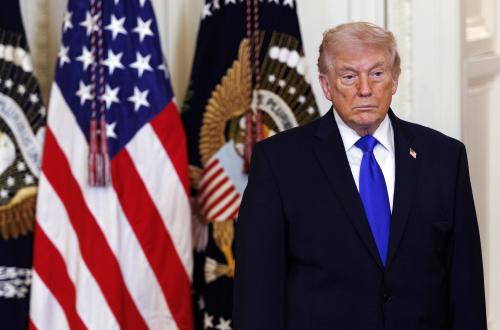
REPUBLIKA.CO.ID, WASHINGTON – A week has passed since the US-Israel aggression against Iran, plunging the Middle East into chaos. Rather than being able to win a quick war, President Donald Trump is overwhelmed by rising risks and challenges in translating military success into geopolitical victory.
Even after the assassination of Supreme Leader Ayatollah Ali Khamenei and devastating strikes against Iranian forces on land, sea, and air, the crisis has quickly widened into a regional conflict that threatens longer US military involvement and whose consequences lie beyond Trump’s control.
This is a scenario Trump has sought to avoid during his two terms in the White House. He typically prefers fast and limited operations such as the airstrike on January 3 in Venezuela and a one-off strike in June against an Iranian nuclear site.
“Iran strikes are a country conducting a chaotic and potentially protracted military campaign,” said Laura Blumenfeld of the Johns Hopkins School for Advanced International Studies in Washington. “Trump is risking the global economy, regional stability, and the performance of the Republican Party in the US midterm elections.”
Trump, who began his presidency promising to keep the US out of “foolish” military interventions, now pursues what many analysts see as an open-ended war not prompted by any threat to the US from Iran, despite claims to the contrary by the president and his aides.
In undertaking this, analysts say Trump has struggled to articulate a series of detailed objectives or a clear end-state for Operation Epic Fury, the largest US military operation since the 2003 invasion of Iraq. He has given varying reasons for the war and different definitions of what constitutes victory.
White House spokesperson Anna Kelly rejected the assessment, saying that Trump has clearly outlined his aims to “destroy Iran’s ballistic missiles and production capacity, destroy their navy, end their ability to arm their proxies, and prevent them from acquiring nuclear weapons.”
However, if the war drags on, American casualties will rise, and the economic costs from disrupted oil flows in the Gulf will mount, and Trump’s biggest foreign policy gamble could also damage the Republican Party politically.
Although some Trump supporters oppose military intervention, so far a majority of MAGA movement members support Trump on Iran.
Yet weakening support could jeopardise Republican control of Congress in the November midterms, given polls showing opposition to the war among a wider electorate, including key independent voters.
“Americans are not keen to repeat the mistakes in Iraq and Afghanistan,” said Brian Darling, a Republican strategist. “The MAGA base is split between those who rely on promises of no new wars and those loyal to Trump’s assessment.”