
A War Nobody Wants
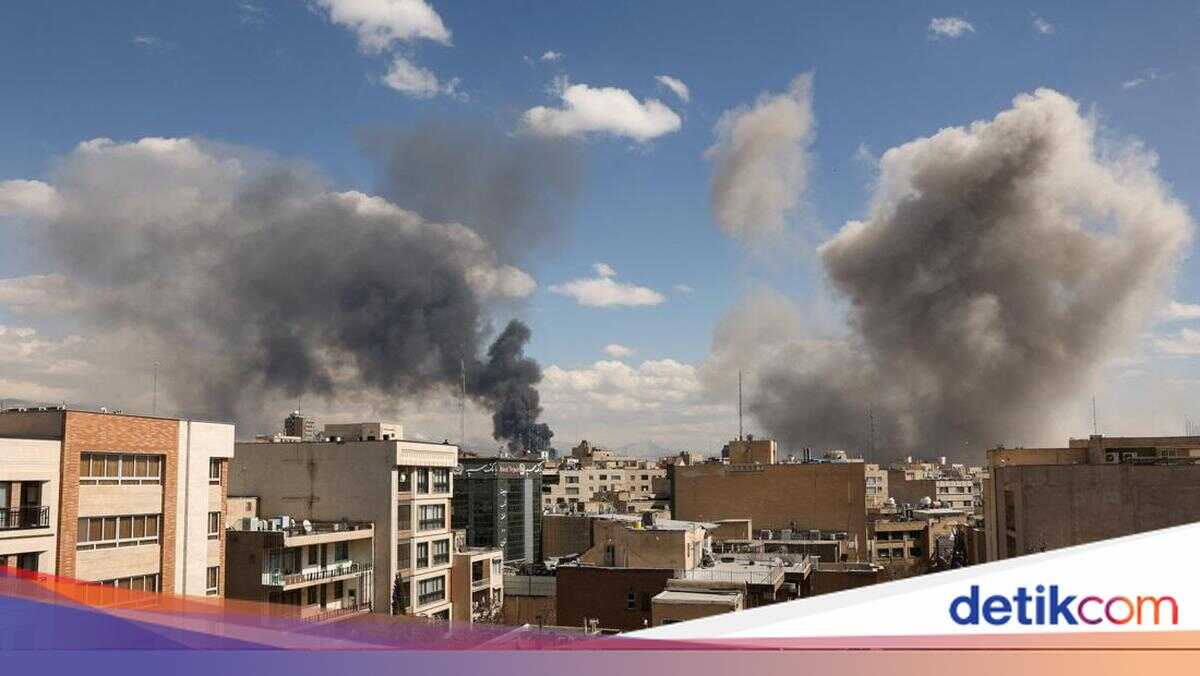
On 28 February 2026, Tehran’s sky was torn apart by more than a thousand bombs in a joint military operation code-named Operation Roaring Lion and Operation Epic Fury. Iran’s Supreme Leader Ayatollah Ali Khamenei was killed. Iran retaliated with a wave of ballistic missiles and drones against five Gulf-region states. Within hours, the world plunged into the most dangerous phase of a conflict that might still have a way out if all sides had the courage to take it.
This war did not fall from the sky. It was built, step by step, from diplomatic failures that should never have been allowed to happen. Its impact on humanity, the global economy, world trade routes, and international order proves one thing that we should have agreed on long ago: war is not a solution. Never.
Diplomatic Failure That Should Not Have Happened
This is the irony hard to digest: this war broke out only a day after Iran’s Foreign Minister Abbas Araghchi stated that the agreement with the United States “was within reach” on the negotiating table in Geneva. The mediator Oman reported that negotiations were underway and promising—touching on the core issues of uranium enrichment and security guarantees for Tehran. But that momentum collapsed. And in the darkness that followed, bombs were dropped.
The conflict is in truth the culmination of a long escalation chain. The exchanges of attacks between Israel and Iran in April and October 2024, followed by the “Twelve-Day War” in June 2025, which had already drawn the direct involvement of the United States in bombing Iranian nuclear facilities. Rather than a turning point, each phase deepened mistrust, narrowed the space for diplomacy, and increased pressure in each capital not to look weak in the eyes of domestic publics.
Even more painful: the world had a proven blueprint. The 2015 JCPOA—the Iran nuclear deal involving the United States, Russia, China, the United Kingdom, France, and Germany—proved that diligent multilateral diplomacy can yield a solution acceptable to all parties. When that agreement was abandoned in 2018, not only Iran was harmed. The entire regional security architecture collapsed. And we are now inheriting its rubble.
Humanitarian Wounds Know No Borders
In every war, the first to pay the price are the people with no stake in the decisions made behind closed doors. More than a thousand lives were reported killed in Iran in the initial wave of attacks. Dozens of lives were lost in Israel and Gulf states. Hospitals, schools, and civil infrastructure were destroyed.
A girl died from shrapnel in Kuwait. More than 130 cities in Iran were attacked simultaneously, cutting off communications and essential services for millions of civilians who had no choice but to take shelter.
There is another wound no less significant: the psychological dimension. This war broke out precisely during Ramadan—a period observed by Muslims worldwide as a time of reflection, peace, and solidarity. The Indonesian Ulema Council (MUI), in its official statement on 1 March 2026, affirmed what should already be clear: war only brings harm, and there are no true winners when civilians die.
International law also seems blunt. Experts, including those from the International Crisis Group, question the legal basis for pre-emptive strikes—because the UN Charter only permits the use of armed force in response to a real and imminent threat, not a hypothetical one.
The UN Security Council, as usual, is trapped in stalemate. This is not merely procedural dysfunction. It is a crisis of confidence in a global governance system that has long been fractured.
When the Flames of War Burn the World Economy
The economic impact of this conflict is not simply a figure on stock traders’ screens. It pervades daily life for millions of people who may not even know exactly where the Persian Gulf lies on the map.
Within hours of the initial strike, Brent crude oil prices surged sharply. Analysts at Barclays projected prices could top USD 100 per barrel when markets fully reopen.
Maersk and Hapag-Lloyd suspended sailings in the region. Qatar closed its airspace indefinitely. And the Bab el-Mandeb Strait—one of the world’s busiest shipping lanes, linking the Indian Ocean to the Red Sea and the Suez Canal—once again became a dangerous zone as the Houthi threat re-emerged.
Disruptions to shipping routes have far-reaching effects beyond the region. About 12 percent of global trade passes through the Suez Canal each year. When ships are forced to reroute via the Cape of Good Hope at the southern tip of Africa, journey times lengthen by two to three weeks, shipping costs rise, and consumer prices rise worldwide.
Wheat in East Africa, spare parts in Southeast Asia, electronic components in Europe—all affected by a war that breaks thousands of kilometres away from the markets where those goods are bought and sold.
Developing economies, which are most vulnerable to external shocks, bear the greatest burden. Energy price increases squeeze subsidy budgets and erode the purchasing power of households not yet fully recovered from pandemic shocks and earlier global crises. That is why this war is not merely a Middle East affair. It is a crisis that touches the dinner tables of millions of families across the world.
Indonesia and the Call of History for Peace
Amid the turmoil, Indonesia has taken a step worthy of note. In an official statement by the Indonesian Ministry of Foreign Affairs on 28 February 2026—the same day the first bombs were dropped—President Prabowo Subianto said Indonesia stood ready to act as a facilitator of dialogue, even willing to fly straight to Tehran if required.
This move was not merely a gesture.