
A Series of Challenges Threaten Indonesia's Furniture Industry, the Ministry of Industry Chooses to Act
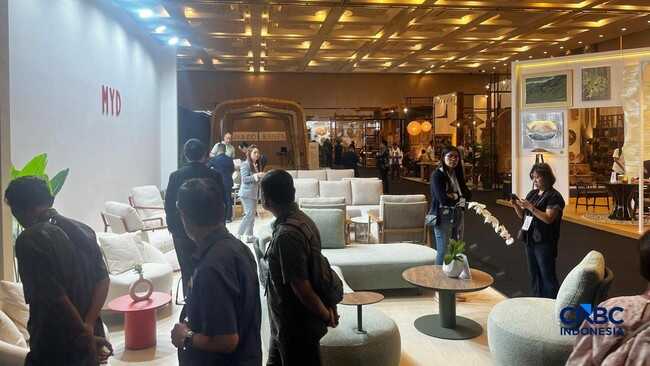
Jakarta, CNBC Indonesia - The national furniture industry faces pressure from multiple directions, ranging from global geopolitics to environmental regulations in export markets. The Director General of Agro Industry at the Ministry of Industry (Kemenperin), Putu Juli Ardika, outlined a number of key challenges currently shadowing the sector. ‘The main challenge facing Indonesia’s furniture industry at the moment is the disruption of export logistics due to geopolitical conditions,’ he said at the opening of IFEX 2026 at ICE BSD, on Thursday 5 March 2026. In addition to logistics factors, sustainability regulations in key export markets are also a serious concern. ‘Policy issues on environmental sustainability in export markets, for example the European Union Deforestation Regulation (EUDR), are challenges we must anticipate,’ he said. Pressure is also coming from the domestic market with rising imports. ‘Rising furniture imports, particularly metal and plastic furniture, as well as issues around investment security, are also concerns,’ continued Putu. To address these challenges, the government has prepared five focus strategies to strengthen the industry. ‘Our strategy focuses on facilitating the supply of raw materials, the availability of skilled human resources, market development and market reference research, improving productivity and product quality, and a conducive business climate and increased investment,’ he explained. A range of fiscal incentives and licensing simplifications are also being expanded to maintain the competitiveness of businesses. ‘The government provides tax incentives such as tax allowances, tax holidays, super deduction tax, tariff preferences, import licensing under LARTAS, and easier procedures for exporting finished products and importing raw materials,’ said Putu. He also emphasised the importance of quality standards in facing increasingly stringent global regulations. ‘To improve product quality, the adoption of SNI (Indonesian National Standard) will enable Indonesian furniture to compete in both export and domestic markets,’ he added. Amid these challenges, Putu remained optimistic that the sector can rebound if all stakeholders work together. ‘To all furniture industry players, I hope you will continue innovating in design, use eco-friendly raw materials, apply more efficient technologies and embrace the circular economy so that you produce innovative and marketable products,’ concluded Putu.