
A Product of Islamic Civilisation: Few Know That Spinach Originated in Iran
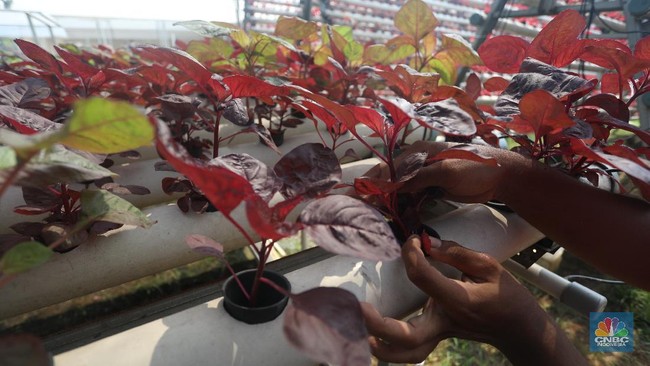
Jakarta — Spinach is present in nearly every kitchen around the world today. This green leaf appears in salads, Mediterranean dishes, and in soups at local Indonesian food stalls.
However, the lengthy history of spinach is rarely discussed. According to various botanical and culinary historical records compiled by food literacy centres, this plant originated in ancient Persia, the region now known as Iran, before spreading to various continents through trade networks and Islamic world expansion.
Etymology-wise, the word “spinach” derives from the Persian language word ispanai, which means “green hand”. This word later transformed into the Latin spanachia, and subsequently developed into “spinach” in English.
Spinach cultivation has been practised in Persia for more than 2,000 years. In this region, spinach grew from wild plants known as Spinacia tetrandra, a type of edible green vegetable.
The spread of spinach from Persia occurred through Asian trade routes. According to research into the history of food plants, spinach is recorded as having arrived in China in 647 CE. Historical records state that the vegetable was sent from Nepal to the Chinese imperial court.
There it became known as “Persian Green” or Persian vegetable. This name reflected both the plant’s geographical origin and its distribution route.
The subsequent expansion occurred through Islamic civilisation networks during the medieval period. Muslims brought spinach to Mediterranean regions around the 9th century. Spinach was introduced to Sicily around 827 CE. From there, the plant spread to various regions of southern Europe.
An important role came next from the Moors of North Africa. The Moors brought spinach to Spain in the 11th century. From this Iberian region, spinach subsequently spread to various areas of Europe. During that time, England even called it “the Spanish vegetable” because its entry route originated from the Iberian Peninsula.
During the medieval period, spinach began to become an important plant in the Mediterranean region. Spinach cultivation expanded from the 14th to the 15th centuries. This vegetable frequently appeared in various Mediterranean dishes and became a high-value spring crop in England.
Spinach’s entry into European culinary culture strengthened in the 16th century. One figure who played a role was Catherine de Medici, an Italian noblewoman from the Medici family. When she married the King of France and moved from Florence, she brought her chefs with her. The spinach-based dishes they prepared subsequently gave rise to the culinary term “à la Florentine”, which refers to dishes served over a bed of spinach.
Spinach entered the New World alongside the wave of European colonisation. Spinach was brought to America by early settlers. The plant subsequently became an important agricultural commodity.
Spinach’s popularity in America surged in the 20th century. According to the history of the spinach industry in the United States, the cartoon character Popeye the Sailor Man, introduced in 1929, played a major role in increasing consumption of this vegetable. The character was depicted gaining strength after eating spinach. The popularity of this character drove increased spinach sales during the 1930s.
In modern times, spinach has become one of the most widely cultivated leafy vegetables in the world. China, the United States, and Japan are among the major producing countries, with total production exceeding 20 million tonnes per year. This production makes spinach an important part of the global food supply chain.