
A portrait of Xiadongzhai's thousands-of-years-old horse racing tradition
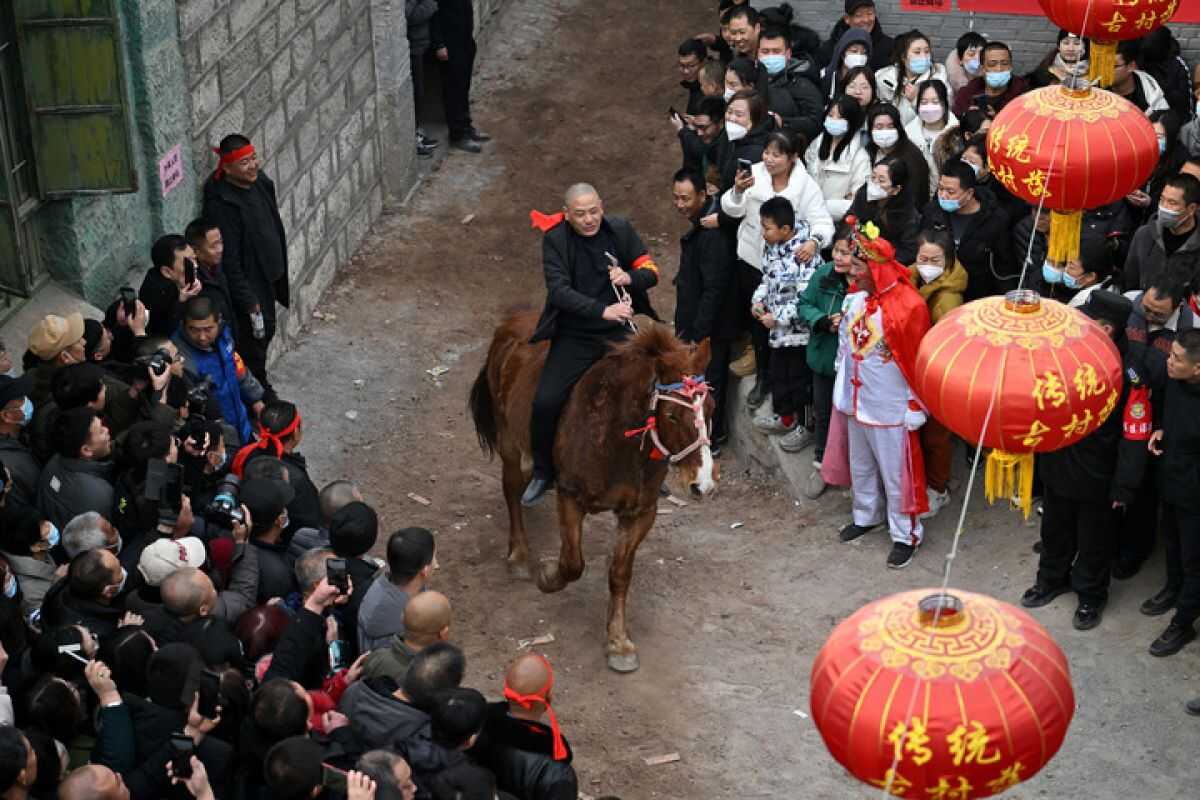
Taiyuan (ANTARA) - At dawn on the 16th day of the first month of the Chinese lunar calendar, Xiadongzhai Village in Shanxi Province, northern China, was filled with a festive atmosphere as a thick layer of furnace ash was spread along the centuries-old stone streets to mark the start of the traditional horse racing event. Located in Niangziguan in Pingding County, Yangquan City, Xiadongzhai has a history of nearly 2,000 years and is recognised as a Chinese historical and cultural village. The Niangziguan Spring Festival Horse Racing Tradition has been inscribed as a nationally intangible cultural heritage of China. Since early morning, tourists had lined the four-metre-wide ancient street on both sides. At 08:30 local time, accompanied by the pounding of gongs, riders raced their horses past the crowd. Riding without a saddle or bridle, they stabilised their bodies by gripping the horse with their legs, captivating spectators as the drumbeats, horses’ hoofbeats, and cheers echoed across the village. Leading the procession is a symbolic figure known as the ‘Messenger’, regarded as the soul of the event. Dong, a truck driver who has participated in the event for more than three decades, returned to the village a few days earlier to prepare. ‘This role carries great responsibility and extraordinary blessings. I feel honoured to be able to pass it on.’ After earning a master’s degree from Chongqing University, Yuan now works in Taiyuan. He took two days off to return home and participate in the event. Although he left his hometown at the age of 12, the horse racing tradition remains a strong memory for Yuan. Although the origins of certain aspects of the tradition are not fully clear, local experts believe the practice reflects cross-border culture and relay stations on ancient courier routes. As social changes occur, more and more residents of Xiadongzhai are leaving their village. Yet, on the 16th day of the first month in the Chinese lunar calendar each year, villagers return, relatives gather, and the streets and alleys are filled with a festive atmosphere. ‘This horse racing activity helps unite the villagers and strengthen cohesion,’ said Ma Zhanfei, an official at the Yangquan Cultural Centre. With strong support from governments at various levels and related departments, significant progress has been made in collecting historical material, creating digital archives, upgrading equipment, renovating the training centre, and publishing related books. By providing insurance for riders and increasing the number of security personnel, the event now runs with more standardised and orderly governance. ‘It is thrilling and exciting. I want to go home and feel it again,’ Yuan said. Riders range from those in their 20s to those in their 70s; regardless of age, how long they have left home, or busy work schedules, more than a dozen participants return each year to take part in the horse racing. The unique Spring Festival tradition has long fused into Xiadongzhai’s identity, becoming a shared cultural bond and a spiritual home. As the sound of horse hooves echoes along the blue-toned stone street, the Spring Festival celebration ends with meaning. Carrying their best wishes, villagers return to their tasks, welcoming the new year and moving forward as if the horse were running at full speed.