
A New Era of Warfare Begins: Lasers Become the World's Go-To Anti-Drone Weapon
REPUBLIKA.CO.ID, JAKARTA — The way wars are fought is changing gradually, almost silently. If the skies over battlefields were once filled with the roar of jets and flashes of missiles, now threats come from small objects called drones—cheap, nimble, and hard to detect.
To counter them, several countries are beginning to rely on technology that was once more common in science fiction films: high-energy lasers.
In the United States, the latest step comes from an agreement between the Federal Aviation Administration and the United States Department of Defense, allowing the use of laser-based anti-drone systems along the southern border with Mexico.
“After conducting a thorough Safety Risk Assessment and based on the data, we have determined that this system does not pose an increased risk to the public using air transportation services,” said FAA Administrator Bryan Bedford on Friday, as reported by Defensenews.
Previous testing was stated to meet aviation safety standards, although it had raised concerns following an incident of mistaken fire on a government unmanned aircraft.
Those concerns are not unfounded. The use of lasers in civilian airspace brings new risks, especially if the system is not fully integrated with air traffic control. However, the growing drone threat, including those used for drug smuggling by cartels, is pushing security authorities to seek faster and more efficient solutions.
This is where lasers become appealing. Unlike expensive and limited missiles, lasers operate at the speed of light and cost almost nothing per shot. As long as the power source is available, the system can be used repeatedly to disable or destroy drones entering restricted areas.
The United States is not alone. In the Middle East, Israel is developing the Iron Beam system designed to intercept short-range rockets and drones. This system complements existing layered defences, offering a cheaper solution to counter low-cost attacks launched en masse.
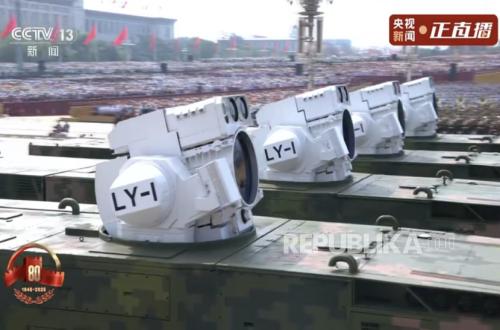
In Asia, China is also moving quickly with the Silent Hunter system, which has been used to neutralise small drones and is even marketed to other countries. This approach shows that laser technology is no longer just an experimental project but is entering the operational and commercial realm.
Meanwhile, the UK is testing the DragonFire system, which in trials has successfully destroyed aerial targets with high precision. The UK government states that the cost of a laser shot can be far cheaper than launching a conventional missile, an important factor in modern warfare that demands efficiency.
Turkey, known as one of the largest drone producers, is also developing the ALKA system to counter similar threats. This system not only destroys drones but can also disrupt their electronic systems, providing flexibility in various combat scenarios.