
A New Era in Real-Time Astrophysics: Supernova Observed from its Earliest Phase
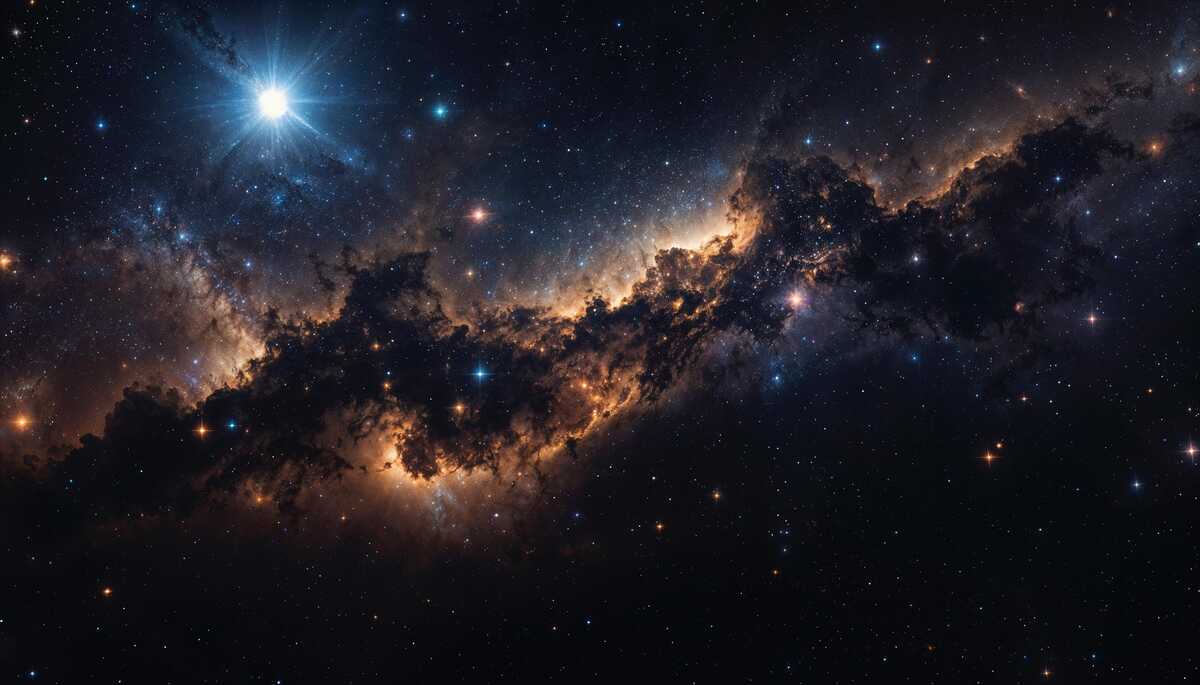
For the first time, astronomers have successfully observed the earliest phase of a supernova explosion, specifically the moment when the shockwave breaks through the surface of a collapsing massive star. This observation provides a detailed picture of the final moments of a star’s life before it explodes and scatters heavy elements into interstellar space.
This rare event was detected through a high-speed sky survey utilizing a network of automated telescopes and space observatories. One of the key instruments in this observation was NASA’s Neil Gehrels Swift Observatory, which was able to capture flashes of X-rays and ultraviolet light just minutes after the initial explosion was detected.
The very short initial signal, lasting only a few hours, serves as direct evidence of the shock breakout phase, which has previously been predicted more through theoretical models than direct observation.
Type II supernovae originate from the collapse of the core of a star with a mass greater than eight times the mass of the Sun. The explosion occurs when the radiation pressure from fusion reactions is no longer able to withstand the force of gravity. The star’s core collapses in less than a second, triggering a shockwave that travels outward.
As the wave reaches the surface of the star, there is a surge in extreme luminosity that can reach billions of times the brightness of the Sun. This phase is what has now been directly observed almost simultaneously with the initial moment of the explosion.
In a recent study published in The Astrophysical Journal, the research team reported that the evolution of the supernova’s light was recorded within less than 24 hours of the initial explosion.
Spectral analysis shows the interaction between the star’s ejected material and the dense gas layer surrounding it. This finding indicates that the star had experienced significant mass loss before the explosion.
The data helps answer long-standing questions about how the outer structure of massive stars influences the character of supernova explosions. Previously, uncertainties in the early phase have been an obstacle in modeling the distribution of energy and the production of heavy elements such as oxygen, silicon, and iron, which play an important role in the formation of planets and life.
This early observation was made possible by the automated alert system from the Zwicky Transient Facility, which scans the sky every night to detect rapidly changing objects.
The combination of rapid response from ground-based telescopes and space observatories opens a new era in real-time astrophysics. The documentation of the early phase of supernovae is now not only an observational achievement but also an important foundation for understanding the chemical evolution of galaxies.
With more and more sensitive instruments in operation, the opportunities to capture the “death throes” of massive stars are expected to increase in the coming years. Source: NASA