
A New Era in Indonesian Project Management: Focusing on Strategic Execution and Adaptive Human Resources
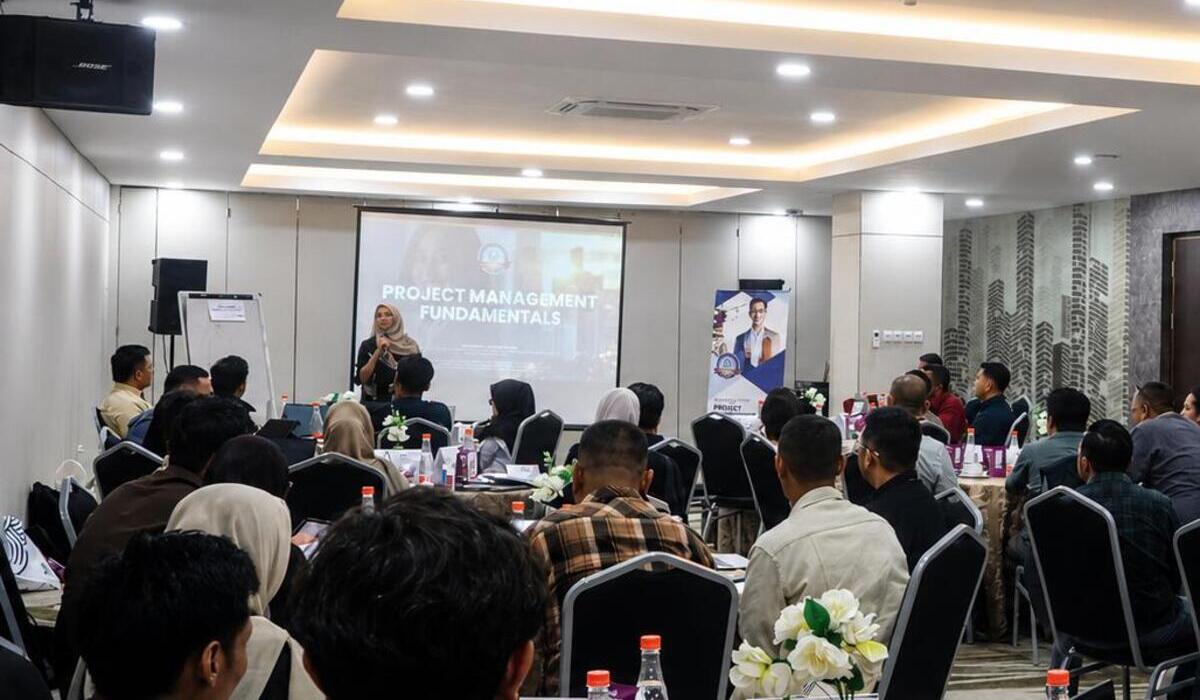
Amid the acceleration of digitalisation, infrastructure development, energy transition, and Indonesia’s Golden 2045 ambitions, many organisations face the same question: why does a well-conceived strategy on paper often fail to translate into action on the ground? The answer is not a lack of strategy but a deficiency in execution. One of the required elements is an adaptive human resources (HR).
These questions became the central issue raised at the ‘Systemic Impact through Transformative Training’ 2026 forum. The forum emphasised that success in transformation is not solely determined by the magnitude of the vision, but by an organisation’s ability to implement it effectively.
This shift is changing perceptions of project management. If, in the past, the profession was synonymous with timelines, budgets, and scope, the expectations are now broader. Project managers are no longer required only to control projects, but also to connect strategy, people, and implementation in conditions that are not always predictable.
This is the principle championed by the Project Management Institute (PMI). Beginning with the MORE philosophy: Manage Perceptions, Own Success, Relentlessly Reassess, and Expand Perspective, introduced by PMI at the end of 2025 as a framework for redefining project success. This approach moves away from the old paradigm focused on completing projects within time, cost, and scope, towards creating value that is relevant to the organisation and its stakeholders.
Recently, PMI Asia Pacific, during a visit to Indonesia, discussed human-centered delivery, organisational capability, and measurable outcomes with private sector companies and state-owned enterprises, as well as with Authorized Training Partners in Indonesia. During their May visit, the emphasis was not solely on finishing on time and within budget, but on whether the organisation truly changes and can compete in an increasingly competitive environment by building the competencies of its project managers.
This is underpinned by the belief that the global economy will require 30 billion project management professionals by 2035. Indonesia is expected to be one of the largest markets in ASEAN.
In Indonesia, the pressure feels tangible. The energy sector struggles with a not-so-simple transition: risk governance and cross-stakeholder coordination that is becoming more complex. The business and government sectors are being pushed towards digitalisation that demands faster and more measured execution. All of this requires people who not only understand frameworks but know how to make things really work.
Dcolearning’s Programme & Partnership Director, Nurul Winanda, has observed this firsthand. She assesses the shift from meeting timelines to achieving synergy between people, strategy and execution and measurable results.
‘Organisations no longer need only project managers who can manage timelines. What is increasingly sought are professionals who can connect strategy, people, and execution to deliver measurable outcomes. That is becoming the real differentiator now,’ Nurul said on Tuesday (19 May 2026).
Indonesia, in her view, has momentum that is not small. Digital transformation, infrastructure, and HR development are all progressing rapidly in parallel.
‘Capacity building in Project Management should be regarded as a strategic competency for every organisation, not merely an operational project need,’ she added.
Dcolearning, as one of PMI Authorized Training Partners in Indonesia, is responding by broadening its programme focus, in addition to running PMP® and CAPM® certification programmes, but also programmes that support the development of execution capability and organisational readiness for both state-owned enterprises and the private sector, from project management fundamentals to strategic project execution and project risk management.
There is growing realisation that transformation fails are not due to a lack of technology or strategy, but to poor coordination, unclear communication, and immature cross-functional implementation capabilities. When change comes faster, execution is the clearest differentiator.
Nurul states that certification remains important and will become even more important. But what is truly sought now is not only people who can manage a project, but project management professionals who know what to do when plans do not go as expected.
The acceleration of digitalisation of micro, small and medium enterprises (MSMEs) and cooperatives in South Kalimantan is urgent and crucial to improve operational efficiency, expand market reach, and enhance competitiveness.