
A New Era as Prabowo Delivers the Macro-Economic Framework Directly to Parliament
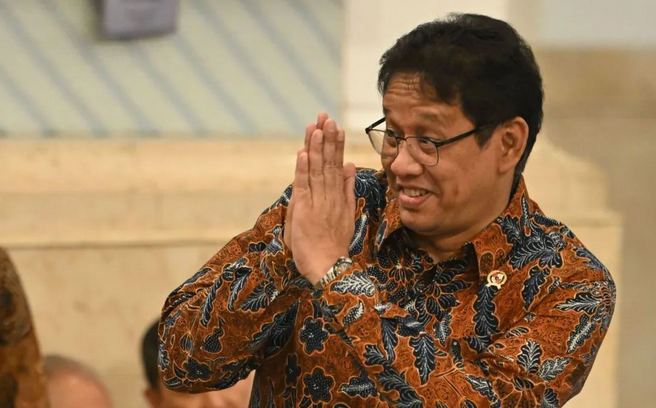
A new era in Indonesia’s fiscal history is set to unfold. Finance Minister Purbaya Yudhi Sadewa announced that President Prabowo Subianto will personally deliver the Macro Economic Framework and the Core Policies of Fiscal Policy (KEM-PPKF) for the Draft State Budget for Fiscal Year 2027 in a plenary session of the House of Representatives, on Wednesday, 20 May 2026.
The President is scheduled to attend the DPR RI Plenary Session for the Fifth Session of the 2025–2026 legislative year at the MPR–DPR–DPD complex in Jakarta. The main agenda is the initial discussion of the RAPBN 2027. The moment carries particular significance as it coincides with National Awakening Day.
‘This is history — for the first time the President will speak in the KEM-PPKF,’ Purbaya said at the KiTa APBN press conference for April 2026 in Jakarta, on Tuesday, 19 May.
Purbaya emphasised that, constitutionally, there is no rule restricting who must present the KEM-PPKF before members of parliament. Therefore, the President has the latitude to take a direct role in outlining the government’s fiscal policy.
‘There is no rule, right? It’s free. There is no law against it, right? If the President wants to speak, that’s fine,’ he said.
The President’s direct appearance in the plenary is viewed as a highly strategic step, given that the KEM-PPKF for the 2027 RAPBN includes various priority programmes and flagship policies of President Prabowo. The timing also carries symbolic value as it coincides with National Awakening Day.
‘There are important messages in the KEM-PPKF, including the President’s flagship programmes. So it must be him who speaks, not me,’ Purbaya added.
During his remarks, the finance minister quipped about the President taking on the duty of delivering the speech, saying he was glad because it meant he would not have to speak himself.
The President’s personal appearance at the DPR plenary is seen as a strong signal of the government’s commitment to directly steer macroeconomic policy and to ensure national strategic programmes receive full backing from the outset of budget planning in parliament.