
A Look at Three Advanced Robots for Patient Surgery
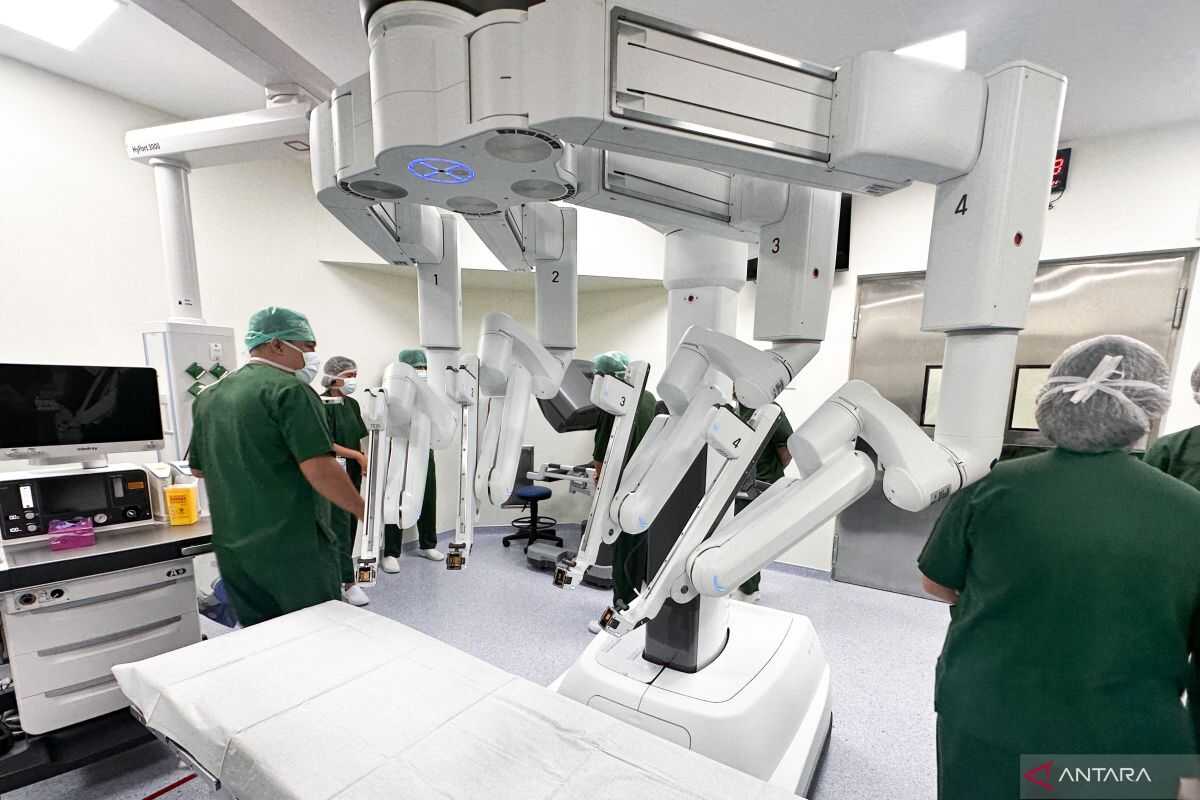
Siloam Hospitals Kebon Jeruk in Jakarta has introduced three trusted robotic technologies to demonstrate how technology can change healthcare: Da Vinci Xi, Biobot MonaLisa, and ROSA Knee. The hospital emphasises that these systems aim to make surgical procedures more precise, with lower risk and faster patient recovery, rather than simply showcasing gadgetry.
Da Vinci Xi is a multi-arm surgical robot that can be used in a range of fields. At Kebon Jeruk, it is currently employed for operations in urology, gynaecology, and the digestive tract. Biobot MonaLisa is a navigational robot for prostate biopsy, while ROSA Knee is a total knee replacement (TKR) robot that analyses in real time for orthopaedic procedures.
For many laypeople, the notion of a “robotic operation” can sound daunting, with images of machines moving independently. In reality, control remains entirely with the surgeon during the procedure. On a visit by ANTARA on Wednesday night, 4 March, we observed in the operating theatre that the surgeon’s hands remain in command; the robot merely translates the surgeon’s movements with far greater accuracy.
In the Da Vinci Xi system, the surgeon operates the surgical instruments from a console that presents a three‑dimensional high‑definition view with up to ten‑times magnification. Urologist Dr Marto Sugiono SpU (K) described the experience as having an operating field that is exceptionally clear. The system works on a master–slave concept, meaning every robot movement is fully controlled by the surgeon operator, not autonomous movement.
Unlike human hands, the advantage of the Da Vinci Xi lies in the instruments’ high flexibility in tight spaces—such as during prostate operations—and in tremor filtering that maintains movement stability. “If the surgeon’s hand trembles during dissection, the tremor will not be translated by the robot to the patient’s body, so the risk of damaging surrounding tissues is very, very low. Naturally, postoperative pain will also be minimised,” Dr Marto said.