
A Look at How Bedugs Are Made in Tanah Abang: They Use Goat Skin
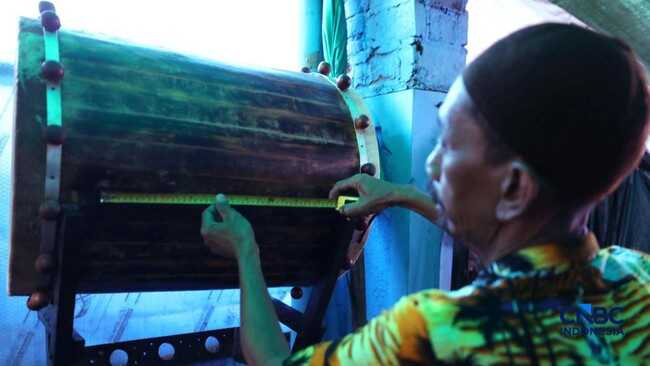
Workers finish making bedug along Jalan KH Mas Mansyur in Tanah Abang, Jakarta, on Thursday, 5 March 2026. Bedug of various sizes are displayed on the sidewalk, drawing the attention of passers-by. For locals, the production and sale of bedug has become an annual routine since 2016. The activity usually becomes busier during the Ramadan period through Idul Fitri, when demand increases. In the area, a number of seasonal bedug traders appear each year. These bedug traders typically also sell goats on ordinary days, so that the skins can be used to make bedug. The prices offered for bedug vary from Rp60,000 to Rp4 million, depending on size and material type, and for certain designs or sizes the price can exceed Rp5 million. The traders say they have prepared bedug stock well in advance to meet demand predicted to rise sharply, especially in the last week of Ramadan. This rise in buyers interest is a strong indicator of a revival of the tradition of welcoming Idul Fitri. One of the most notable trends for Lebaran this year, 2026, is the surge in small-sized bedug designed specifically for children.