
A Glimpse Inside the Betawi Dodol Kitchen as Orders Surge Ahead of Eid al-Fitr
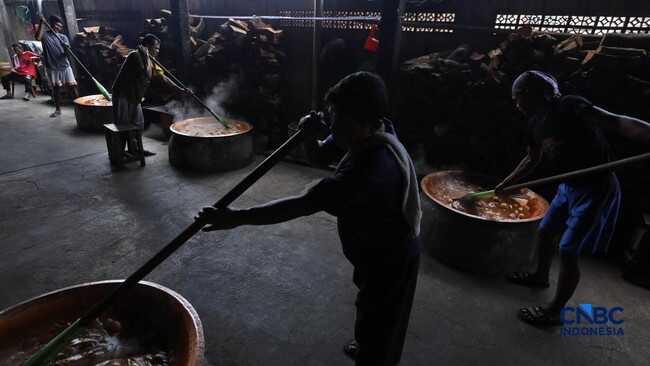
Jakarta, 4 March 2026 — The Pondok Dodol Sari Rasa Ibu Yuyun in Jalan Damai Baru, Pejaten Timur, Pasar Minggu, continues to bustle as Lebaran approaches. The Betawi dodol kitchen, established in the 1980s, sees workers moving between stations, preparing ingredients and stirring dodol in large kettles, as activity increases ahead of Eid al-Fitr. As in previous years, orders for Betawi dodol surge before Lebaran. A worker said that on ordinary days they cook two kenceng per day; this year’s lead-up has boosted production to as many as 16 kenceng daily. A kenceng is a large wok used for cooking dodol. To meet demand, production is split into two sessions: the first after dawn and running until about four in the afternoon. In each session, eight kenceng are cooked simultaneously, taking around seven hours until the mixture thickens. The dodol-making process begins with coconut processing: coconuts are peeled and ground, then water is added to produce coconut milk. At the same time, glutinous rice is washed and ground into flour, while red palm sugar and sugar are melted. One of Pondok Dodol Sari Rasa Ibu Yuyun’s distinctive aspects is the use of firewood as the primary fuel; controlling the flame size is also crucial to the resulting dodol’s quality. The traditional method is maintained to preserve the flavour and aroma. “If we use gas, the taste is different,” one worker says. Once cooked, the dodol is transferred to bamboo besek for cooling and packaging. From one kenceng of dough, about 20 besek can be produced. The products come in several packaging options: rolled packages priced at Rp25,000, small besek at Rp100,000, and large besek at Rp130,000. The rolled packages come in flavours including original, durian, and ketan hitam.