
A Friendly Country That's Not Friendly to Its Biggest Investors - Kompas.id
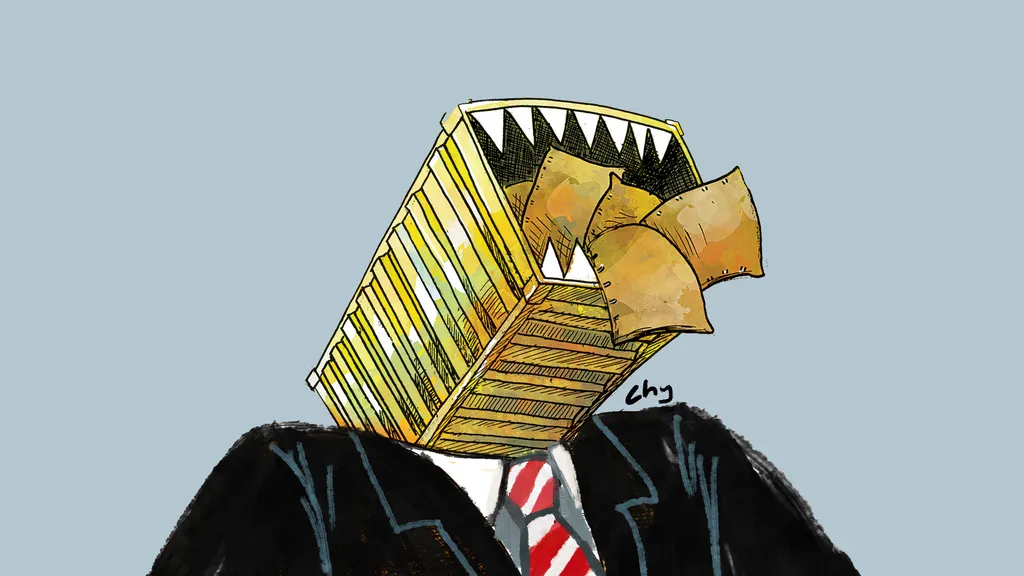
The Indonesian people are considered among the friendliest in the world. However, when faced with foreign capital, Indonesia tends to behave somewhat differently.
By Irvan Maulana
21 Mei 2026 14:00 WIB · English
The five-page letter reached President Prabowo Subianto on May 12, 2026, from a party that is usually reluctant to speak openly. The sender is the China Chamber of Commerce in Indonesia (CCCI), and its content is quite frank: sudden regulatory changes and allegations of illegal levies by certain officials have eroded the trust of Chinese investors. The following day, Prabowo himself acknowledged in public that some bureaucrats are indeed drafting regulations to collect quotas.
Indonesia has long marketed itself to the world as a friendly nation. Smiles, open doors, and warm welcomes to foreigners have all become part of the national image that we take pride in and promote through tourism. However, this time, the largest source of foreign capital in the country has accused the opposite and has done so publicly.
This contradiction is not merely an impression. It is recorded in data, black and white. In the InterNations Expat Insider 2024 survey, Indonesia ranks second out of 53 countries in the category of local residents’ friendliness, with more than 90 percent of expatriate respondents stating that they feel truly welcomed by the Indonesian community.
On metrics that matter to investors, the picture is sharply different. The World Bank’s Business Ready (B-READY) 2024 report, which replaces the Ease of Doing Business index, places Indonesia in the fourth and lowest tier for both Regulatory Framework and Operational Efficiency. In the last Ease of Doing Business assessment in 2019, Indonesia remained in 73rd place out of 190 economies.
The pattern is hard to deny. The Indonesian people, as human beings, are considered among the friendliest on Earth. However, when faced with foreign capital, Indonesia tends to behave somewhat differently.
The complaints from the chamber of commerce are very concrete. They include repeated increases in mineral royalties, tax audits resulting in fines of tens of millions of US dollars, and new regulations that force exporters to hold half of their dollar earnings in state-owned banks for a minimum of one year. Several disputes, according to the letter, can only be resolved through intermediaries at costs described as “astronomical.”
The damage is already becoming apparent. The chamber of commerce warns that current policies threaten more than 400,000 workers who depend on Indonesia’s nickel industry. The rupiah has weakened for months, and some currency analysts now point to the credibility of the policy itself as one of the causes.
Nickel is at the heart of this complaint. The mining quota for large operations has been cut by more than 70 percent this year, removing approximately 30 million tons of ore from the supply. The revision of the nickel benchmark price formula, which now includes cobalt and iron in the calculation, has driven comprehensive nickel ore costs up by about 200 percent.
There is a certain irony in seeing Chinese investors complain this loudly. The dominant narrative among Western policymakers has been simple: Chinese capital is capable of entering places that other investors avoid, into countries with weak governance and easily harvested rents. The record in Indonesia is actually more typical; Chinese companies assess risks like anyone else and prefer predictable corruption over unpredictable policies.
See how the money truly flows in and the picture becomes clearer. Chinese capital has been flowing into Indonesia, especially following President Xi Jinping’s visit to Jakarta in October 2013, through partnerships with Indonesian conglomerates and via financial channels in Singapore and Hong Kong. The Central Statistics Agency recorded Chinese investments amounting to 16.2 billion US dollars between 2020 and 2022 alone, the second largest after Singapore, although the actual exposure is much deeper due to these intermediary channels.
This is also what makes the chamber of commerce letter more serious than it appears. Chinese state-owned enterprises in large infrastructure projects typically manage risks through political channels between Beijing and Jakarta, while private companies handle them through partnerships with Indonesian conglomerates. If both groups, with such different playing patterns, are complaining about the same issue at the same time, the problem is clearly no longer in their strategies.
None of this is happening in a vacuum. The downstreaming policy launched during the Joko Widodo administration was designed to maintain domestic value-added processing of nickel, bauxite, and other critical minerals. To attract private capital, Jakarta offered a 10-15 year tax holiday, eliminated import tariffs on construction materials, and facilitated land access.
Chinese private companies have responded massively through joint ventures with Indonesia’s largest conglomerates. Morowali Industrial Park and Weda Bay Industrial Park have grown to become the largest nickel processing centers in Asia within just a few years. According to the 2023 Forbes list, 84 percent of the 50 richest individuals in Indonesia are of Chinese descent, with a total wealth of approximately 230 billion US dollars, and many of them now hold top positions in these joint ventures.
Current pressures, therefore, are being applied to investors with the deepest political integration. Increases in royalties, foreign exchange retention regulations, and quota reductions do not affect opportunistic newcomers, but rather impact long-term partners. They entered under the terms that the government itself had once advertised, and some of them are families of supporters of the current administration since the 2024 elections.
All of this raises an awkward question about what kind of hospitality we are actually practicing. The version we present to foreign tourists with su