
A 112-Million-Year Secret: Scientists Uncover the History of Deep-Sea Biofluorescent Fish
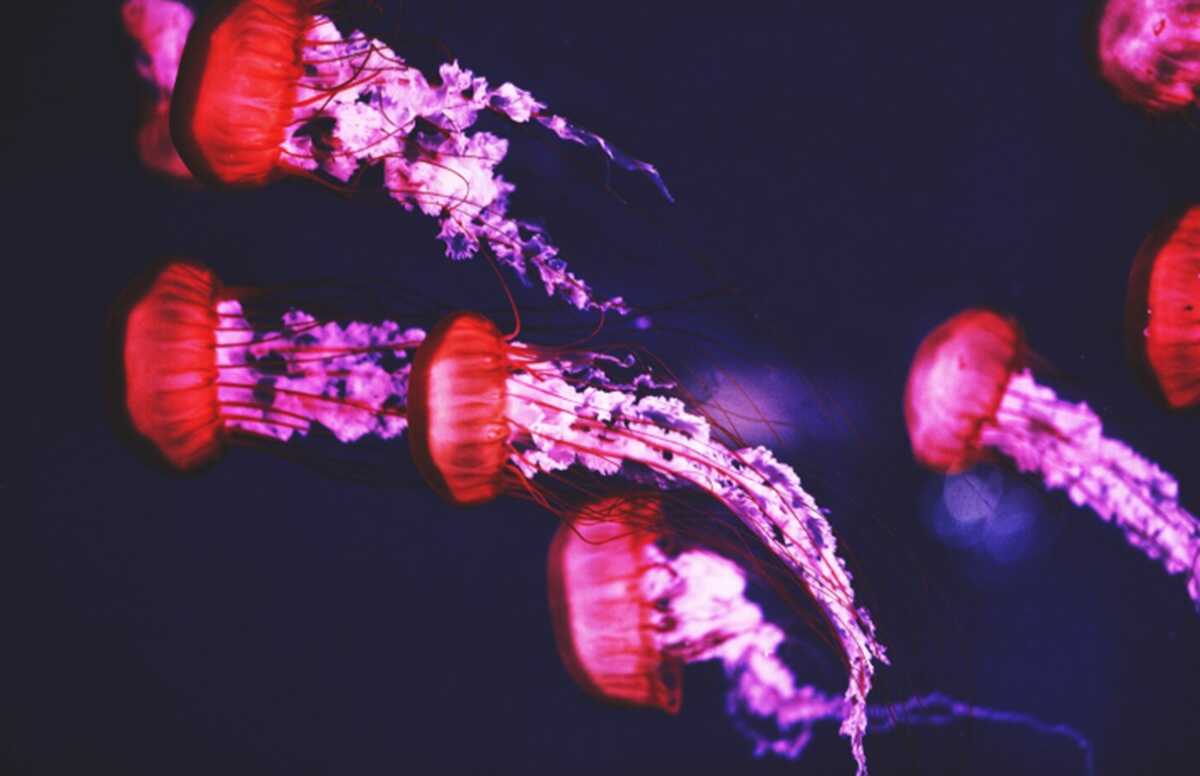
Beneath the darkness of the ocean, a secret light display has endured for at least 112 million years. Biofluorescent fish absorb blue sea light and re-emit it as colours ranging from green to yellow to red. Although invisible to the naked eye under sunlight, this phenomenon turns coral reefs into spectacular underwater neon boards.
Two recent studies from the American Museum of Natural History trace the origin and evolution of this light. By analysing 459 species, the researchers found that biofluorescence first appeared in ancient moray eels and has evolved independently more than a hundred times.
The studies show that life on coral reefs speeds up this evolutionary trick. Reef-dwelling fishes developed the ability to fluoresce about ten times faster than species in open waters.
The burst of luminous species occurred after the mass extinction 66 million years ago. When the dinosaurs perished and coral reefs began to recover, these fishes rapidly occupied newly available ecological niches.
“Researchers have long known that biofluorescence is fairly widespread among marine animals, from sea turtles to corals, and particularly among fish. But to truly understand why and how species use this unique adaptation — whether for camouflage, predation, or reproduction — we need to understand the underlying evolutionary story and the extent of biofluorescence that exists today,” explained Emily Carr, the study’s lead author.
In a second experiment using photography of museum specimens under special lighting, the team found far more colour variation than previously documented. Some fish families showed at least six distinct peaks of fluorescence.
“The extraordinary variation we observed across fluorescent fish could mean that these animals use signal systems that are highly diverse and complex, based on species-specific patterns of fluorescence emission,” said John Sparks, co-author of the study.
This discovery is not only important for marine science. Fluorescent proteins previously isolated from jellyfish have revolutionised molecular biology. Now, the various colours found in fish could become the next generation of medical imaging tools, aiding doctors in detecting tumours or guiding surgery with light.
Although many sea secrets remain hidden, every flash of colour brings humans closer to understanding how fish communicate, hide, and hunt. The full study describing this discovery has been published in the journal PLOS One.