
95 Empty Stalls and Kiosks at Sanglah Market; New Traders Offered Free Rent and Seed Capital
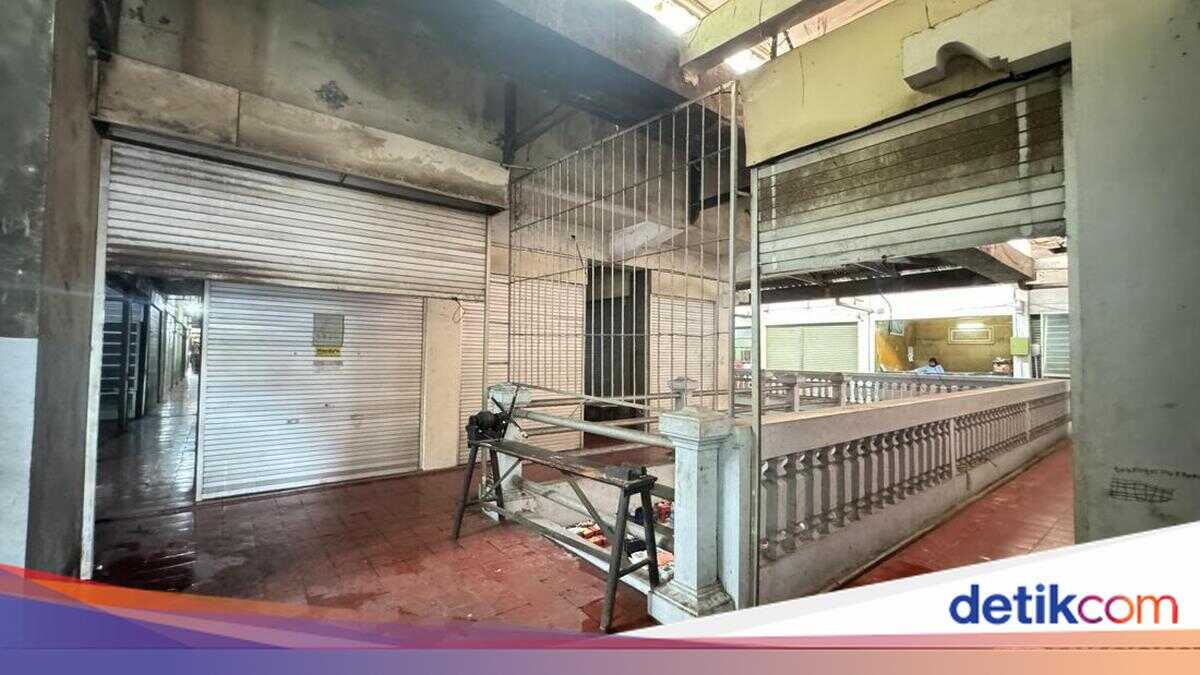
A total of 90 stalls and 5 kiosks at Sanglah Market remain vacant. To attract new traders, the market management has introduced a two-month free rent trial, alongside seed capital assistance for those who start selling. “We have implemented a policy of two months free. If they trade for 1-6 months, we will also prepare something like seed capital for traders who have been selling for three months,” said Wayan Kardika, Head of the Sanglah Market Unit, on Thursday (5/3/2026).
The seed capital assistance ranged from IDR 5 million to IDR 25 million, depending on the type of business. According to Kardika, traders selling ceremonial goods typically require larger capital due to the higher value of items. “Because if they purchase IDR 50 million, that’s not a lot; the items are valuable. For vegetables at least IDR 10-15 million is already more than enough,” he added.
The programme uses a Credit Usaha Rakyat (KUR) scheme. The business premises being rented are used as collateral, while repayments are made monthly according to the trader’s ability.
The policy targets new entrepreneurs who rent the stalls. Existing entrepreneurs have already earned their rights to the programme. Nevertheless, the market operator is open to those who need loans. “Sometimes every three months, we promote to traders. Some want to borrow money or need seed capital; the Business Development Team is the one that goes down to help,” Kardika said.
Kardika admitted that the market’s vacancy rate arose after the COVID-19 era. The proof is in traders choosing to return rented spaces. Average daily visits run at around 400, with active hours only from 02:00 to 07:00 WITA. He noted that market revenue has fallen by 5-10 percent. In addition to the free rent and seed capital funds, the operator has also been educating traders on online selling strategies.
“Usually at that time, visitors who buy in large quantities are for resale at their stalls. We are also trying to change traders’ mindsets, especially those on the second floor, such as clothing, to sell online rather than manually. Some traders have already started selling via TikTok and IG,” Kardika said.
However, a constraint they encounter is older businesspeople with limited technology, “Ages 55 and above. We need to re-direct them; we recommend coordinating with their children who are more tech-savvy,?” he added.
Ida Bagus Kompyang Wiranata, President Director of Perumda Pasar Sewakadarma, assessed that the emptiness of kiosks and stalls is also influenced by the proliferation of modern stores and the presence of unlicensed traders around the market.
“There are unlicensed traders in front of the market, around the market. I don’t know who manages them, but they are selling in front of our market. Whereas we are not allowed to manage markets outside the fence. Banning them isn’t allowed either because it is within our authority,” Wiranata said.
He also observed that changes in consumer habits, favouring convenience, cause some buyers to shop outside the market rather than inside the market area.
“This leads to unfair competition. We have coordinated with the Department of Transportation (Dishub) and the Satpol PP, but the problem is the stubborn sellers who may require supervision by personnel; Satpol PP staff cannot wait forever,” Wiranata stated.
Wiranata urged the public to return to shopping at traditional markets. Besides helping the livelihoods of small traders, the market also serves as a social hub for the community.
“We urge the public to shop at traditional markets because there is interaction there. We can also support the lives of traders who belong to the economically weak,” he urged.
(nor/nor)