
90-Million-Year-Old Fossil Fills Gap in the Evolution of Ant-Eating Dinosaurs
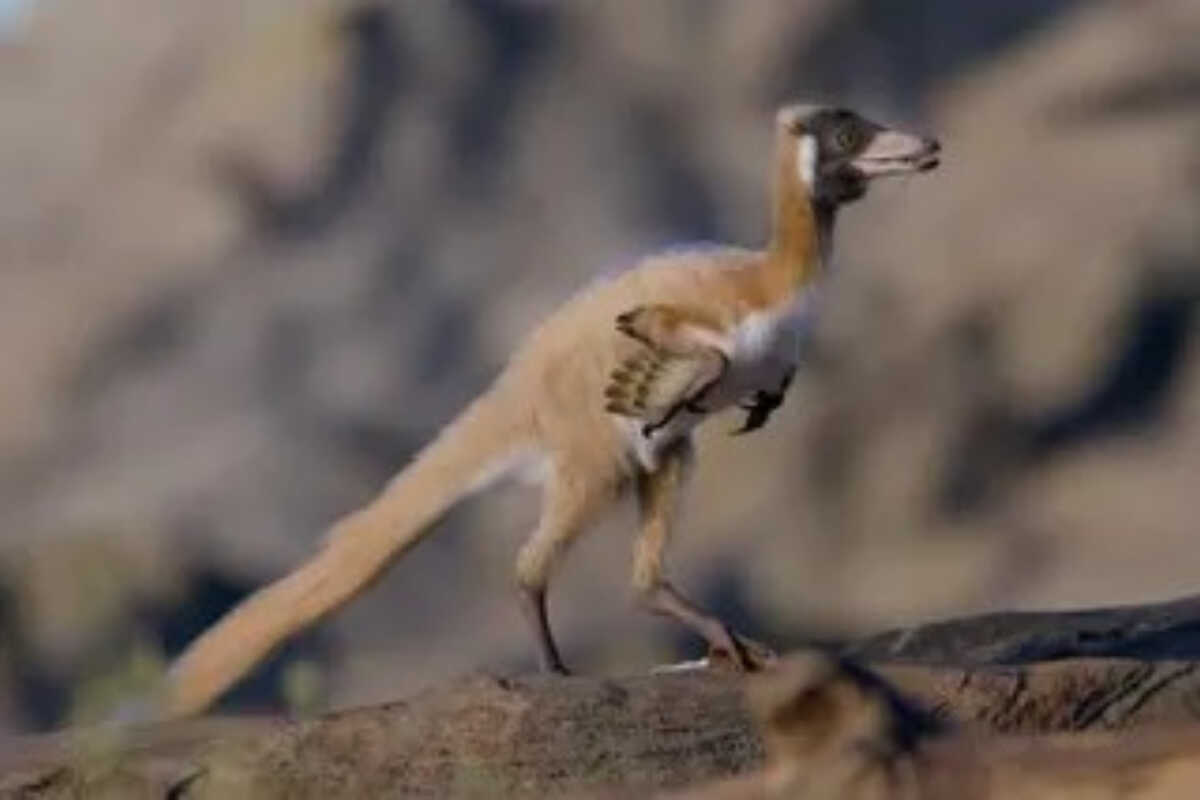
The discovery of a 90-million-year-old fossil in South America has shed light on a missing chapter in the evolutionary history of insect-eating dinosaurs. The find, from the La Buitrera site in the Patagonia region of Argentina, has immediately captured the attention of the international paleontology community.
The fossil consists of a relatively complete skeleton of a small dinosaur belonging to the alvarezsaurid group. This group is known for being small theropods with very short arms and a single large claw, which is believed to have been used for digging up ant and termite nests. However, before this discovery, scientists only had isolated bone fragments, making it difficult to map their evolutionary trajectory clearly.
What makes this fossil important is its anatomy. The specimen from La Buitrera shows that early members of this group did not yet have the extreme adaptations seen in their later relatives. Their arms were still relatively longer, and their teeth were more developed. This suggests that they were not yet fully specialized for eating ants. This challenges the old assumption that alvarezsaurids were specialized diggers from the beginning.
According to Discover Magazine, the evolutionary process of this group appears to have occurred gradually. They first underwent a reduction in body size, and then evolved into the form with super-short arms and large claws that are efficient for dismantling insect nests.
This discovery clarifies the pattern of diet and morphology evolution within the lineage of small theropods. Evolution does not always immediately produce highly specialized forms. In this case, the dinosaur seems to have gone through a general phase before finally becoming an expert insect hunter.
Scientifically, this is important because it helps fill a data gap from the Middle Cretaceous period, about 90 million years ago. This gap has long made it difficult for researchers to understand how environmental pressures and changes in the ecosystem drove the emergence of extreme adaptations.
With a more complete fossil, paleontologists now have concrete evidence that the transformation into ant-eating dinosaurs did not happen in one big leap. There were distinct transitional stages, and this fossil is one of the key pieces of evidence.
This discovery shows that every skeleton unearthed can change the big picture of evolution.
Source: Discover Magazine, Phys.org
Recent research reveals that the Triceratops’s nose had complex functions, including helping to regulate body temperature and humidity, not just as a sense of smell.
The fossil shows that its lineage crossed the K–Pg boundary without becoming completely extinct. Adaptations to aquatic life and a flexible diet were likely key factors.
The Chilesaurus diegosuarezi dinosaur broke the traditional stigma that dinosaurs that look like predators must be carnivores.
Although almost the size of a Tyrannosaurus rex and belonging to the same theropod group as ferocious predators like Deinocheirus, it was not a cold-blooded hunter.
A recent study reveals that helpless baby sauropods were a major source of energy for predators like Allosaurus.