
80 Coal and Nickel Mining Permits Frozen by KLH, Rp6 Trillion in Fines Await
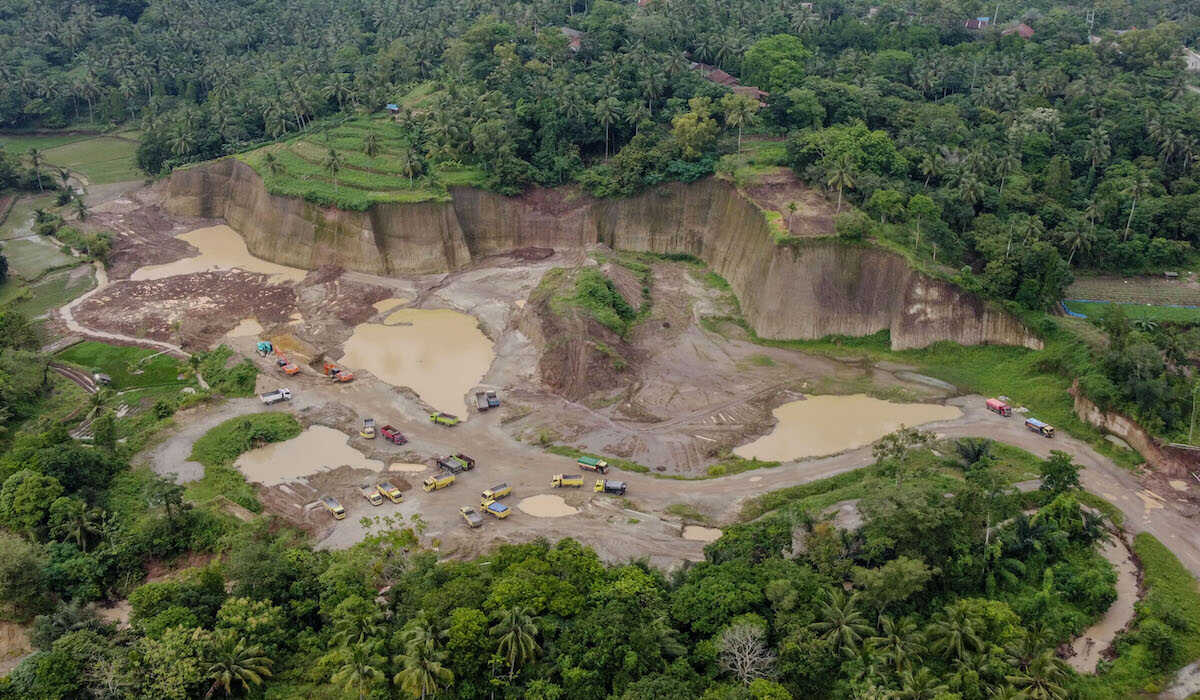
The Ministry of Environment and Forestry (KLH) is taking decisive action against the mining sector in Indonesia. A total of 80 environmental permits for coal and nickel mining operations have been officially frozen after undergoing a thorough evaluation process.
This move is part of the government’s effort to improve mining governance and address its negative impact on ecosystems.
Minister of Environment and Head of the Environmental Protection Agency (BPLH), Hanif Faisol Nurofiq, stated that the government is currently evaluating a total of 1,358 coal and nickel mining operations across Indonesia.
As of Wednesday (February 25th), KLH has completed the evaluation of 250 operations out of the thousands targeted. Of these, nearly one-third, or approximately 80 operations, have had their environmental permits frozen due to significant violations.
Hanif emphasized that the evaluation focuses on 14 critical provinces with large-scale coal and nickel mining activities. One of the main indicators in this assessment is the contribution of mining activities to ecological disasters, such as the frequency of floods in the operational areas.
“So, the results of the analysis are used to summon the responsible parties, and then a report is prepared, along with findings from the field. After that, it is escalated to a legal approach,” said Hanif after the National Coordination Meeting on Waste Management 2026 in Jakarta.
This enforcement process does not stop at simply freezing permits. KLH is implementing a systematic legal approach to ensure corporate compliance. The sanctions include:
Currently, the Deputy for Law Enforcement (Gakkum) of KLH/BPLH is overseeing 30 cases that have been brought to court as a strong warning to other companies.
Important Information: The number of frozen environmental permits is likely to increase as the evaluation process continues for the remaining 1,108 mining operations.
In addition to improving environmental quality, this decisive action is also expected to generate significant revenue for the state through non-compliance fines. Hanif estimates that this amount could reach Rp5 trillion to Rp6 trillion.
However, the Minister of Environment emphasized that fines are not the primary goal of the government. “This does not mean that we are only using this as a means to generate revenue. We hope that the deterrent effect will resonate, so that others will be more careful,” he concluded.
This bold move by KLH is expected to be a turning point in improving the investment climate in the mining sector in Indonesia, making it more environmentally friendly and sustainable, as mandated by law.
The government states that there are still about 40 final processing sites (TPS) in Indonesia that are fully practicing open dumping.
Director of Technology Brian Yuliarto and Minister of Environment Hanif Faisol Nurofiq agreed to strengthen collaboration between universities and the government in national waste management.
Minister of Environment Hanif Faisol Nurofiq, along with the KLH team, continued the series of events commemorating National Waste Awareness Day (HPSN) 2026.
KLH/BPLH stopped the operation of Boiler Biomassa 1 belonging to PT Panca Kraft Pratama in Karawaci, Tangerang, after complaints of air pollution and findings of emission violations.
KLH/BPLH inspected PT Biotek Saranatama after a fire involving 20 tons of pesticides contaminated the Cisadane River for 22.5 km and caused massive fish deaths.