
7 Habits of Outstanding Indonesian Children Become Government’s Key Support Amid PP Tunas Implementation
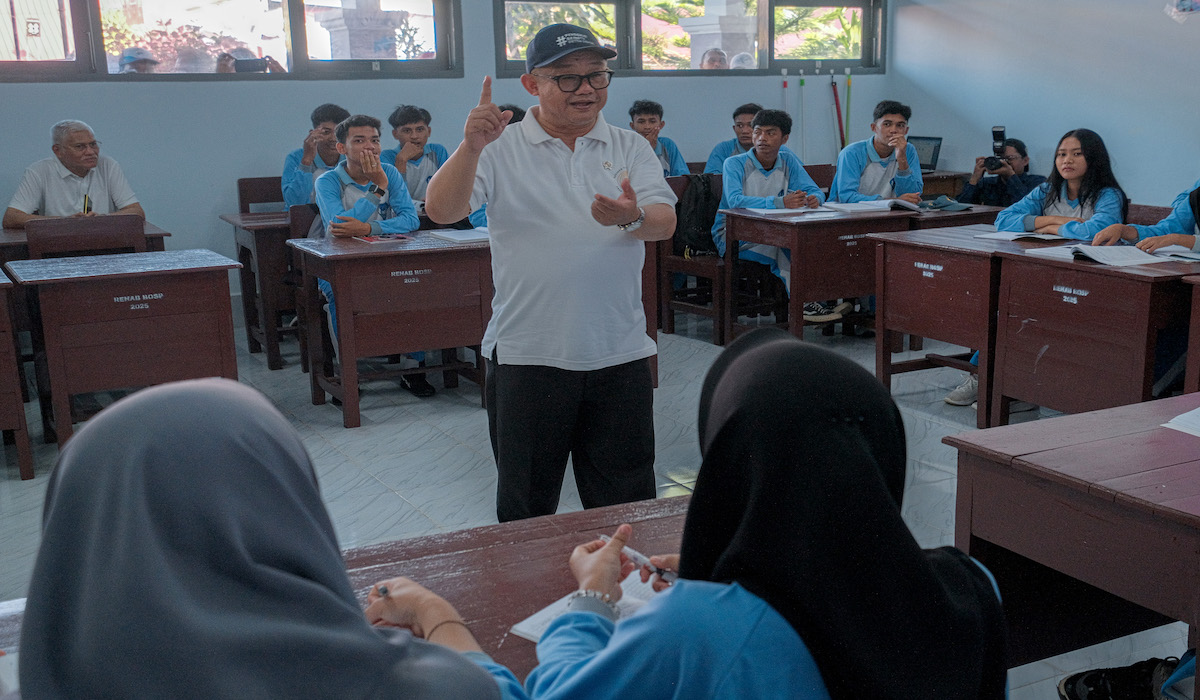
The Ministry of Basic and Secondary Education (Kemendikdasmen) has expressed full support for the implementation of Government Regulation Number 17 of 2025, or the Tunas Regulation, which limits social media access for children under 16 on high-risk digital platforms.
This support will be strengthened through the Seven Habits of Outstanding Indonesian Children (KAIH) movement as well as the Screen Time, Screen Zone, and Screen Break (3S) programme in educational units.
Minister of Basic and Secondary Education Abdul Mu’ti stated that Kemendikdasmen has been involved from the drafting stage to the dissemination of the regulation. According to him, the policy is expected to address issues with gadget, gaming, and internet usage that do not support educational goals.
“The Ministry supports PP Tunas. We have been involved from the drafting to the dissemination. This policy is expected to address issues with gadget, gaming, and internet usage that do not support educational goals,” said Abdul Mu’ti, as quoted from Antara on Sunday (29/3).
He emphasised that digital literacy programmes in schools will be implemented alongside the regulation. Digital-based learning, he said, can still be conducted but must be under teacher supervision to ensure students use technology in a healthy, safe, and responsible manner.
Kemendikdasmen considers this step important for strengthening digital space governance while ensuring children grow up in a healthy learning environment.
Such an environment is seen as the main foundation of education, including in character building and children’s social development.
Previously, Minister of Communication and Digital Meutya Hafid emphasised that the government will not tolerate leniency towards digital platforms that fail to comply with the Tunas Regulation.
“The government has instructed all platforms in Indonesia to adjust their products, features, and services to the regulation. There is no compromise on compliance, and all business actors must submit to the law,” said Meutya.
The government has officially restricted social media access for children under 16 on high-risk digital platforms following studies on the impact of social media on children’s growth and development. The policy was taken amid growing concerns over digital addiction and exposure to harmful content, from hoaxes and pornography to cyberbullying and online scams. (Ant/Z-10)
Around 50% of child internet users have been exposed to sexual content on social media.
Several parents support PP Tunas, including Mia Santani, 36. However, there are some notes.
With PP Tunas officially in effect, the government is pressuring digital platforms. The surge in child pornography cases serves as an alarm, calling on families to strengthen literacy to protect children.
PP Tunas can serve as a shield for parents to protect their children from the dangers of excessive social media use.
Children accustomed to relying on gadgets in daily life are at risk of showing excessive emotional reactions (tantrums) when their usage is restricted by parents.
Traditional games are one positive activity for children to reduce dependence on social media.