
7 Facts About Ali Larijani, Iran's Key Figure Killed by US-Israel
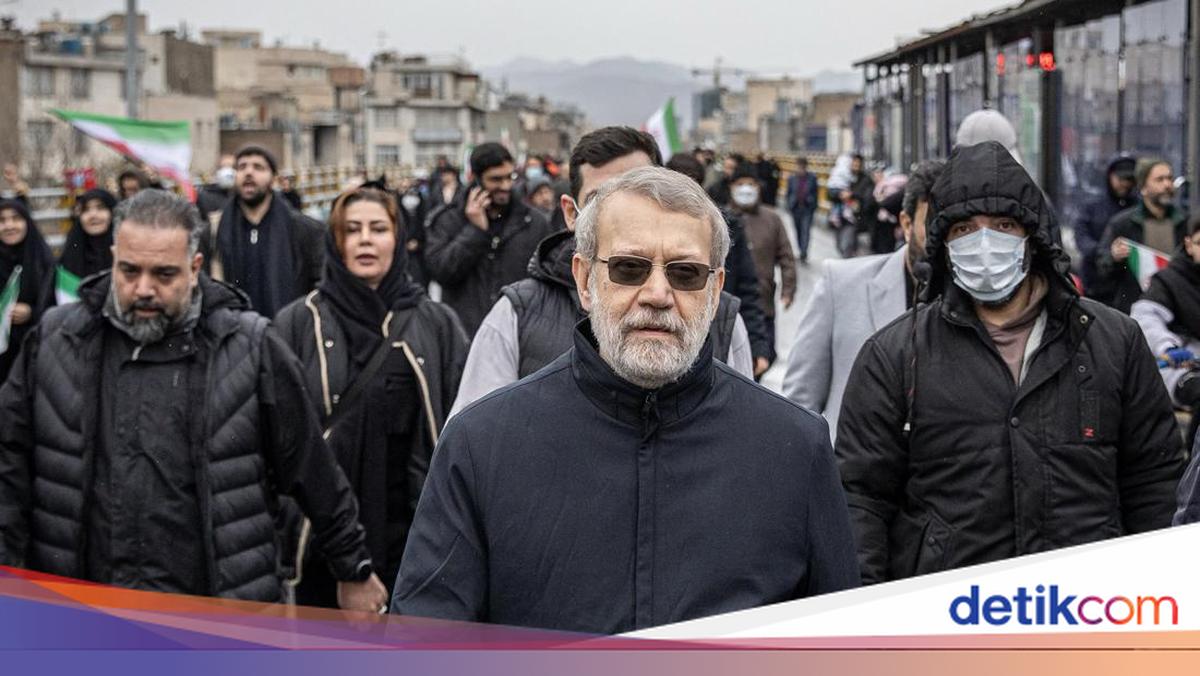
The head of security and right-hand man to Iran’s supreme leader Mojtaba Khamenei, Ali Larijani, fell in an attack by Israel and the United States (US). Several facts are known following the death of this senior Iranian politician. According to Al Jazeera on Tuesday (17/3), Israel’s Defence Minister Israel Katz also claimed in his statement that Ali Larijani had been killed in Israel’s latest attack. According to Iran’s semi-official media Mehr, the country’s Supreme National Security Council confirmed Larijani’s assassination. “After a lifetime of struggling for the advancement of Iran and the Islamic Revolution, he finally achieved his long-cherished wish, answering the call of truth, and proudly attaining the noble status of a martyr on the front lines of devotion,” read the statement from the council as reported by Mehr. Here are several facts known about Ali Larijani: 1. Killed While Visiting His Daughter in Tehran According to Reuters on Wednesday (18/3), Ali Larijani was one of Iran’s most influential figures, the architect of its security policy, and a close advisor to Ayatollah Ali Khamenei until the supreme leader’s death in an airstrike last month. Larijani, 67 years old, was killed in a US-Israel airstrike while visiting his daughter on the eastern outskirts of Tehran, as reported by Iran’s semi-official news agency Fars on Tuesday (17/3). 2. The Figure of Ali Larijani According to Al Jazeera on Wednesday (18/3), Larijani was the Secretary of Iran’s Supreme National Security Council, last seen in public on Friday (13/3) during the Al-Quds Day parade in the capital, Tehran. He was the highest-ranking Iranian official killed by Israel since Khamenei, who died on the first day of the war on 28 February. For decades, Larijani was the calm and pragmatic face of Iran’s government—a man who wrote a book on the 18th-century German philosopher Immanuel Kant and negotiated a nuclear deal with the West. However, on 1 March, the security chief’s tone changed dramatically. Appearing on state television just 24 hours after the US-Israel airstrike killed Khamenei and IRGC Commander Mohammad Pakpour, Larijani delivered a fiery message. “America and the Zionist regime (Israel) have burned the hearts of the Iranian nation,” he wrote on social media. “We will burn their hearts. We will make the shameless Zionist and American criminals regret their actions. The brave soldiers and great Iranian nation will give an unforgettable lesson to the vile international oppressors,” he added. Larijani, who accused US President Donald Trump of falling into an “Israeli trap,” was at the centre of Iran’s governmental system’s response to its biggest crisis since 1979. Larijani played a key role alongside a three-member transitional council running Iran after Khamenei’s assassination. So, who was Larijani, who directed Iran’s security strategy, and what was his legacy? 3. Iran’s Kennedy Family Born on 3 June 1958 in Najaf, Iraq, from a wealthy family in the city of Amol, Iran, Larijani came from a dynasty so influential that in 2009, Time magazine called them the “Kennedy Family of Iran.” His father, Mirza Hashem Amoli, was a prominent religious scholar. Like Larijani, his siblings have held some of the most influential positions in Iran, including in the judiciary and the Assembly of Experts, a council of scholars authorised to select and oversee the supreme leader. Larijani’s ties to post-1979 Iran’s revolutionary elite were also personal. At age 20, he married Farideh Motahari, daughter of Morteza Motahhari, a close confidant of the founder of the Islamic Republic of Iran, Ruhollah Khomeini. Although his family had conservative religious roots, his children pursued diverse careers. His daughter, Fatemeh, a medical graduate from Tehran University, completed her specialisation at Cleveland State University in Ohio, US. 4. Philosopher Mathematician Unlike many of his peers from religious seminaries, Larijani also had a secular academic background. In 1979, he earned a bachelor’s degree in mathematics and computer science from Sharif University of Technology. He then completed a master’s and doctorate in Western philosophy from Tehran University, writing his thesis on Immanuel Kant. However, it was his political positions that formed the core of his career. After the 1979 revolution, he joined the IRGC in the early 1980s before switching to government, serving as Minister of Culture under President Akbar Hashemi Rafsanjani between 1994 and 1997, and then as head of the state broadcasting agency, IRIB, from 1994 to 2004. During his tenure at IRIB, he faced criticism from reformists who accused his strict policies of driving Iranian youth to foreign media. Between 2008 and 2020, he served as Speaker of Parliament (Majlis) for three consecutive terms, playing a major role in shaping domestic and foreign policy. 5. Return to Security Larijani ran for President in 2005 as a conservative candidate but did not advance to the second round. In the same year, he was appointed Secretary of the Supreme National Security Council and head of the country’s nuclear negotiator. He resigned from that position in 2007, after distancing himself from President Mahmoud Ahmadinejad’s nuclear policy at the time. Larijani entered parliament in 2008, winning a seat to represent the religious centre of Qom, and became Speaker of Parliament. This allowed him to increase his influence, and he maintained his involvement in nuclear issues, securing parliamentary approval for the 2015 nuclear deal between Iran and world powers, known as the Joint Comprehensive Plan of Action (JCPOA). After leaving his position