
60 Students Involved in School Brawls Have KJP Support Revoked
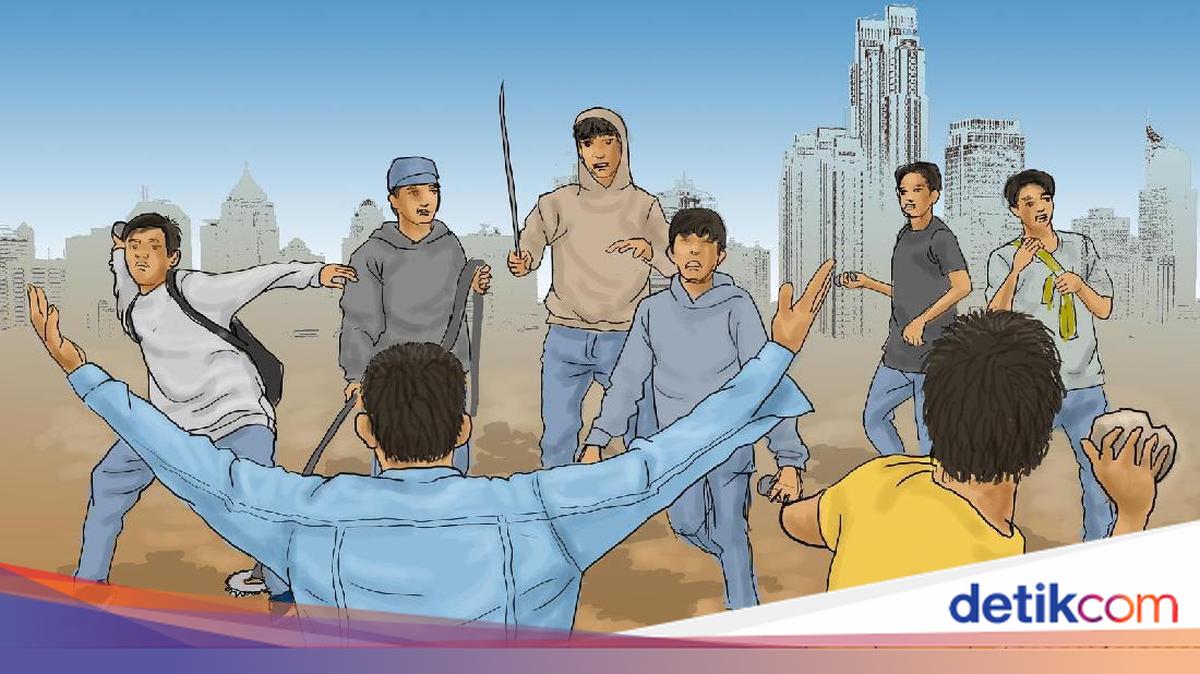
In our data, 20 students had their KJP revoked in 2025 due to school brawls. Another 40 students had their KJP revoked in 2026,” said DKI Jakarta Education Department Head Nahdiana during a working meeting with the Jakarta Regional House of Representatives’ Commission E on Monday (25/5/2026).
Nahdiana stressed that revoking KJP is part of the rehabilitation process for students involved in brawls. Although education assistance is halted, the DKI Jakarta Provincial Government ensures these students do not drop out of school. “When they engage in brawls, regulations require expulsion, but we must remember these are our children who need guidance. Expulsion does not mean they must leave school entirely,” she said.
Nahdiana said the DKI Jakarta Education Department will communicate with schools and families to determine the appropriate education path for the students. She noted that not all children fit into certain formal schools, so they may be directed to alternative education pathways, including non-formal education. “These students must not drop out of school. Those who have left school are currently being reintegrated,” she added.
Nahdiana explained that KJP revocation is not immediate. Students involved in brawls undergo a rehabilitation and evaluation process based on their level of involvement. “Whether they accidentally joined, consciously followed others, or initiated the incident, there will be specific procedures,” she added.
Meanwhile, the DKI Jakarta Education Department is intensifying efforts to prevent school brawls by collaborating with various parties, including security forces and the community. This includes partnerships with Densus 88, BNPT, and school community communication forums involving police, regional authorities, and community leaders.
Nahdiana stated that handling brawls cannot be solely the school’s responsibility. She said the roles of families, communities, and media must be coordinated to monitor children’s activities outside school hours. “Education cannot be viewed solely through the school lens, as children come from home and return to society,” she added.
Nahdiana explained that the DKI Jakarta Education Department will work with schools and families to determine the most suitable education model. She noted that not all students fit certain school environments, requiring different approaches. “We usually communicate with schools that may be better suited for the student, whether School A or School B,” she said.
However, Nahdiana clarified that not all students are automatically transferred to other schools. Non-formal education options such as Community Learning Centres (PKBM) or vocational courses may be alternatives depending on the student’s situation. “I’m not saying they’re transferred; some may choose to take vocational courses. If they attend PKBM, they can still obtain a diploma,” she explained.
Nahdiana said the DKI Jakarta Provincial Government is drafting social protection regulations to consolidate various social assistance schemes into a single system. Data integration is needed to streamline Jakarta’s social aid recipients. Currently, aid is distributed per sector, leading to multiple family members receiving different benefits. “We’re often asked, ‘If a family has three children, do all three get KJP?’ Then one might get KJMU for university, and the parents receive other aid,” she explained.
Nahdiana explained this occurs because aid distribution is based on each department’s authority. She said the social aid recipient system will be improved. “When each department has its own authority, this happens, but we’re currently streamlining it. There will be one system, and social aid recipients will be clearly identified,” she added.