
58% of Indonesia-made furniture sold to the US; will the Iran war have no effect?
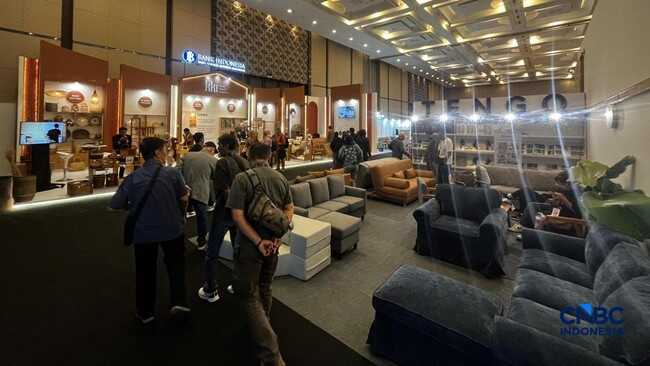
The conflict in the Middle East is beginning to affect the Indonesian furniture industry. Disruptions to shipping routes, especially around the Strait of Hormuz, could push logistics costs significantly higher. HIMKI chairman Abdul Sobur acknowledged that global trade routes depend heavily on the region.
“Global traffic passes through the Middle East. If the Strait of Hormuz is closed, ships will certainly seek longer routes,” he said at a press conference during the Indonesia International Furniture Expo (IFEX) 2026 at ICE BSD, on Thursday (5 March 2026).
He estimated that shipping costs could surge sharply if ships have to detour via alternative routes such as Africa.
“The possibility could be more than double. Just the first day has already risen by 50 percent. It depends on field conditions,” he said.
Rising fuel costs and operational risks will be directly charged to the goods owners.
“If ship owners don’t want to incur losses, and if they have to detour, they require more fuel, that will certainly be charged to the goods owner,” Sobur explained.
In addition to shipping costs, insurance issues are also a serious concern. Juju notes that war protection clauses are often not covered in standard policies.
“Insurance coverage does not cover war-related matters. This is something exhibitors and buyers should scrutinise,” he said.
He emphasised the importance for business players to read the insurance clause details before transacting in a volatile global situation.
“The issue of insurance and war risk is now highly valuable. It must be fully guaranteed in the contract,” he said.
Nevertheless, HIMKI remains optimistic that export growth targets can be achieved because main markets lie outside the conflict area.
“Our target market is not in the Middle East. 58 percent to the United States. There, there is relatively no war,” Sobur said.
The industry still aims for an average growth of 12 percent per year through 2030, with export targets of US$5-6 billion.
“If this war does not last long, we are optimistic that the roadmap will continue. The global furniture market is worth US$700 billion and continues to grow,” Sobur said.