
53 Protected Coconut Crabs Attempted to be Smuggled in Unclaimed Suitcases at the Port
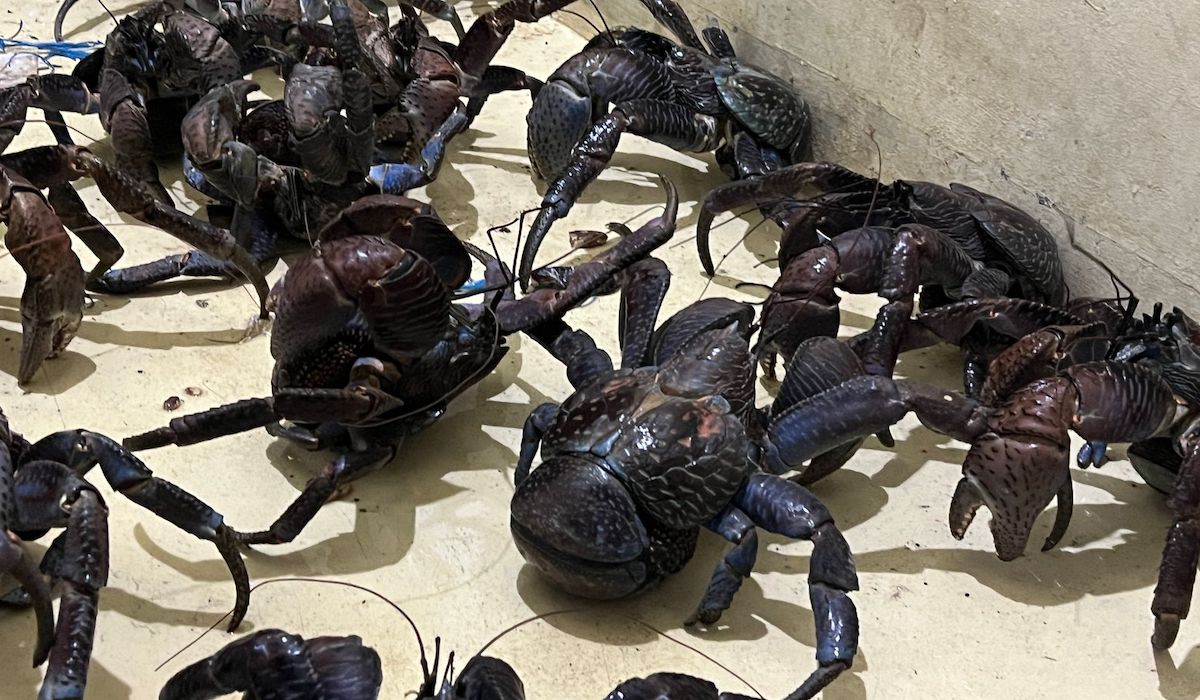
As many as 53 coconut crabs (Birgus latro), protected animals also known as giant robber crabs, nearly escaped smuggling through Soekarno-Hatta Port in Makassar.
The animals were found in four unclaimed suitcases left on the KM Dobonsolo ship on Tuesday night (24/3).
The presence of the suspicious suitcases was first detected when PT Pelni’s Makassar branch staff conducted an initial inspection of passengers’ luggage arriving from Bau-Bau, Southeast Sulawesi.
When the suitcases were opened, staff discovered dozens of live coconut crabs in bound conditions.
The South Sulawesi Quarantine Team deployed to the site then conducted further examinations. The result was that none of the 53 coconut crabs were equipped with origin quarantine documents or legal circulation certificates.
Head of South Sulawesi Animal, Fish, and Plant Quarantine, Sitti Chadidjah, emphasised that the seizure of these animals is a firm step to prevent the potential spread of pests and diseases while protecting legally protected wildlife.
“The coconut crab is an animal with high ecological value and is protected. Every movement or trade must be accompanied by official documents. Such methods are certainly very risky to the species’ conservation,” said Sitti in her statement on Thursday (26/3).
Head of PT Pelni Makassar Branch, Darman, added that his side is committed to tightening supervision of all passenger and goods activities at the port.
“We will not give any leeway. Every suspicious item will be checked. Synergy with Quarantine is very important to prevent violations,” he stressed.
This enforcement refers to Law No. 21 of 2019 on Animal, Fish, and Plant Quarantine.
In addition, coconut crabs are included in the list of protected animals based on Ministry of Environment and Forestry Regulation No. P.106 of 2018.
South Sulawesi Quarantine urges the public to comply with biological commodity traffic regulations.
In addition to preserving natural resources, adherence to quarantine rules is also important to prevent the entry and spread of animal pests and diseases that can impact ecosystems and public health.