
500 Million Trips per Year: KAI Strengthens Safety Systems to Maintain Public Trust
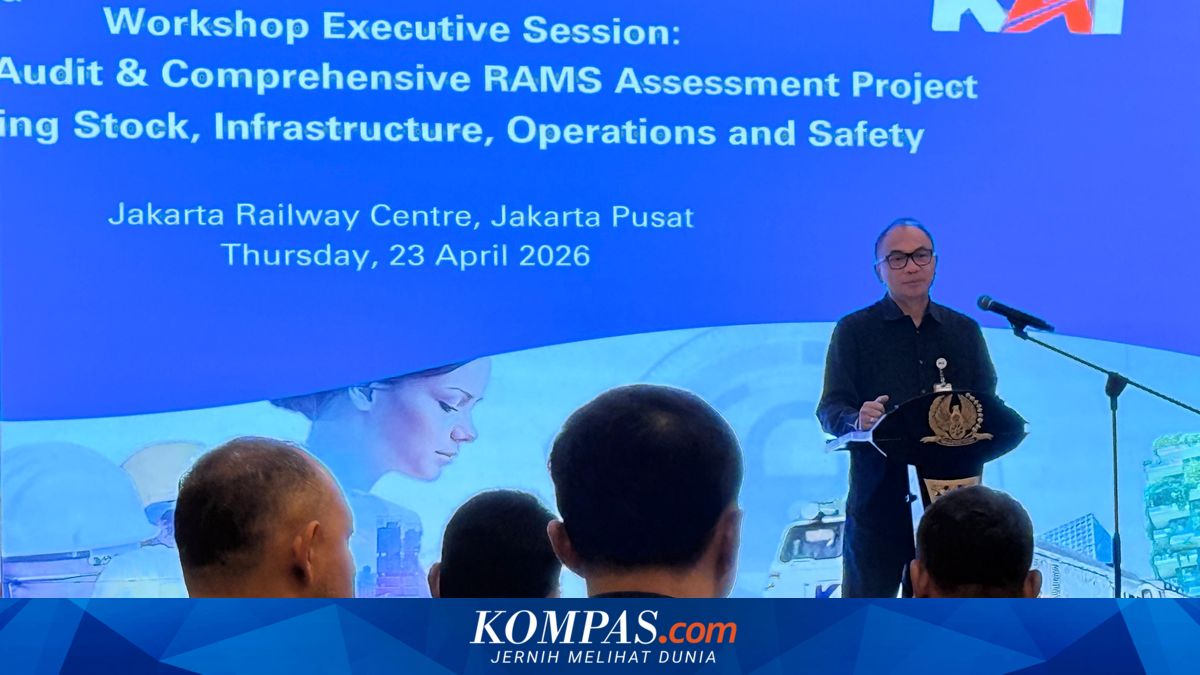
PT Kereta Api Indonesia (Persero) or KAI is strengthening its safety and operational systems amid a surge in the number of trips that has exceeded more than 500 million per year. This step is taken to maintain public trust in line with the increasing mobility of the population and the expansion of the railway network in various regions. KAI’s Director of Portfolio Management and Information Technology, I Gede Darmayusa, stated that the continuously developing operational scale demands increasingly precise, integrated, and responsive systems to risks. “When more than 500 million trips occur in one year, the system must work with precision. Every process needs to be measured, integrated, and able to respond to risks quickly,” he said in a press release received by Kompas.com on Friday (24/4/2026). In the first quarter of 2026, the KAI Group served 128,055,072 customers. Annually, the number of passengers has increased significantly, from 154.5 million in 2021 to 503.6 million at the end of 2025. This figure reflects the increasingly high operational intensity across the entire KAI network. “Public trust arises from a system that operates disciplined and whose performance can be monitored. Therefore, strengthening is carried out from the aspect of maintenance of facilities, infrastructure, to data-based operation management,” he emphasised. As part of these efforts, KAI conducted a comprehensive technical assessment together with TÜV Rheinland, a global independent institution in the field of testing, inspection, and certification (TIC). This activity was packaged in the Workshop Executive Session: Technical Audit & Comprehensive RAMS Assessment Project for Rolling Stock, Infrastructure, Operations and Safety – RAMS Knowledge Sharing KAI, held at the Ballroom of Jakarta Railway Center on Thursday (23/4/2026). In the assessment, a reliability, availability, maintainability, safety (RAMS) approach was used, combining historical data analysis with physical inspections of assets in the field, from rail tracks to bridges. “The RAMS approach helps identify potential risks from the start and provides recommendations that can be immediately implemented to maintain system reliability,” he said. Currently, KAI manages nearly 11,000 facilities, with about 35 percent of them entering the rejuvenation phase in the coming years, as well as a rail network spanning 8,178 kilometres. This scale requires a thorough evaluation so that all operational processes remain under control. In addition, safety aspects at level crossings are also a primary focus in the evaluation. These efforts are directed at maintaining the trend of declining operational disruptions while ensuring every trip runs safely. I Gede emphasised that mobility growth must be balanced with sustainable system strengthening. “Mobility growth needs to be followed by increasingly strong systems. KAI ensures every trip runs under measured and accountable control,” he concluded.